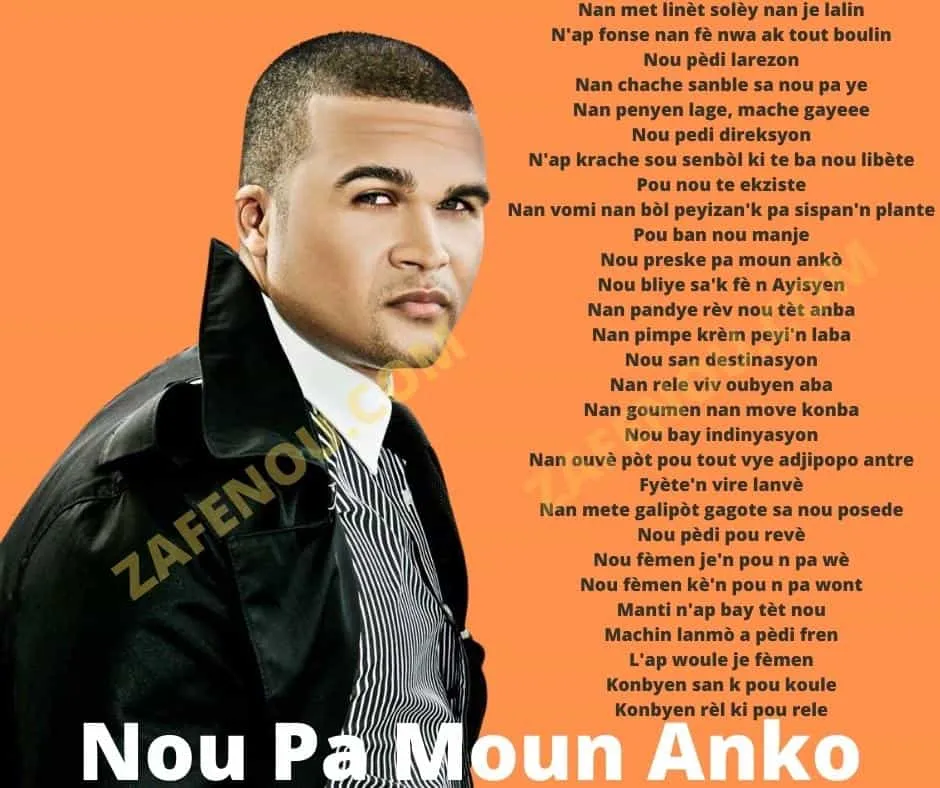
Haitian music has long served as a vessel for storytelling, celebration, and profound social commentary. Among the myriad of tracks released in recent years, few have struck a chord as deeply as Nou Pa Moun Ankò. This collaboration between Richard Cavé and the renowned lyricist BIC (Roosevelt Saillant) transcends the boundaries of typical popular music.
The song, which translates roughly to “We Are No Longer Human” or “We Are No Longer People,” serves as a somber reflection on the state of Haitian society. It addresses themes of lost identity, the erosion of community values, and the collective trauma faced by a nation in turmoil.
Rather than a simple dance track, it is a plea for introspection and a call to restore dignity.
Understanding the impact of this song requires looking beyond the melody. One must examine the cultural context of the lyrics, the history of the artists involved, and the tradition of socially conscious music in Haiti. This article explores the layers of meaning behind Nou Pa Moun Ankò and why it resonates so powerfully with listeners today.
The Artistic Collaboration: Melody Meets Poetry
The success of Nou Pa Moun Ankò stems largely from the unique chemistry between its two primary creators. Richard Cavé is widely recognized for his melodic sensibilities and modern production style, often associated with the Kompa genre. His ability to craft hook-laden, emotional compositions provides the musical foundation for the track.
On the other side of the collaboration is BIC, often referred to as Tizon Dife. BIC is celebrated as one of Haiti’s most gifted lyricists, known for his mastery of wordplay, metaphors, and double entendres in the Haitian Creole language. His style often bridges the gap between music and slam poetry, allowing for dense, narrative-driven verses.
When these two forces combined, the result was a track that balanced musical accessibility with lyrical weight. Cavé’s emotive vocal delivery complements BIC’s rhythmic, spoken-word influence. This duality allows the song to reach a broad audience while delivering a message that requires serious contemplation.
Deconstructing the Lyrics and Metaphors
The lyrics of Nou Pa Moun Ankò are rich with symbolism that paints a picture of a society that has lost its way. The song opens with imagery of confusion and blindness, describing people wearing sunglasses to look at the moon or rushing into darkness. These metaphors suggest a collective loss of perspective and a willful ignorance of reality.
A central theme in the verses is the abandonment of heritage and foundational values. The lyrics speak of “spitting on symbols” that provided freedom and “vomiting in the bowl” of the peasant who provides food. This represents a rejection of the agricultural and historical roots that once defined Haitian resilience and self-sufficiency.
The recurring refrain, “Nou preske pa moun ankò” (We are almost no longer human), acts as a haunting diagnosis of the social condition. It suggests that the accumulation of violence, dishonesty, and lack of empathy has stripped the population of its essential humanity.
The song argues that when a community ceases to care for its members or respect its history, it loses the very essence of existence.

The Concept of “Moun” in Haitian Culture
To fully grasp the gravity of the song’s title, one must understand the specific cultural weight of the word Moun in Haiti. In Haitian Creole, being a “moun” implies more than just being a biological human being. It carries connotations of dignity, respect, character, and social belonging.
There is a common Haitian proverb, “Tout moun se moun,” which means “Every person is a person,” emphasizing universal human dignity. Conversely, to say someone is “not a person” or has “lost their humanity” is a severe critique of their moral standing and social behavior. It implies a descent into barbarism or a complete loss of communal ethics.
When Richard Cavé and BIC declare “Nou Pa Moun Ankò,” they are mourning the loss of this cultural standard. They are suggesting that the social contract—the unwritten rules of respect and mutual aid that bind the community—has been broken. The song is a lament for the loss of mounite (personhood/humanity) in the face of chaos and survivalism.
Mizik Angaje: The Tradition of Engaged Music
Nou Pa Moun Ankò fits squarely into the tradition of Mizik Angaje, or engaged music. This genre of Haitian music is characterized by political and social consciousness. Historically, artists have used this form to critique dictatorships, expose corruption, and give voice to the struggles of the marginalized.
Unlike purely recreational music designed for festivals or clubs, Mizik Angaje serves as a historical record of the people’s sentiment. It functions as an auditory newspaper or a town hall meeting. Artists who participate in this tradition often take on the role of social observers, risking controversy to speak truth to power.
By releasing this track, Cavé and BIC stepped into this lineage of artist-activists. They utilized their platform not just to entertain, but to provoke dialogue. The song challenges listeners to stop ignoring the “death machine” (machin lanmò) and to confront the uncomfortable truths about their society’s trajectory.
Richard Cavé: Evolution from Carimi to Social Commentator
Richard Cavé’s career trajectory adds another layer of significance to this release. As a founding member of the legendary group Carimi, he spent years at the forefront of the Kompa scene. Carimi was known for high-energy hits and romantic ballads that dominated the dance floors of the Caribbean and the diaspora.
Following the dissolution of Carimi and the formation of his subsequent project, KAI, Cavé continued to produce popular hits. However, Nou Pa Moun Ankò marked a shift toward more somber and reflective subject matter. It demonstrated his versatility as a composer and his willingness to address difficult topics outside the realm of romance and partying.
This evolution reflects a broader trend among veteran artists who feel a responsibility to address the deteriorating conditions of their homeland. For fans who grew up with Carimi, seeing Cavé tackle such heavy themes signaled the severity of the situation. It bridged the gap between the commercial music industry and the harsh realities of daily life in Haiti.
BIC Tizon Dife: The Poet of the Streets
Roosevelt Saillant, known professionally as BIC, brought the necessary lyrical gravity to the project. BIC is widely respected for his ability to articulate the frustrations and hopes of the common citizen. His discography is filled with songs that analyze social inequality, environmental degradation, and political hypocrisy.
In Nou Pa Moun Ankò, BIC’s verse anchors the song in specific imagery. He describes the disorientation of a people who have “lost the brakes” and are “rolling with eyes closed.” His delivery is less about melody and more about the rhythmic impact of the truth.
He forces the listener to pay attention to the words rather than just swaying to the beat.
BIC’s contribution ensures that the song is not just a lament, but an indictment. He questions the “indignation” that leads to nowhere and the “fights in the wrong battles.” His presence on the track validates it as a serious piece of social criticism, leveraging his reputation as one of the country’s most thoughtful songwriters.
Art as a Mirror for Social Reality
The release of Nou Pa Moun Ankò coincided with a period of intense instability in Haiti. The lyrics reference a “death machine” losing its brakes, a metaphor that many listeners interpreted as a direct reference to the escalating violence and political vacuum facing the nation. The song captures the anxiety of a population living in uncertainty.
Art often serves as a mirror, reflecting the collective psyche of a nation. In this case, the reflection is painful. The song does not offer easy solutions or happy endings. Instead, it holds up a mirror to the ugliness of the situation, demanding that the audience acknowledge the “lies we tell ourselves.”
By articulating feelings of despair and loss of identity, the song also provides a form of catharsis. It validates the emotions of millions who feel helpless in the face of systemic collapse. Hearing these sentiments expressed by prominent artists helps to break the isolation of individual suffering, creating a shared space for grief and, potentially, for healing.
FAQ
What is the main message of “Nou Pa Moun Ankò”?
The primary message of the song is that society has lost its moral compass and human dignity. The title translates to “We Are No Longer Human,” suggesting that violence, apathy, and a rejection of cultural values have dehumanized the population. It is a call for introspection and a return to community values.
Who are the artists behind this song?
The song is a collaboration between Richard Cavé and BIC (Roosevelt Saillant). Richard Cavé is a singer, songwriter, and producer known for his work with the bands Carimi and KAI. BIC is a celebrated Haitian lyricist and poet known for his socially conscious songwriting and mastery of the Creole language.
What genre of music is this track?
While Richard Cavé is famous for Kompa, this track blends elements of Kompa with a more ballad-like, introspective style. It features the melodic structures typical of Haitian popular music but incorporates the rhythmic, spoken-word delivery characteristic of BIC’s style, placing it firmly in the realm of Mizik Angaje or socially engaged music.
What does the term “Moun” imply in this context?
In Haitian culture, “Moun” refers to a human being, but it also connotes dignity, respectability, and social responsibility. To say one is “no longer Moun” is a profound critique, implying a loss of the essential qualities that make someone a functioning, moral member of the community.
Are the lyrics political?
Yes, the lyrics are deeply political and social. They critique the state of the country, referencing “death machines,” loss of direction, and the betrayal of historical symbols. While they may not name specific politicians, they address the broader political climate, instability, and the suffering of the citizenry.
Why is BIC called “Tizon Dife”?
“Tizon Dife” literally translates to “Firebrand” or “Spark.” It is a moniker that reflects BIC’s ability to ignite thought and passion through his lyrics. His words are often seen as powerful, illuminating, and capable of sparking necessary conversations about difficult social topics.
How was the song received by the public?
The song resonated deeply with the Haitian public and the diaspora. Because it articulated the frustration and sadness many were feeling during a time of crisis, it was widely shared and discussed. It became an anthem for those seeking to express their grief over the country’s deteriorating social conditions.