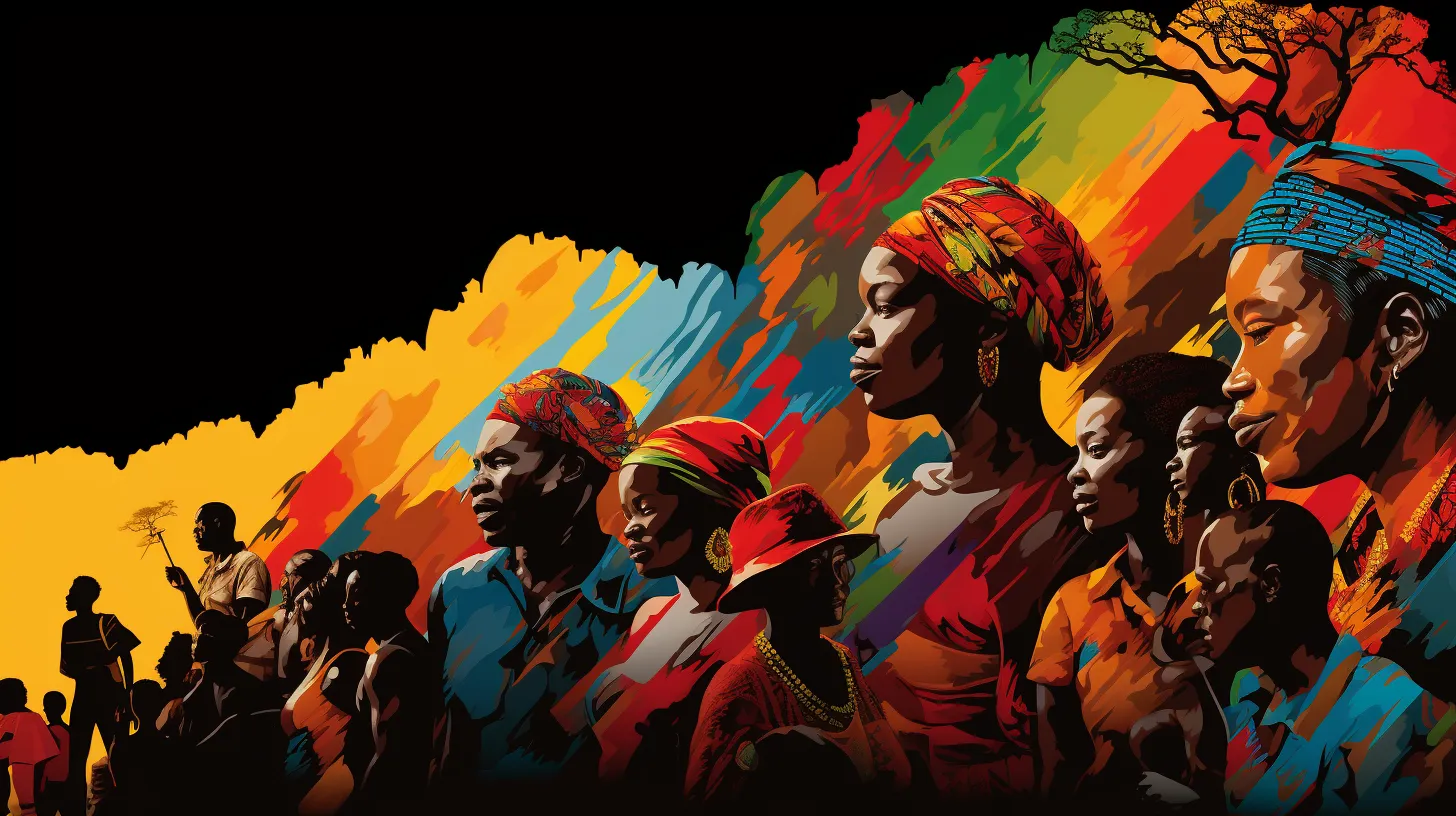
Haiti stands as a unique cultural beacon in the Americas, often cited by historians and anthropologists as the most African nation in the Western Hemisphere. The vibrant identity of the Haitian people is not a monolith but a complex mosaic formed by distinct ethnic groups brought over during the colonial era.
Understanding these roots requires looking beyond general geographic labels to identify the specific tribes, kingdoms, and societies that forged a new nation.
The ancestors of modern Haitians primarily arrived from West and Central Africa, carrying with them sophisticated social structures, languages, and spiritual systems. Unlike many other Caribbean nations where colonial assimilation was more pervasive, the early independence of Haiti allowed these African traditions to survive and coalesce.
This preservation was not accidental but a direct result of the demographic realities of Saint-Domingue, the French colony that would become Haiti.
This article explores the specific African regions that influenced Haitian heritage, examining how the Kongo, Fon, Yoruba, and other civilizations shaped the country’s DNA. From the grammatical structure of Haitian Kreyòl to the communal farming systems of the countryside, the legacy of Africa is woven into every aspect of daily life.
By tracing these lineages, we gain a deeper appreciation for the resilience and richness of Haitian identity.
The Demographic Landscape of Saint-Domingue
To understand Haitian ancestry, one must first understand the intense demographic shifts of the 18th century. During the peak of the plantation economy in Saint-Domingue, the demand for labor was so high that the enslaved population grew exponentially through importation rather than natural increase.
Historians note that in the years leading up to the Haitian Revolution of 1791, a significant majority of the adult population had been born in Africa, rather than in the colony.
These individuals, referred to as “Bossales,” arrived with their memories, languages, and cultural practices fully intact. They outnumbered the “Creoles” (those born in the colony) in many regions, ensuring that African customs remained the dominant social force.
This constant influx of new arrivals refreshed cultural ties to the continent, preventing the dilution of traditions that occurred in colonies with lower importation rates.
The specific ports of departure shifted over time, creating layers of cultural influence. While early arrivals often came from the Senegambia region, the later and larger waves originated from the Bight of Benin and Central Africa. This timing is crucial because the people who led the revolution and established the early republic were predominantly from these later groups.
The Central African Connection: The Kingdom of Kongo
Central Africa, particularly the region encompassing modern-day Angola and the Democratic Republic of the Congo, provided the largest single contingent of people to Haiti. The influence of the Bakongo people is profound and visible in the military strategies used during the Haitian Revolution.
Many of the enslaved men from this region were former soldiers captured during civil wars in the Kingdom of Kongo, bringing with them tactical experience that proved vital against French forces.
Culturally, the Kongo influence is deeply embedded in the spiritual and rhythmic life of Haiti. Anthropologists have traced specific drum patterns and dance styles directly to Central African traditions. The “Petro” rites within Haitian spirituality, characterized by their fiery energy and pragmatic focus, are widely believed to stem from these Central African roots.

Linguistically, the Kikongo language has contributed significantly to the Haitian vocabulary. Many words related to the spiritual world, the natural environment, and communal activities have Kongo origins. This connection serves as a testament to the enduring legacy of the Bantu-speaking peoples in the formation of Haitian society.
The Fon and Ewe Legacy of Dahomey
The second major pillar of Haitian ancestry comes from the Bight of Benin, specifically the regions now known as Benin and Togo. This area was home to the powerful Kingdom of Dahomey and the Oyo Empire. The Fon and Ewe peoples from this region contributed heavily to the theological and organizational structure of Haitian life.
The religious system known as Vodou derives its name from the Fon word “vodun,” which simply means “spirit” or “divine essence.” The “Rada” rite, which is considered the cool, benevolent, and traditional side of Haitian spirituality, traces its lineage directly to the Arada (Allada) kingdom of Dahomey.
The pantheon of spirits, or “Lwa,” includes names that are identical or nearly identical to deities worshiped in Benin today.
Beyond spirituality, the Fon influence is evident in the syntax of Haitian Kreyòl. While the vocabulary of Kreyòl is largely French-derived, the grammar follows West African patterns. The way sentences are constructed, the use of post-posed articles, and the verbal markers for tense and aspect mirror the structure of the Fon-Gbe languages.
The Nago Influence: Yoruba Traditions
The Yoruba people of modern-day Nigeria, referred to historically in Haiti as the “Nago” nation, also left an indelible mark on the culture. Although they may have arrived in smaller numbers compared to the Kongo or Fon, their cultural impact was disproportionately strong.
The Nago are particularly associated with the warrior spirits and the use of iron, linking back to the Yoruba deity Ogun.
In Haiti, the Ogou family of spirits represents power, authority, and metallurgy, reflecting the prestige of the Oyo Empire from which many Nago people originated. Cultural practices involving weaving and specific agricultural techniques also show traces of Yoruba influence.
The Nago presence is a reminder of the diversity within the African population of Saint-Domingue, where distinct nations maintained their identities even while forging a new collective culture.
This influence extends to the concept of character and leadership. The Nago legacy is often associated with political organization and military discipline. In many traditional songs and oral histories, the Nago are referenced with respect for their strength and resilience, highlighting their role in the fight for independence.
The Lakou System: West African Compounds in the Caribbean
One of the most tangible manifestations of African heritage in Haiti is the “Lakou” system. In rural Haiti, families traditionally live in a compound structure consisting of a cluster of houses surrounding a central courtyard. This arrangement is a direct continuation of West African compound living, particularly patterns seen in Benin and Togo.

The Lakou is more than just a housing arrangement; it is a social and economic unit. It is typically governed by a patriarch or matriarch and operates on principles of communal ownership and cooperative labor. This system allowed rural Haitians to maintain autonomy and resist the plantation labor models that colonial powers tried to reinstate after independence.
Within the Lakou, the “Konbit” is a vital institution. A Konbit is a form of cooperative labor where neighbors and family members gather to work a specific plot of land, accompanied by music and food. This practice mirrors communal farming traditions found throughout West Africa, reinforcing the values of solidarity and collective survival that define the Haitian peasant class.
Linguistic Resilience: How Kreyòl Preserved History
Language is perhaps the most democratic vessel of culture, and Haitian Kreyòl is a living museum of African heritage. While French provided the lexical building blocks, the soul of the language is African. Linguists classify Kreyòl as having a French-based lexicon but a West African morpho-syntax, meaning the logic of the language is African.
For example, the way possession is expressed and the use of serial verb constructions are features common in the Kwa language family of West Africa. This linguistic fusion allowed enslaved Africans from different tribes to communicate while retaining their native modes of thought.
It was a tool of resistance, allowing for the transmission of complex ideas and plans that were unintelligible to French overseers.
Today, Kreyòl is the primary language of all Haitians, regardless of social class. It serves as a unifying force that binds the nation to its African past. The proverbs, idioms, and storytelling traditions expressed in Kreyòl often have direct equivalents in the languages of Senegal, Benin, and the Congo, preserving wisdom across centuries and oceans.
The Role of Isolation in Cultural Preservation
Following the Haitian Revolution in 1804, the new nation faced a diplomatic and economic quarantine imposed by European powers and the United States. While this isolation had devastating economic consequences, it had an unintended cultural benefit. It created a “cordon sanitaire” that shielded the Haitian population from the heavy European immigration that altered the demographics of other Caribbean islands.
In places like Cuba or Brazil, the continuous arrival of European immigrants in the 19th and 20th centuries diluted some African cultural practices. In Haiti, the population remained overwhelmingly of African descent, allowing traditions to evolve organically without external pressure to assimilate to Western norms. This unique historical trajectory explains why Haitian connections to Africa feel so immediate and undiluted.
This isolation allowed for the crystallization of a distinct Haitian culture that viewed itself as a sovereign extension of African dignity. The preservation of African roots was not merely a matter of memory but a necessity for survival and nation-building in a hostile geopolitical environment.
FAQ
Which African countries are the primary ancestors of Haitians?
The primary ancestral roots of the Haitian people can be traced to the modern-day nations of Benin, Togo, Nigeria, and the Democratic Republic of the Congo.
While people were brought from as far north as Senegal and as far south as Angola, the cultural heavyweights were the Fon/Ewe peoples of the Bight of Benin and the Bakongo peoples of Central Africa.
What is the difference between the Rada and Petro rites?
In Haitian cultural and spiritual traditions, the Rada rite is associated with the Fon and Ewe peoples of Dahomey (Benin). It is characterized by cool, gentle energy, white clothing, and traditional drumming rhythms.
The Petro rite, conversely, is often linked to Central African (Kongo) origins and the fiery energy of the New World experience, characterized by faster rhythms and a focus on pragmatic action and protection.
How did the Haitian Revolution influence cultural retention?
The Haitian Revolution was unique because it resulted in the complete expulsion of the colonial ruling class and the establishment of an independent Black republic in 1804. This early independence stopped the influx of European culture and allowed the existing African population to solidify their traditions, language, and social structures without colonial interference for nearly a century.
What is the “Konbit” and where does it come from?
The Konbit is a traditional form of communal labor practiced in rural Haiti, where neighbors gather to help a farmer with a large task, such as planting or harvesting, in exchange for food and festivity. This system is a direct continuation of cooperative farming practices found in many West African societies, emphasizing community solidarity over individual profit.
Is Haitian Kreyòl a dialect of French?
Linguists consider Haitian Kreyòl to be a distinct language, not a dialect of French. While the majority of its vocabulary is derived from 18th-century French, its grammar, sentence structure, and syntax are heavily influenced by West African languages, particularly the Fon-Gbe language family. It is a fully developed language with its own rules and nuances.
Who are the Nago people in Haitian history?
The term “Nago” is used in Haiti to refer to people of Yoruba ancestry, originating from what is now Nigeria and parts of Benin. The Nago nation contributed significantly to Haitian culture, particularly in the realms of military tradition and specific spiritual practices involving the Ogou family of spirits, who represent iron, war, and leadership.