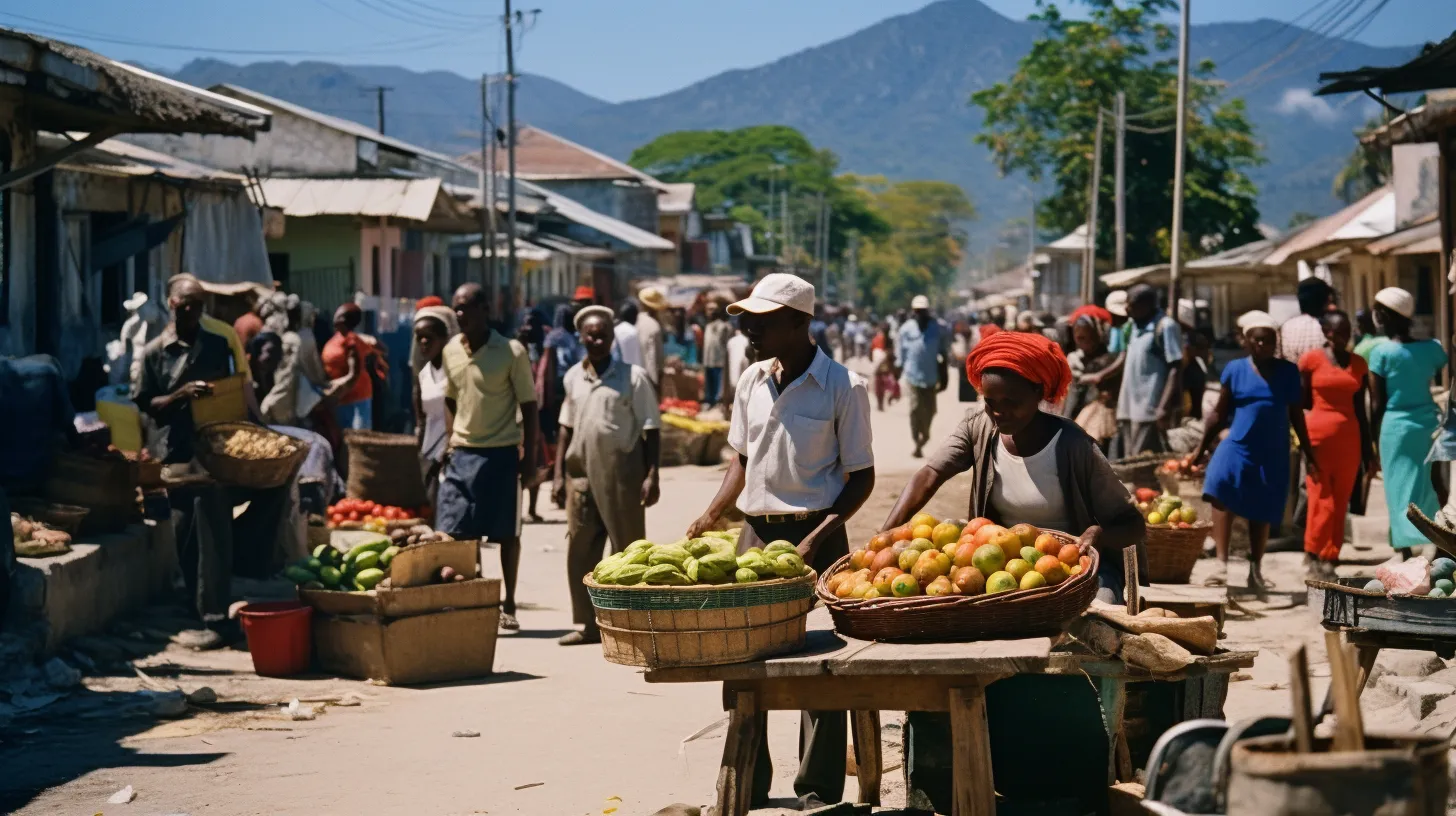
Haitian culture is defined by a profound sense of community, resilience, and a vibrant zest for life that manifests clearly in how people spend their free time. Leisure in Haiti is rarely a solitary pursuit; it is almost always a shared experience that strengthens social bonds and reinforces local identity.
From the energetic rhythms of street parades to the strategic silence of a domino match, pastimes here are deeply woven into the fabric of daily existence.
Visitors and cultural observers often note that the Haitian concept of recreation blends artistic expression with social interaction. Whether in the bustling streets of Port-au-Prince or the quieter rural provinces, the atmosphere is frequently punctuated by music, conversation, and impromptu games. These activities are not merely distractions but are vital rituals that preserve history and foster unity among neighbors.
Understanding these leisure activities offers a window into the soul of the country. It reveals a society that values storytelling, rhythmic expression, and communal dining. This exploration covers the specific games, musical traditions, festivals, and artistic endeavors that define fun and relaxation in Haiti.
The National Obsessions: Soccer and Dominoes
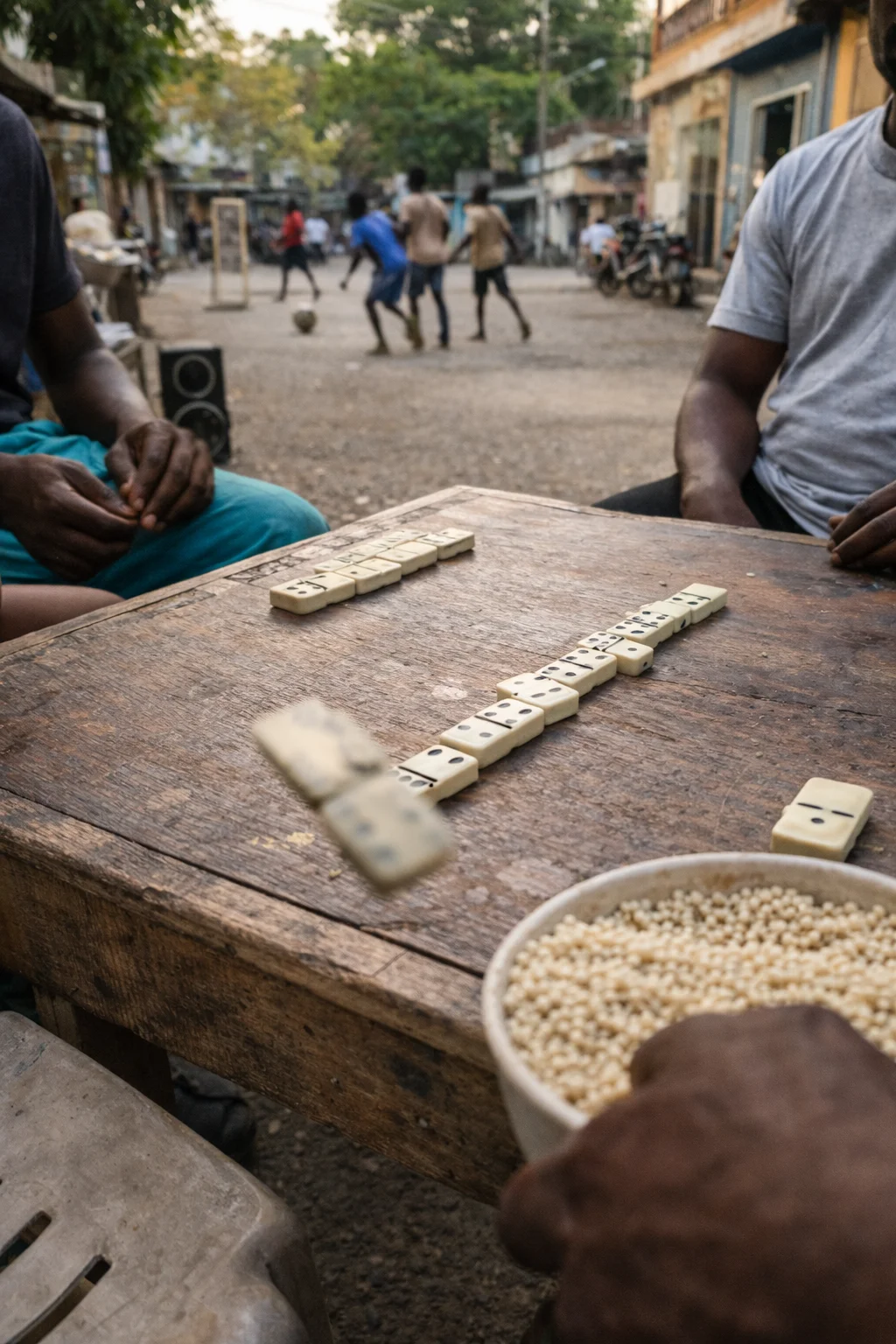
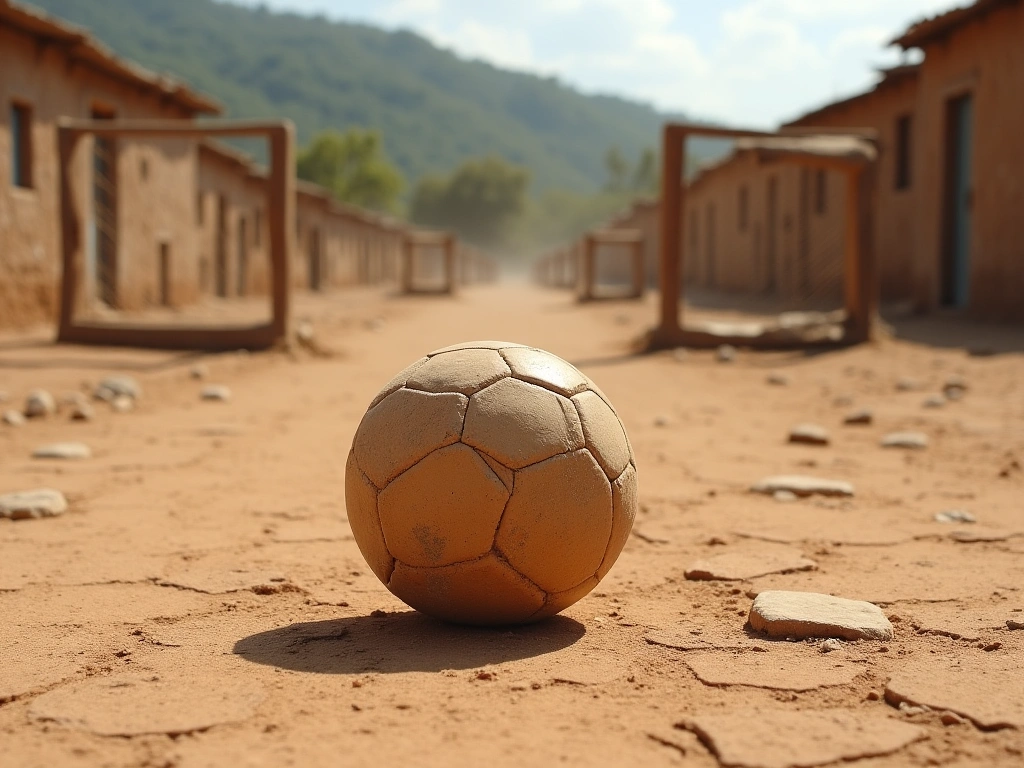
If there is a universal language in Haiti, it is foutbòl (soccer). It is played everywhere, from professional stadiums to dusty village clearings and concrete city streets. The sport transcends age and class, serving as a primary source of entertainment and passionate debate.
When the national team, Les Grenadiers, plays, the country effectively comes to a standstill. However, the local love for the game is best observed in neighborhood matches, often referred to as ti sourit, where small goals and fast-paced skills turn narrow streets into arenas of intense competition.
Parallel to the physical exertion of soccer is the mental strategy of dominoes. This is not a casual pastime but a serious tactical engagement. Walking through residential neighborhoods, one will often hear the distinctive clack of heavy resin tiles being slammed onto a wooden table. This forceful placement is part of the game’s etiquette, signaling confidence and dominance to opponents.
Domino matches are social hubs, usually accompanied by lively commentary, teasing, and analysis. The game often involves a “double-six” set, and players must calculate probabilities while managing the psychological aspect of the match. It is a staple of Sunday afternoons and late evenings, providing a space for men and women to decompress and connect.
Rhythms of the Island: Konpa, Rara, and Twoubadou
Music in Haiti is not background noise; it is a participatory event. The most dominant popular genre is Konpa Dirèk (or simply Konpa), a modern meringue characterized by a slower, sensual rhythm and electric instruments.
Social dances featuring live Konpa bands are major events, where couples engage in a close, fluid dance style that has become a hallmark of Haitian nightlife.
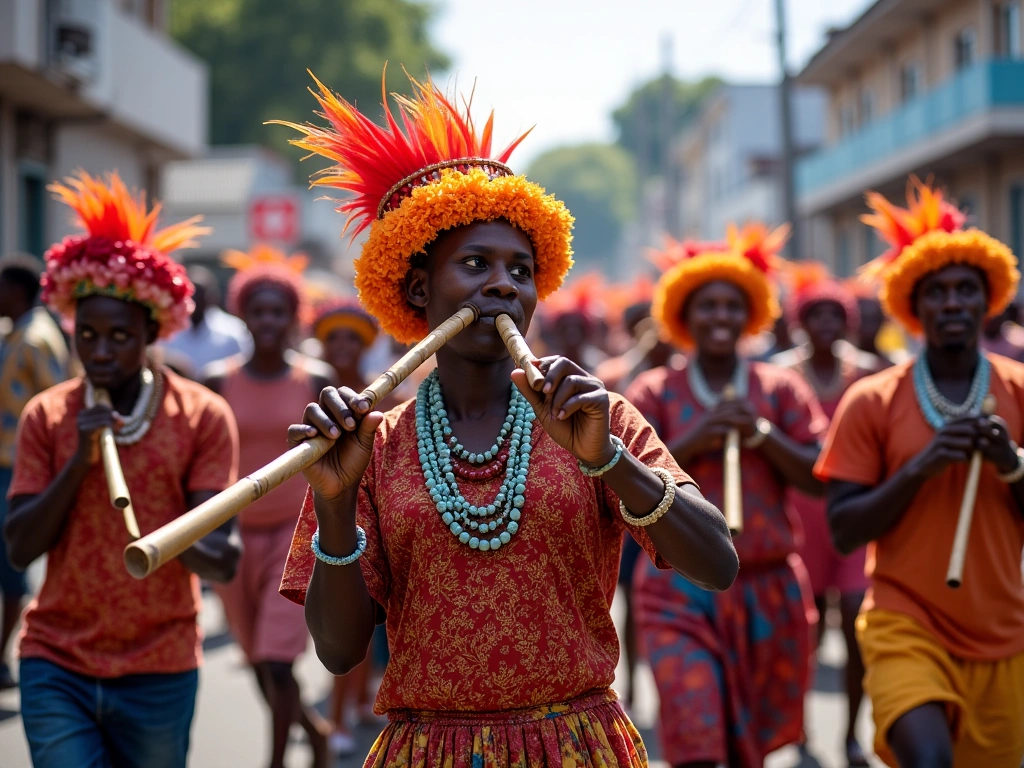
In contrast to the polished sound of Konpa is the raw, energetic tradition of Rara. Originating from the peasant classes, Rara is a form of festival music used for street processions, particularly during the Lenten season leading up to Easter. Rara bands are distinct for their use of the vaksin, a cylindrical bamboo trumpet that produces a single note.
When played in a group, these instruments create a complex, interlocking melody known as hocketing. The processions are colorful and boisterous, often involving miles of marching, singing, and dancing through towns.
For a more intimate acoustic experience, Haitians enjoy Twoubadou. This genre traces its roots to the troubadours of old, featuring acoustic guitars, a banjo, and a manouba (a box bass instrument). Twoubadou songs are often ballads about love, daily struggles, or humorous social commentary. It is the music of rural gatherings and beach parties, cherished for its lyrical depth and organic sound.
The Art of Storytelling: Krik? Krak!
Before the advent of television and the internet, oral tradition was the primary form of evening entertainment, and it remains a cherished cultural practice. This tradition is encapsulated in the call-and-response phrase: “Krik? Krak!” The storyteller calls out “Krik?” and the eager audience responds “Krak!” to signal they are ready to listen.
These storytelling sessions are more than simple entertainment; they are performances. The stories often feature stock characters like Bouki and Ti Malice. Ti Malice is the sharp-witted trickster, while Bouki is the greedy, somewhat dim-witted foil. Through their interactions, storytellers convey morals, proverbs, and lessons about survival, intelligence, and justice.
Riddles, known as tim-tim bwa chèch, are also a common component of these gatherings. This verbal play sharpens the mind and preserves the Haitian Kreyòl language’s rich metaphorical capacity. While modernization has changed entertainment habits, the spirit of oral history persists in the way Haitians recount daily events with dramatic flair and humor.
Patron Saint Festivals and Carnival
The Haitian calendar is punctuated by Fèt Champêtre, or patron saint festivals. Every town and village in Haiti is associated with a specific patron saint. On the saint’s feast day, the town transforms. People who have moved away to the capital or abroad often return home for these celebrations, making them massive reunions.
A Fèt Champêtre involves religious services followed by days of street fairs, music festivals, and open-air markets. It is a time when the population swells, and the local economy thrives. Pilgrims may visit sacred sites, such as waterfalls or caves, which are often syncretized spaces holding significance for both Catholic and Vodou practitioners.
Kanaval (Carnival) is the peak of public leisure. While Port-au-Prince hosts a massive, televised parade with large musical floats, the town of Jacmel offers a more artistic and traditional experience. Jacmel’s Carnival is famous for its papier-mâché masks and theatrical street performances that depict historical events, local legends, and animal spirits. It is a visual spectacle where the line between performer and spectator blurs, allowing the entire community to engage in a collective release of energy.
Culinary Leisure: Fritay and Soup Joumou
Eating is a major social activity, and street food culture, known as Fritay, is central to Haitian nightlife. Fritay vendors set up large cauldrons of oil on roadsides, serving fried delicacies such as griot (marinated fried pork), banan peze (pressed plantains), accra (malanga fritters), and marinades.
Gathering around a Fritay stand is a common way to end a night out, facilitating conversation among strangers and friends alike.
On a more domestic level, the consumption of Soup Joumou (pumpkin soup) on January 1st is a leisure activity of immense historical weight. This soup was once forbidden to enslaved people; consuming it is now a celebration of independence and freedom. Families spend the day visiting one another, sharing bowls of soup, and relaxing. It is a day dedicated to leisure, reflection, and national pride.
Artistic Craftsmanship as Recreation
For many Haitians, creating art is both a vocation and a form of meditative leisure. The country is renowned for its visual arts, particularly the Fer Découpé (cut iron) sculptures. This art form, centered in the village of Croix-des-Bouquets, involves flattening oil drums and chiseling them into intricate designs of trees, spirits, and animals. Watching these artisans work is a popular pastime for visitors and locals, as the rhythmic hammering creates a unique industrial music.
Painting is equally ubiquitous. The “Saint Soleil” movement and other schools of Haitian art are characterized by vivid colors and dreamlike imagery. Art is not hidden in museums; it is displayed on street corners, on the sides of tap-tap buses, and in open-air markets. Engaging with art—whether making it or appreciating it—is a standard part of the cultural landscape.
FAQ: Leisure and Culture in Haiti
What is the most popular sport in Haiti?
Soccer (foutbòl) is the undisputed most popular sport. It is played and watched passionately across the country. During major international tournaments, particularly the World Cup, the entire nation engages in the spectacle, with flags flying from cars and homes. Basketball has also gained popularity in urban areas, but soccer remains the primary athletic passion.
What is the significance of the game of dominoes?
Dominoes is a major social activity, particularly for men. It is a game of strategy, memory, and psychology. The loud slamming of the tiles is a traditional part of the gameplay, adding intensity and excitement to the match. It serves as a key bonding activity in neighborhoods and is often played for hours on weekends.
What is Rara music?
Rara is a traditional form of festival music that originated in Haiti. It is performed during the Lenten season and involves walking bands that play bamboo trumpets (vaksin), tin horns, and percussion instruments. Rara bands march through communities, gathering followers as they go, creating a moving festival that blends music, dance, and spiritual expression.
Are there specific traditional games for children?
Yes, Haitian children play various traditional games. Osselets (similar to jacks) is a popular game of dexterity played with small bones or plastic pieces. Kite flying is also a major seasonal activity, especially around Easter, where children craft their own kites from plastic bags and light wood. Lago is a version of tag that is widely played in schoolyards.
What is the role of storytelling in Haitian culture?
Storytelling is a historic method of education and entertainment. The “Krik? Krak!” tradition involves a storyteller sharing fables, riddles, and proverbs. These stories often feature the characters Bouki and Ti Malice and are used to pass down cultural values, humor, and history to the younger generation.
How do festivals impact local communities?
Patron saint festivals (Fèt Champêtre) are vital for local economies and community cohesion. They attract visitors from other regions and the diaspora, generating revenue for local vendors and hospitality providers. Socially, they serve as annual reunions where families reconnect and community identity is celebrated through shared rituals and feasting.