Haitian Vodou ceremonies are communal services held in the peristil (the temple space), where song, drumming, and formal etiquette create a shared setting for serving the lwa (sevi lwa). At the center stands the poto mitan (the central post), often described as the spiritual “axis” of the room.
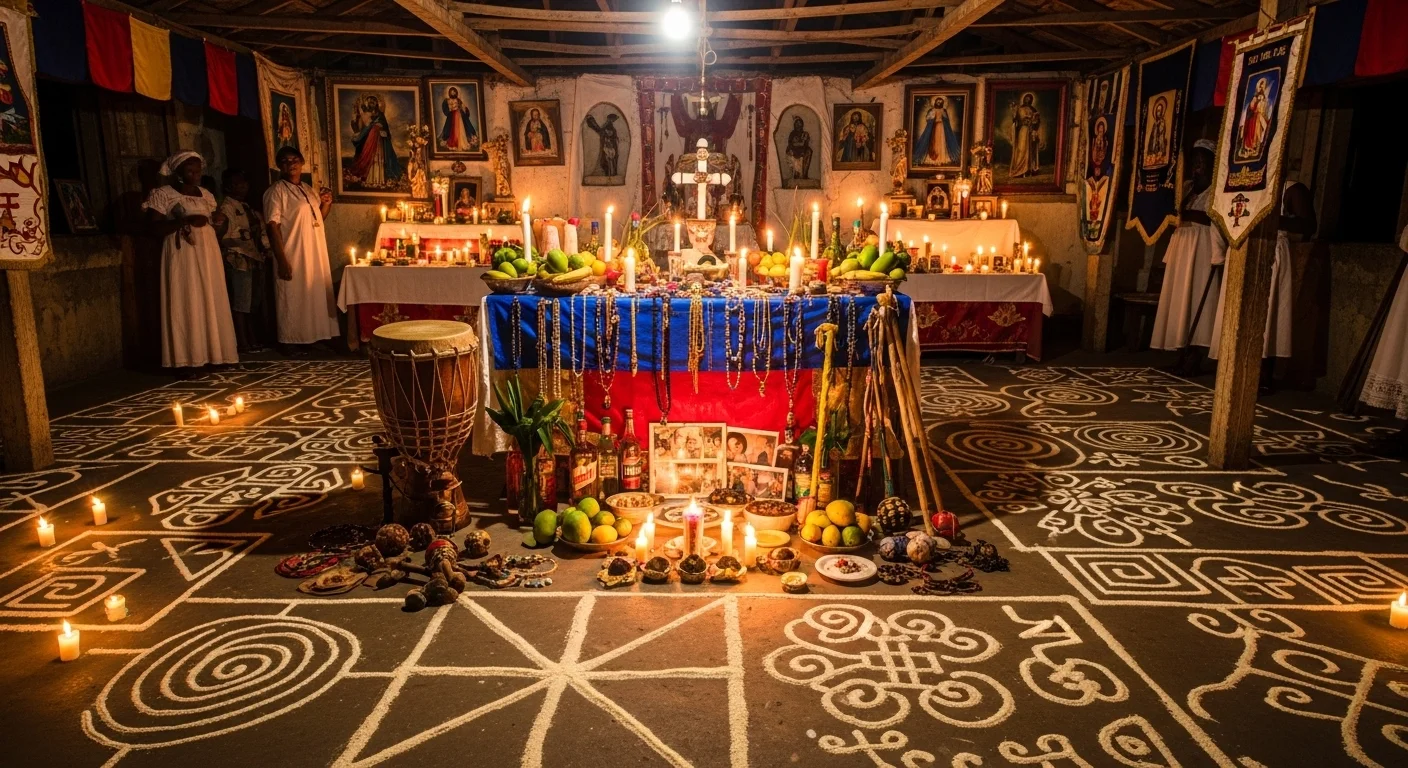
On the floor, vèvè (ritual drawings) may be traced to invite specific lwa, while drapo (sequined Vodou flags) and altars mark the spirits being honored.
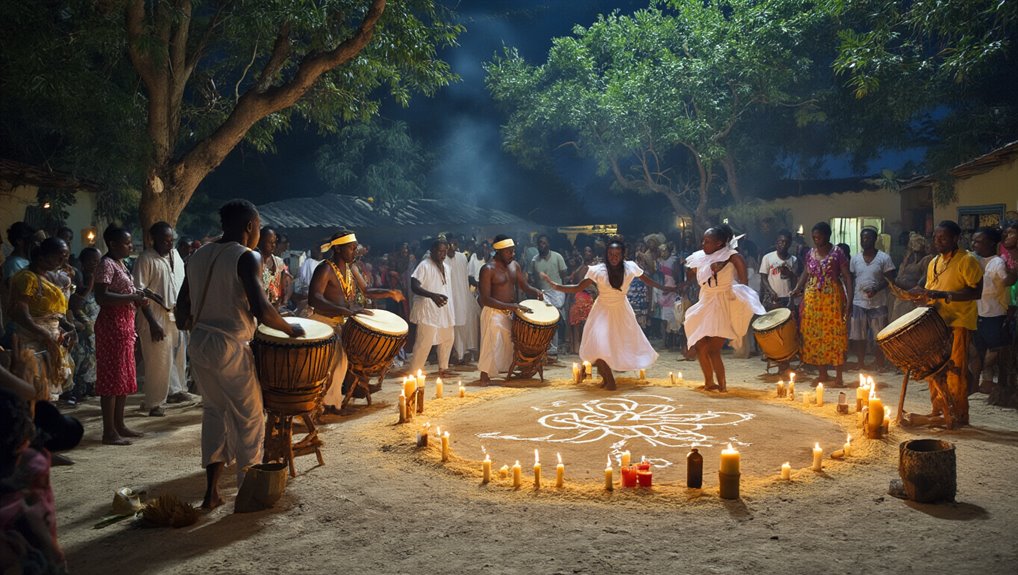
A service is led by a houngan (priest) or mambo (priestess), supported by initiates, singers, and drummers. Drumming patterns and call-and-response songs do not function as background music.
They organize the ceremony’s timing, signal transitions, and support the moment when a lwa may “ride” (possess) a devotee to offer counsel, correction, or blessing. Offerings express reciprocity, and healing work may be included when the service is requested for illness, protection, or major life events.
Key Takeaways
- Vodou ceremonies gather in the peristil, organized around the poto mitan, which anchors the ritual space.
- Vèvè, drapo, and altars help identify which lwa are being served and how the service is structured.
- A houngan or mambo leads, supported by initiates, singers, and drummers who control the ritual flow.
- Drumming and song structure the ceremony and can support possession, understood as service and communication, not spectacle.
- Offerings (and in some contexts sacrifice) express reciprocity, sustain community obligations, and can accompany healing and protection work.
Quick Glossary (So Nothing Feels “Unexplained”)
- Peristil: The ceremonial temple space where services are held.
- Poto mitan: The central post; a physical and symbolic center of the peristil.
- Vèvè: A ritual ground drawing used to honor and invite particular lwa.
- Drapo: Sequined ceremonial flags associated with lwa and the temple.
- Lwa: Spirits served in Vodou; intermediaries active in human affairs.
- Sevi lwa: “Serving the spirits,” the core idea of ritual reciprocity and relationship.
- Possession (“riding”): A lwa temporarily manifests through a person; the community treats it as communication and responsibility.
Haitian Vodou Ceremonies: What to Expect
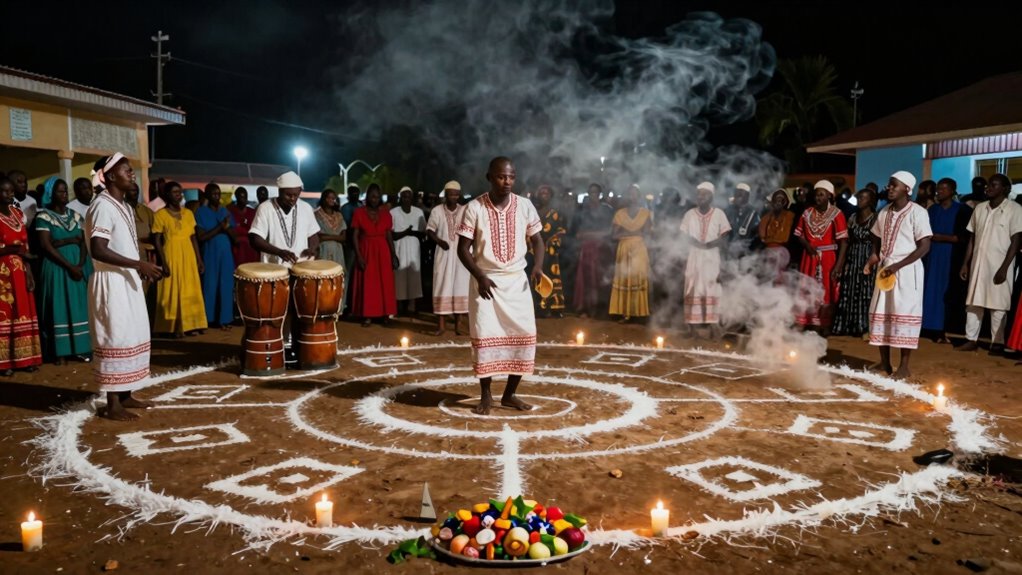
What might someone notice first? The peristil is arranged as sacred space rather than a “stage.” The poto mitan sits at the center, and the floor may be prepared with vèvè traced for specific lwa. Drapo may be displayed to honor the temple and the spirits being served.
A typical service uses call-and-response singing and steady drumming to coordinate movement and attention. When possession occurs, the community responds with protocol: giving space, listening, and following the leader’s directions. If you are describing this for readers, keep the framing consistent: possession is treated as service and message, not performance.
Who Leads and Attends a Vodou Service
A houngan or mambo directs the ceremony, decides sequence, and protects boundaries. Initiates support practical tasks (arranging offerings, maintaining order, assisting during possession). Drummers and singers are not “extras.” They are the engine that maintains rhythm, timing, and ritual transitions.
Attendance can include lakou family, neighbors, invited guests, and people seeking guidance. Some ceremonies are private or family-specific. Others are public-facing, but still governed by strict etiquette.
Opening the Service: Why Legba Is Addressed Early
Many ceremonies begin by greeting Papa Legba, often described as the lwa who opens the way for communication so other lwa can be served. This explains why “opening” songs and salutes matter: they are not filler, they are a ritual doorway.
The Peristil: Altar, Space, and Sacred Objects
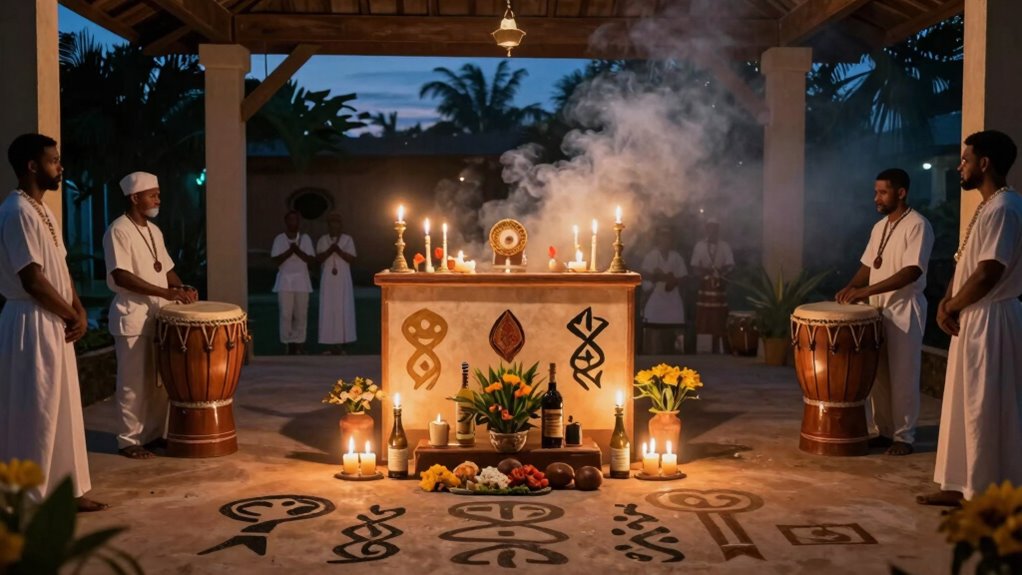
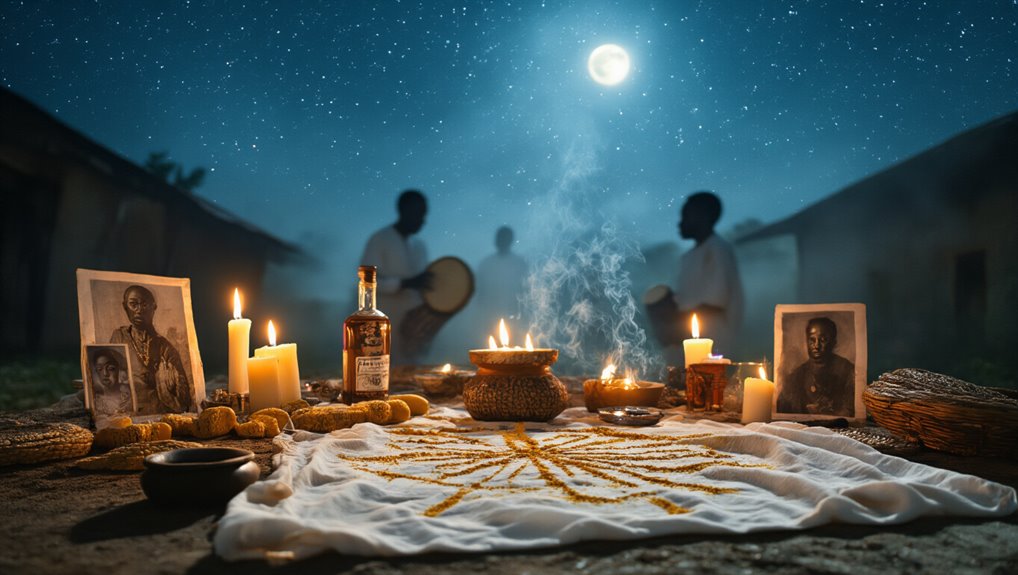
Within the peristil, altars hold candles, water, food, and liquor, depending on which lwa are being served. Drapo and other ceremonial objects can signal lineage, temple identity, and the lwa’s presence in the space. If you mention pot tèt, define it clearly as an initiation-related vessel associated with spiritual custody and obligation (do not treat it like decoration).
A Vodou Ceremony, Step by Step (Clear, Non-Sensational)
- Opening and boundaries: The leader greets the community, establishes rules, and prepares the space.
- Invocations and salutes: Songs and prayers formally begin service, often opening the way through Legba.
- Drawing and display: Vèvè may be traced and drapo displayed to honor specific lwa.
- Offerings: Food, drink, candles, and other items are presented according to temple protocol and lwa preference.
- Possession and counsel: If a lwa “rides” someone, messages and requests may be voiced within ritual order.
- Closing and cleanup: The community gives thanks, restores order, and may share food as part of communal care.
Drumming and Songs: How the Rhythms Work
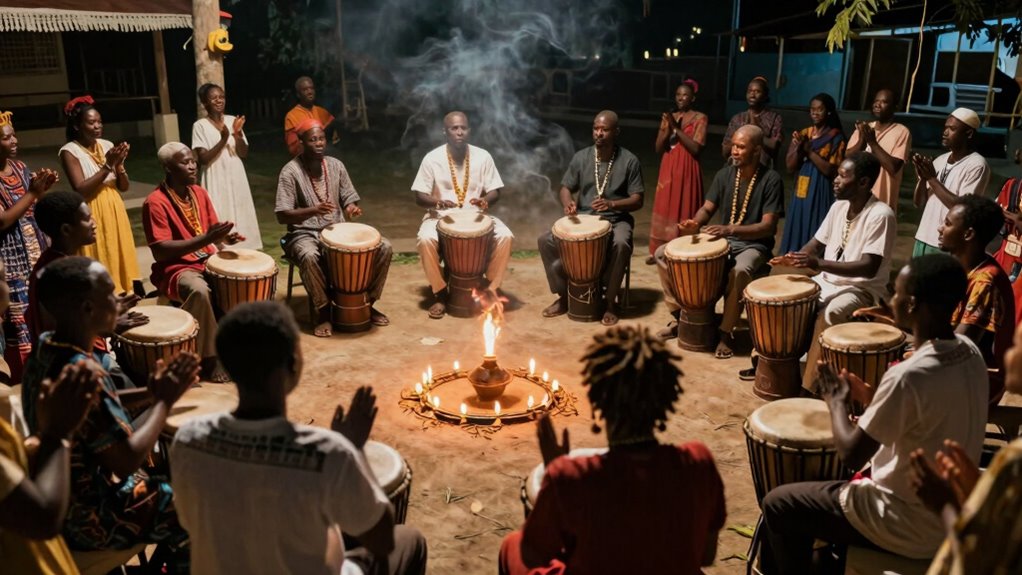
In Vodou, drumming and song function as an organizing system. Repeating patterns hold a steady “container” for movement and attention, then shift to mark transitions such as invocations, offerings, or moments of heightened spiritual focus. When you describe drumming, keep the claim precise: rhythms help coordinate the community and support the ritual environment in which possession can occur.
Spirit Possession: What “Serving the Lwa” Means
Possession is commonly described as a lwa “riding” a person. In Vodou framing, this is not treated as entertainment. It is a serious moment of obligation and communication, where the community responds with respect and follows the leader’s instructions. Afterward, people may describe receiving guidance, correction, or reassurance that strengthens family and lakou cohesion.
Offerings and Sacrifice: What Happens and Why
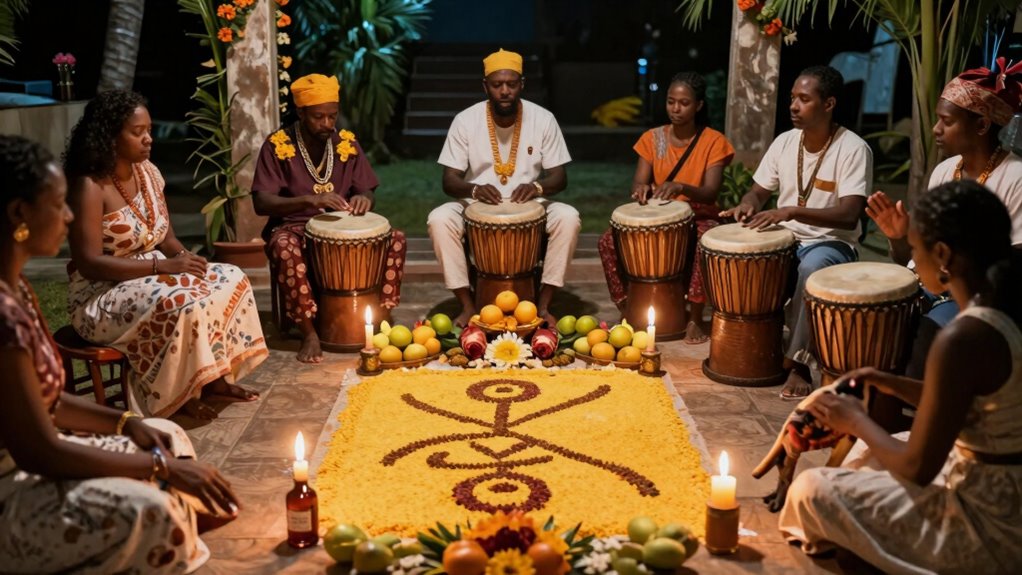
Offerings are a core language of reciprocity. Food and drink are presented as relationship, not “bribes.” In some contexts, animal sacrifice may occur, but it is handled within temple authority, with ethical expectations, legal constraints, and community purpose. Avoid “how-to” detail. Keep the explanation focused on meaning, responsibility, and communal distribution.
Healing, Protection, and Major Life Events
Many ceremonies are requested because someone needs healing, protection, clarity, or support during a life transition. Services can accompany births, unions, migration decisions, and funerary obligations, framing change inside communal care. When you link internally, keep it tight and relevant, for example:
- Religious syncretism in Haitian Vodou (saints, symbols, and overlap)
- Ancestors in Haitian Vodou (the dead, govi, family obligations)
- Healing in Haitian Vodou (baths, divination, herbal support)
Respect, Consent, and Etiquette in Ceremonies
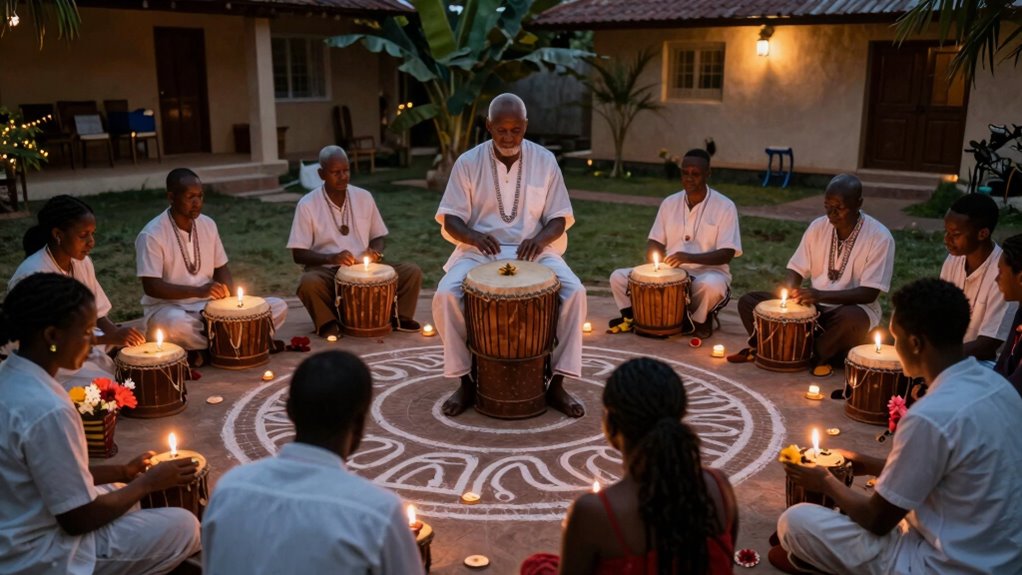
Visitors should treat the peristil as sacred space. Do not touch the poto mitan, vèvè, drapo, or altar items without explicit permission. Ask before photographing or recording. Many communities consider filming possession or altar work inappropriate without clear consent. If you are unsure, observe quietly and follow the houngan or mambo’s guidance.
Frequently Asked Questions
What Is a Haitian Vodou Ceremony?
It is a communal service in the peristil where participants serve the lwa through prayer, song, drumming, offerings, and protocol. It can be held for celebration, healing, protection, or major life transitions.
What Is a Vèvè, and Why Is It Drawn?
A vèvè is a ritual drawing traced on the floor to honor and invite specific lwa. It functions as a formal sign of which spirits are being served and how the ritual space is configured.
Can Tourists Photograph or Record Ceremonies?
Sometimes, but only with explicit permission from leadership and the consent of participants. Many ceremonies restrict recording, especially during possession or altar work.
How Long Do Ceremonies Last?
Length varies by community and purpose. Some services are shorter and focused. Others last many hours when multiple segments, offerings, and consultations are included.
How Do Vodou Ceremonies Differ by Tradition?
Differences often reflect lineage, local leadership, and “nations” (nanchon) of lwa being served. Rhythms, songs, offerings, and emphasis can change, while the shared structure of peristil, protocol, and service remains.
Conclusion
Haitian Vodou ceremonies bring communities together through shared responsibility to the lwa. In the peristil, prayer, drumming, and song organize ritual time, while etiquette and consent protect the space and the people within it. Possession is treated as service and communication, and offerings express reciprocity that sustains both spiritual and community life.
References
- Encyclopaedia Britannica: Lwa (Vodou)
- Encyclopaedia Britannica: Vèvè
- Fowler Museum at UCLA: Haitian Vodou Flags (Drapo)
- University of Illinois Press (context on poto mitan framing in Vodou study)
- University of Florida PDF (Legba addressed early in ceremony)