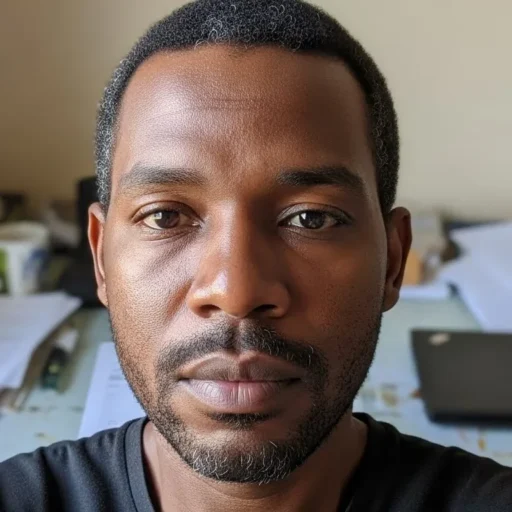
The history of 1990s hip-hop is often defined by the artists who stood in the spotlight, but behind the platinum records and sold-out tours stood a network of influential figures who operated in the shadows. Jacques Agnant, widely known as “Haitian Jack,” remains one of the most enigmatic and controversial characters from this golden era of rap music.
A man who bridged the gap between the gritty street life of Brooklyn and the corporate boardrooms of major record labels, Agnant played a pivotal role in the careers of several superstars.
His reputation in the music industry was dual-sided: he was respected as a capable executive and promoter who could navigate complex social circles, yet he was also feared for his alleged connections to street organizations. Agnant is perhaps best known for his complicated relationship with Tupac Shakur, a friendship that dissolved into one of the most famous feuds in hip-hop history.
Beyond the headlines and diss tracks, Agnant’s story offers a glimpse into the volatile intersection of entertainment and street culture during the late 20th century.
This article explores the life of Jacques Agnant, examining his rise in the New York club scene, his influence on the music industry, and the legal battles that eventually led to his deportation.
By understanding his trajectory, readers gain a deeper perspective on the events that shaped the East Coast hip-hop narrative and the real-life consequences of the “gangster rap” lifestyle.
Early Life and the Brooklyn Street Scene
Born in Haiti, Jacques Agnant migrated to the United States with his family, eventually settling in East Flatbush, Brooklyn. This neighborhood, known for its vibrant Caribbean community, was also a focal point during the turbulent years of the 1980s and 1990s.
Like many immigrants of his generation, Agnant had to navigate a new culture while dealing with the economic hardships that plagued inner-city New York during the crack cocaine epidemic.
Agnant adapted quickly to his environment, earning a reputation for toughness and business acumen. While details of his early adolescence are sparse, it is widely documented that he became immersed in the street economy of Brooklyn. This period was crucial in forming the persona that would later command respect in the music industry. In the world of 1990s hip-hop, “street credibility” was a valuable currency, and Agnant possessed it in abundance.
His transition from street activities to the entertainment sector began through nightlife promotion. Agnant became a fixture in upscale Manhattan nightclubs, serving as a gatekeeper for VIP sections where drug dealers, celebrities, and business moguls mingled.
This unique position allowed him to build a rolodex of powerful contacts, effectively becoming a liaison between the underground economy and the legitimate music business.
Rise as a Music Executive and Promoter
By the mid-1990s, Agnant had formalized his role in the entertainment industry. He was not merely a hanger-on but an active participant in the business of music. He became associated with the rap label Undeas Recordings, which was led by his close associate Lance “Un” Rivera. At Undeas, Agnant worked in Artists and Repertoire (A&R) and management, helping to shape the careers of developing artists.
His influence extended beyond hip-hop. Agnant was known to move in diverse circles, famously associating with pop icon Madonna during a period when she was exploring urban culture. This connection highlighted Agnant’s ability to traverse different social stratospheres, making him a valuable asset to executives who needed someone with genuine influence and the ability to provide security and access.

During this time, Agnant also managed a management and promotion company called Addictific. His role often involved ensuring that artists were safe in volatile environments and facilitating introductions between talent and investors.
Industry insiders from that era often describe Agnant as a charming but intimidating figure, someone whose approval could open doors in New York City that remained closed to others.
The Tupac Shakur Connection
The relationship between Jacques Agnant and Tupac Shakur is central to the lore of 1990s rap. The two met at a nightclub in New York, reportedly introduced by mutual associates. At the time, Shakur was filming the movie Above the Rim and was looking to deepen his connection to the New York street element to enhance his persona. Agnant, with his authentic background and commanding presence, became a mentor figure of sorts to the rapper.
For a brief period, the two were inseparable. Agnant introduced Shakur to the high-stakes world of New York nightlife, providing him with protection and access to exclusive venues. Observers noted that Shakur seemed to emulate Agnant’s style and demeanor.
This mentorship dynamic, however, was fragile. As Shakur’s fame grew, so did the scrutiny on his associations, and the line between friendship and business began to blur.
The dynamic shifted dramatically following legal troubles in 1993. Both men, along with others, were implicated in a sexual abuse case involving a woman at the Parker Meridien Hotel. This legal crisis placed immense pressure on their relationship. As the legal proceedings advanced, paranoia and mistrust began to fester, laying the groundwork for a bitter fallout that would play out in the public eye.
The Quad Studios Shooting and “Against All Odds”
The deterioration of the friendship reached a critical point following the infamous shooting at Quad Recording Studios in November 1994. Tupac Shakur was ambushed, beaten, and shot five times in the lobby of the studio.
While Agnant was not present in the lobby during the attack, Shakur became convinced that the incident was a setup orchestrated by those he had trusted, including Agnant and James “Jimmy Henchman” Rosemond.
Shakur’s suspicion was fueled by the belief that Agnant had the influence to control who entered and exited such spaces. Following the shooting, Shakur publicly accused Agnant of being involved in the conspiracy to harm him. These accusations were immortalized in the song “Against All Odds,” released on the posthumous album The Don Killuminati: The 7 Day Theory. In the track, Shakur explicitly names “Haitian Jack,” alleging betrayal and cooperation with government authorities.
Agnant has consistently denied any involvement in the Quad Studios attack. In various interviews given years later, he maintained that he had love for Shakur and that the rapper was manipulated by others into believing Agnant was an enemy.
Despite Agnant’s denials, the lyrics cemented his villainous status in the eyes of Shakur’s massive fanbase, permanently altering his public image.
Legal Battles and the Informant Allegations
The legal proceedings regarding the 1993 sexual abuse charges at the Parker Meridien Hotel were complex and controversial. Both Shakur and Agnant faced serious charges. However, a significant turning point occurred when Agnant’s case was severed from Shakur’s.
This meant they would be tried separately. Shakur viewed this legal maneuver as evidence that Agnant was cooperating with the prosecution or had made a deal with federal authorities.

The rumor that Agnant was a government informant—a “snitch” in street parlance—became a pervasive narrative. Shakur believed that Agnant’s connections to law enforcement allowed him to avoid the harsh penalties that Shakur himself was facing. Agnant eventually accepted a plea deal that resulted in a misdemeanor conviction and no jail time, whereas Shakur was convicted of sexual abuse and sentenced to prison. This disparity in sentencing further fueled the conspiracy theories.
Legal experts have noted that severance of trials is a standard procedure in cases with multiple defendants, especially when their defense strategies might conflict. However, in the emotionally charged atmosphere of the hip-hop “East Coast vs. West Coast” rivalry, technical legal explanations did little to quell the rumors. Agnant has vehemently denied ever being an informant, citing his later deportation as proof that he received no special protection from the government.
Deportation and Life in the Dominican Republic
After the 1990s ended, Agnant continued to operate in the entertainment and nightlife sectors, but his legal troubles were far from over. In 2004, he was involved in a violent altercation at a nightclub on Melrose Avenue in Los Angeles. The incident involved the shooting of a man, leading to Agnant’s arrest and subsequent conviction. This conviction had severe consequences due to his immigration status.
Despite living in the United States for decades, Agnant was a Haitian citizen. Under U.S. immigration law, non-citizens convicted of aggravated felonies are subject to deportation.
In 2007, after serving time for the shooting, Jacques Agnant was deported to Haiti. This marked the end of his physical presence in the American music industry, although his legend continued to circulate.
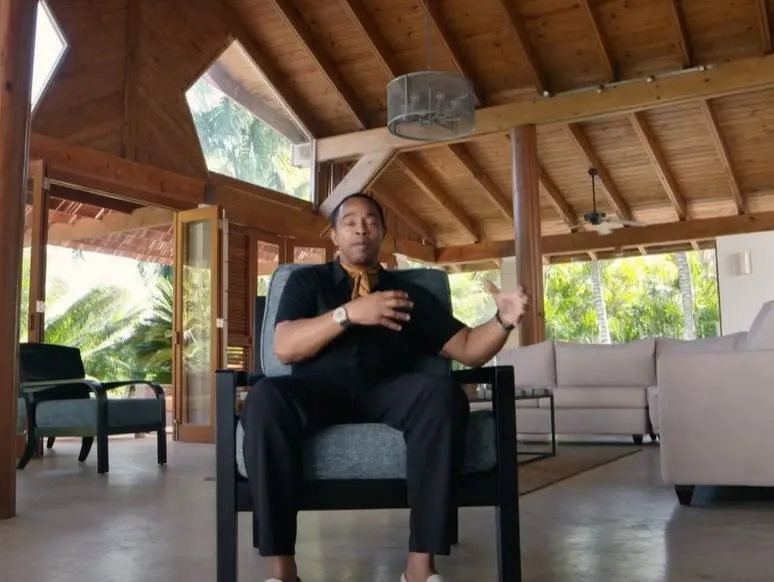
Reports indicate that Agnant eventually relocated to the Dominican Republic, which shares the island of Hispaniola with Haiti. In recent years, he has re-emerged through digital platforms, giving interviews to documentaries and podcasts.
In these appearances, he offers his perspective on the golden era of hip-hop, often expressing regret over how his relationship with Tupac ended while maintaining his innocence regarding the violent accusations leveled against him.
Cultural Impact and Media Portrayal
The figure of Haitian Jack has transcended reality to become a character archetype in hip-hop cinema and literature. He is frequently depicted in biopics and series centered on Tupac Shakur, such as the film All Eyez on Me and the series Unsolved: The Murders of Tupac and the Biggie.
In these dramatizations, he is often portrayed as the embodiment of the dangerous allure of the streets—a sophisticated but lethal figure.
Beyond fictionalized portrayals, Agnant’s life serves as a case study for the “hip-hop police” phenomenon, where law enforcement agencies aggressively monitored rap artists and their entourages. His story highlights the precarious position of industry insiders who maintained ties to the illicit economy.
For many cultural historians, Agnant represents a specific era when the boundaries between organized crime and the music business were porous.
Today, Agnant is viewed by some as a survivor of a deadly era that claimed the lives of many of his peers. His willingness to speak on platforms like The Gulag has provided oral history that fills in the gaps of 1990s rap lore.
While he remains a polarizing figure, his impact on the trajectory of East Coast hip-hop and the career of Tupac Shakur is undeniable.
FAQ
Who is Haitian Jack?
Haitian Jack, born Jacques Agnant, is a former music executive, club promoter, and influential figure in the 1990s New York hip-hop scene. He is best known for his association with Tupac Shakur, Madonna, and Wyclef Jean, as well as his work with the record label Undeas Recordings.
What happened between Haitian Jack and Tupac Shakur?
The two were initially close friends, with Agnant serving as a mentor to Shakur in the New York street scene. However, their relationship soured after they were co-defendants in a sexual assault case in 1993. The friendship turned into a bitter feud after Shakur accused Agnant of being involved in the 1994 Quad Studios shooting and labeled him a government informant.
Was Haitian Jack involved in the Quad Studios shooting?
Tupac Shakur publicly accused Agnant of orchestrating the 1994 robbery and shooting at Quad Studios in the song “Against All Odds.” However, Agnant has consistently denied these claims. No concrete evidence was ever presented in court linking Agnant to the shooting, and he was never charged with the crime.
Why was Haitian Jack deported?
Jacques Agnant was deported from the United States in 2007. The deportation followed a prison sentence for a 2004 shooting incident at a Los Angeles nightclub. Under U.S. immigration laws, his conviction for an aggravated felony led to the revocation of his residency status and his removal to Haiti.
Is Haitian Jack a government informant?
Rumors that Agnant was an informant stemmed from the fact that his legal case in 1993 was severed from Tupac Shakur’s, and he received a lenient plea deal. Shakur believed this indicated cooperation with federal authorities. Agnant denies these allegations, pointing to his eventual imprisonment and deportation as evidence that he did not have federal protection.
Where is Haitian Jack now?
Following his deportation to Haiti, reports suggest that Agnant settled in the Dominican Republic. He has occasionally appeared in interviews and documentaries from that location, discussing his past experiences in the American music industry.
What is Haitian Jack’s net worth?
Estimating Jacques Agnant’s current net worth is difficult due to his departure from the U.S. and the private nature of his current business dealings. During the 1990s, he was a successful executive and promoter, but legal fees and asset seizures likely impacted his wealth. Speculative estimates often range between $1 million and $5 million, though these figures are not verified by financial documents.