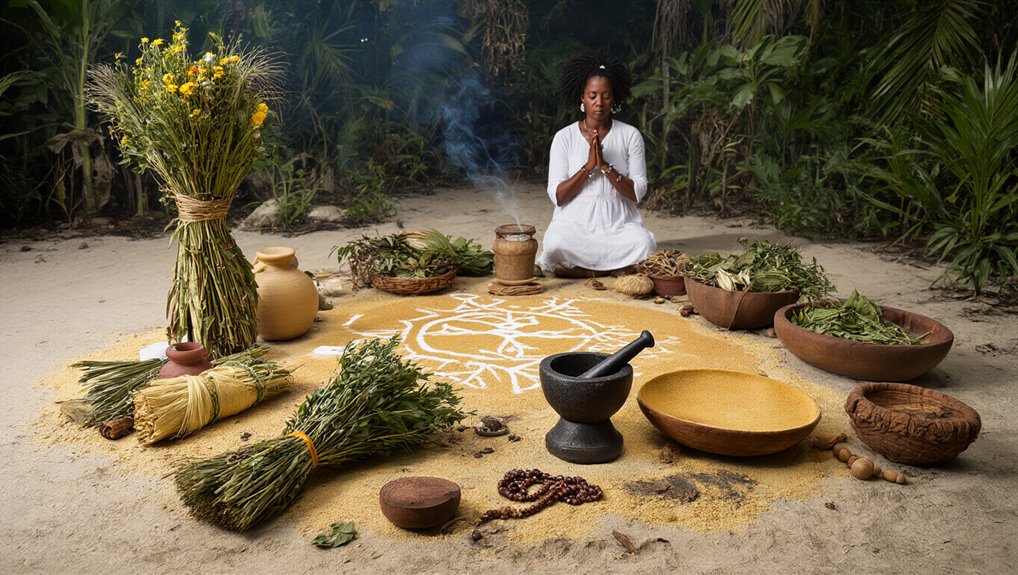
Healing in Haitian Vodou often frames illness as a disruption in physical wellbeing and in the social and spiritual relationships that keep a person “in balance” with family, community, and the spirits (lwa).
In this view, a fever, lingering sorrow, repeated misfortune, or sudden “blocked” luck may have medical causes, spiritual causes, or both, so care can be layered: herbal support, cleansing, prayer, and community protection alongside clinic-based treatment when needed.
Important: This post explains cultural and religious practices. It is not medical advice. For severe symptoms, emergencies, pregnancy-related concerns, or mental health crises, seek qualified medical care right away.
Key Takeaways
- Vodou healing often treats illness as a disruption of balance across body, spirit, and community, not only a physical condition.
- Bondye is commonly described as distant, while everyday help is sought through lwa (spirit intermediaries) and through community ritual support.
- Houngan (priests) and manbo (priestesses) may use divination to ask what is “behind” an illness, including neglected obligations, social conflict, or spiritual offense.
- Doktè fèy (“leaf doctors” or herbal specialists) may support care with inherited plant knowledge, often paired with prayer, cleansing, and protective rites.
- Common ritual tools include ritual baths, lave tèt (“head-washing” for cleansing and spiritual reset), songs, prayers, and offerings…with Papa Legba typically invoked first to open communication.
How Haitian Vodou Healing Explains Illness and Balance
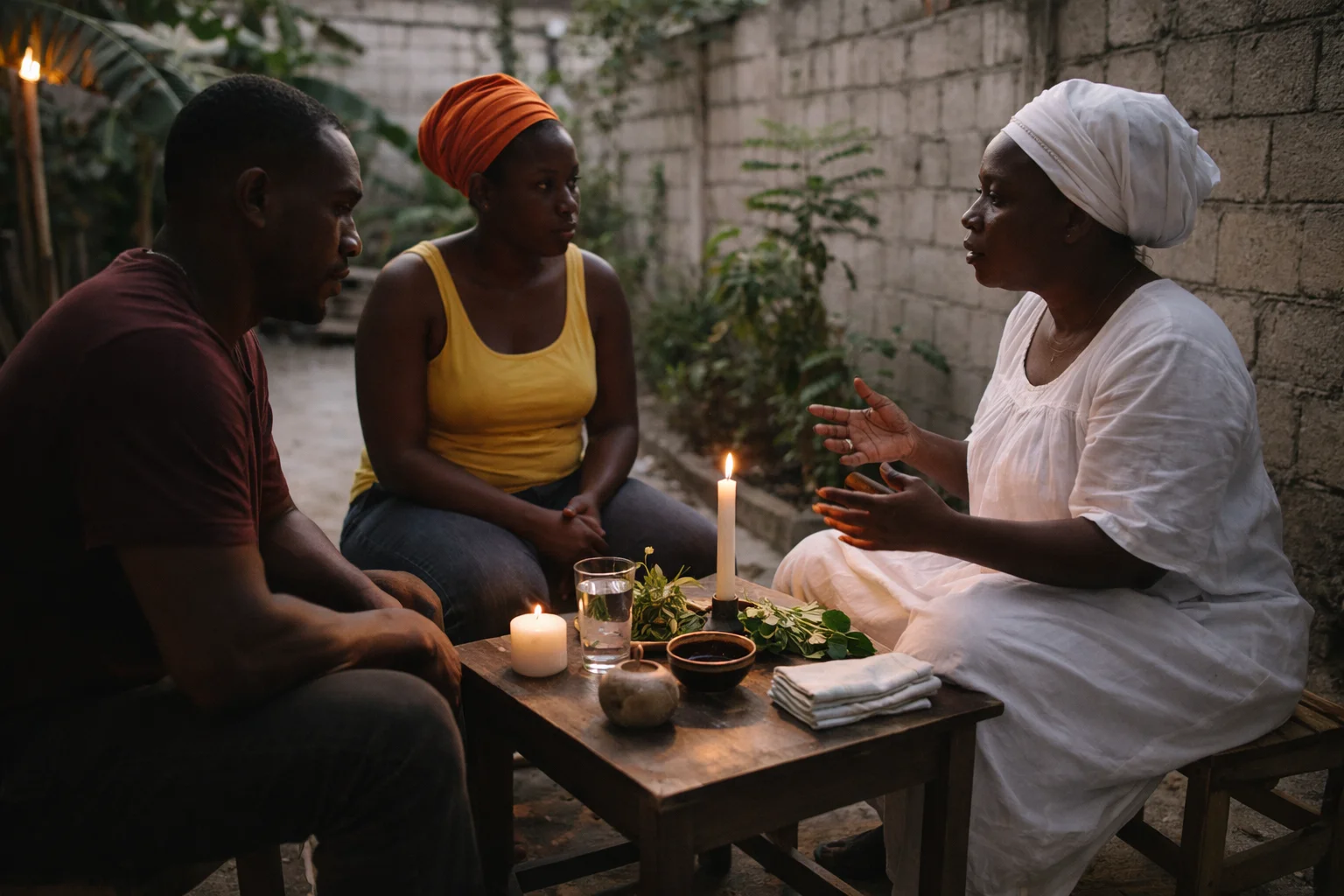
Why might a fever, bad luck, or lingering sorrow be treated as more than a purely physical problem in Haitian Vodou? Many practitioners describe illness as something that can involve the body, but also relationships: tensions in the home, unresolved obligations, spiritual exposure, or a need for cleansing and protection. In that frame, healing is not only “symptom removal”…it is the restoration of alignment.
Practically, this often leads to a simple diagnostic logic with three overlapping buckets:
- Physical strain: infection, exhaustion, dehydration, chronic pain…the body needs support and medical care when appropriate.
- Social strain: conflict, envy, isolation, grief, family pressure…the community relationship needs repair and protection.
- Spiritual strain: neglected obligations, ritual impurity, unwanted exposure, or a spirit-related concern…the person needs cleansing and re-ordering.
A consultation with an houngan or manbo may involve divination (a structured way of asking what is causing the trouble and what response is required). The goal is not to replace biomedicine, but to clarify meaning, responsibility, and next steps…what must be cleaned, repaired, offered, promised, or protected.
Divination and Diagnosis: How a Healing Case Gets Read
Divination in Vodou is often treated as “diagnosis” in a moral and spiritual sense: identifying what the illness is connected to, what has been neglected, and which relationship needs attention. Depending on house tradition and region, a healer may ask questions, pray, interpret patterns, and confirm obligations and taboos before prescribing work.
In many accounts, the diagnosis is less “one cause” and more a map: what is physical, what is social, what is spiritual…and what must happen first. That sequencing matters. For example, cleansing may come before offerings, and offerings may come before a protection rite, depending on what the reading indicates.
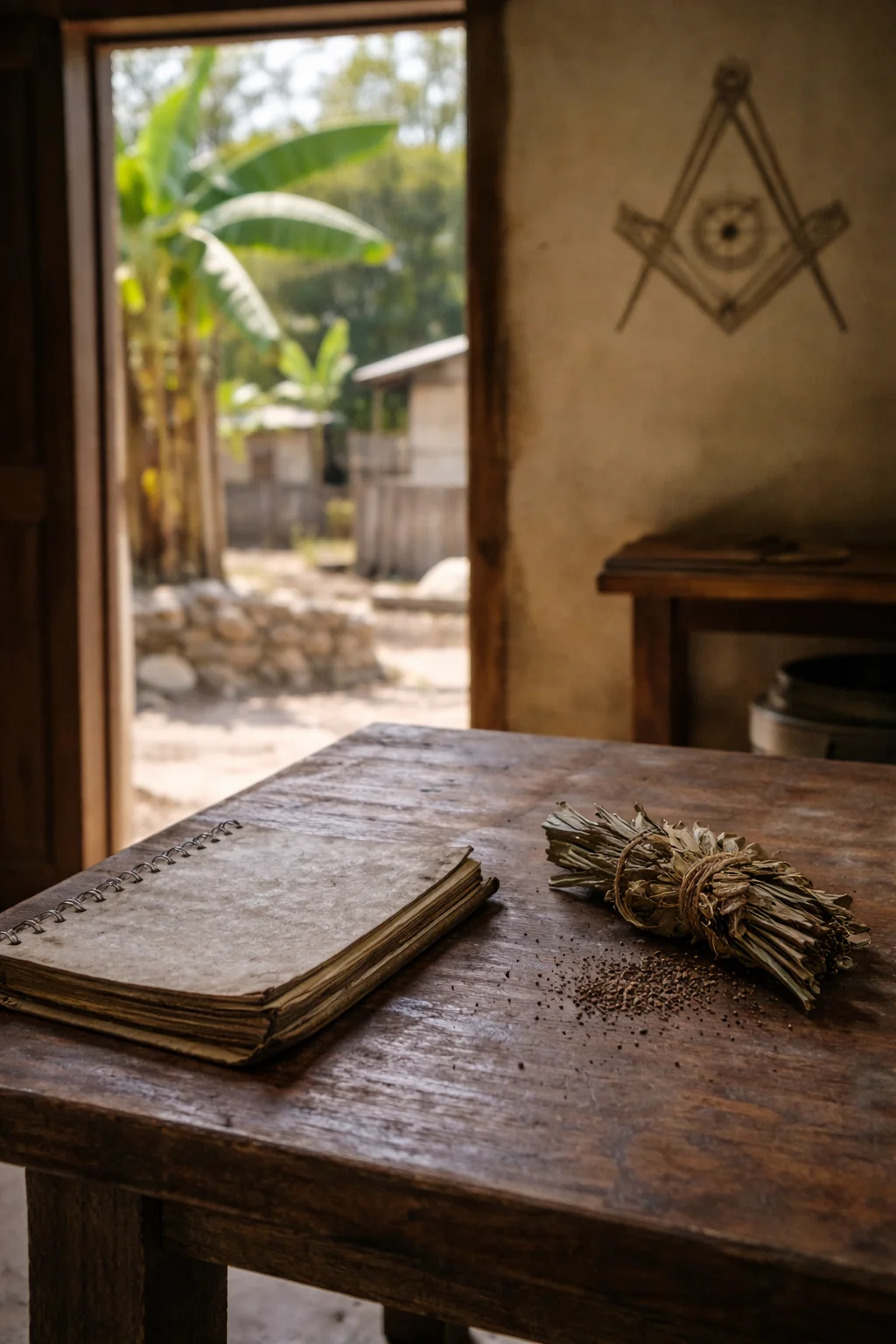
Haitian Vodou Herbal Remedies: Leaves, Roots, Teas
Once divination identifies an illness as a problem of imbalance or spiritual strain, healing often moves into the plant world…where leaves, roots, and oils can carry both practical and ritual meaning. Many families distinguish between everyday home remedies and specialized work guided by a healer.
It is common to see preparations like:
- Infusions and washes: leaves steeped in water for bathing and cleansing rather than “drinking for a cure.”
- Macerations: roots or leaves soaked in water or kleren (Haitian sugarcane spirit) for ritual use.
- Oils and rubs: some traditions use castor oil (lwil maskriti / palmaskriti) as part of soothing rubs and cleansing work.
Safety note: Plant-based remedies can be harmful if misidentified or used incorrectly, and alcohol-based preparations are not safe for everyone. This is why serious cases are typically guided by experienced practitioners and may be paired with medical care.
Haitian Vodou Rituals for Healing: Baths, Prayers, Offerings
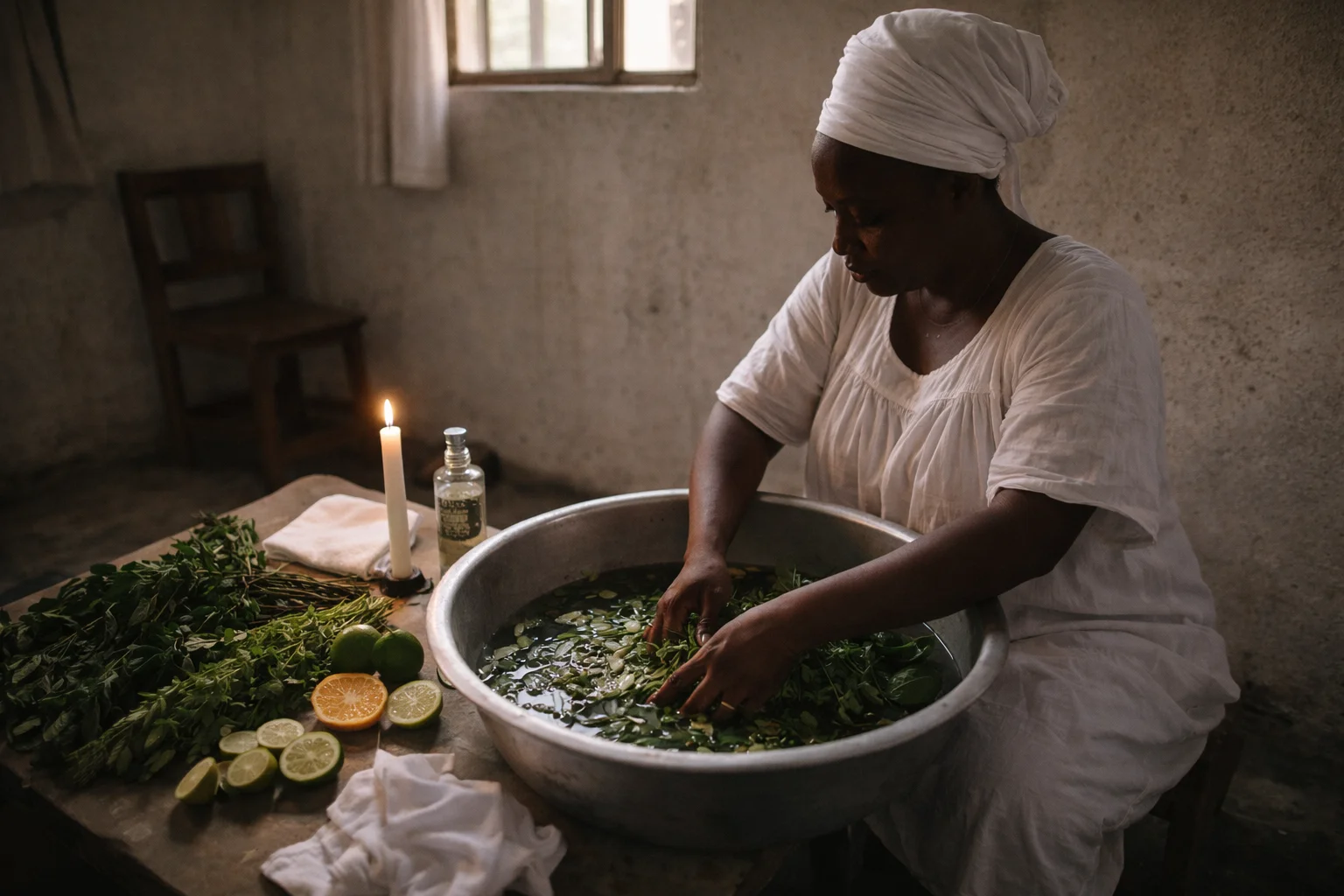
Many healing sequences rely on cleansing to restore “coolness” and stability after stress, fear, conflict, or spiritual exposure. Cleansing can involve ritual baths (beny) with prayers, specific herbs, and careful disposal of used water so the problem is not carried back into the home.
Lave tèt (literally “wash the head”) is often described as a focused cleansing and reset for the person’s spiritual clarity and protection. It can be part of ongoing spiritual maintenance in some traditions and can also appear in initiation contexts depending on the house.
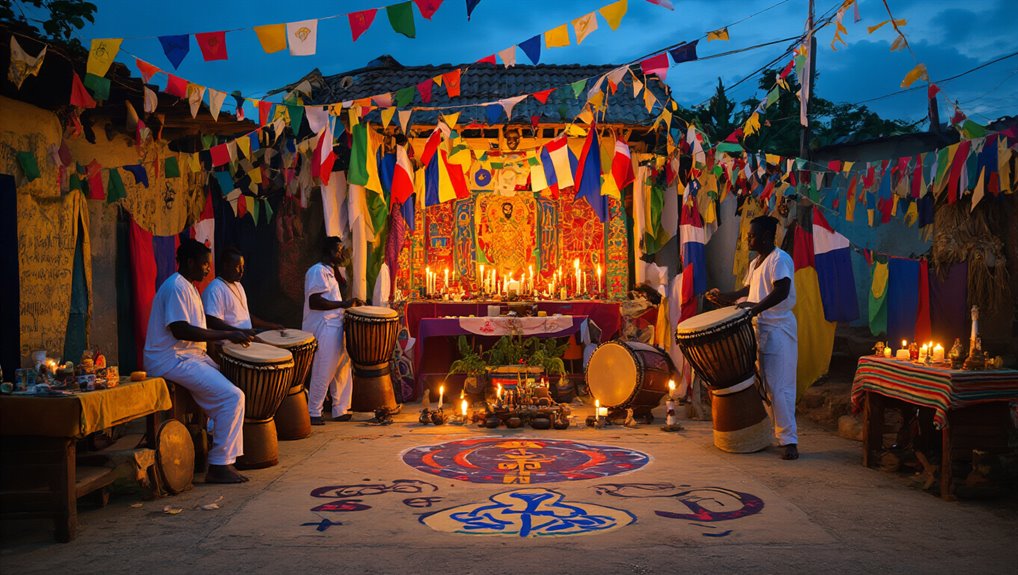
Ritual work commonly begins by invoking Papa Legba…the opener of the way, asked to allow communication and order. From there, a healer may address specific lwa tied to the person’s situation, followed by offerings that are less “payment” and more relationship: acknowledgment, thanks, repair, and renewed obligation.
If you want an internal link here, the only one that fits naturally is your syncretism post (because Catholic prayers and saint imagery sometimes show up in healing work): Religious syncretism in Haitian Vodou.
Vodou Healers and Support: Manbo, Houngan, Doktè Fèy, Community
Healing is rarely “solo.” A houngan or manbo may lead consultations, prayers, and prescribed rites, while a doktè fèy may specialize in herbal knowledge. In many communities, neighbors and family also matter: people help gather materials, prepare food, accompany the client, and maintain boundaries during cleansing and protection work.
This community layer is not decoration…it is part of how “balance” is restored. Illness is not only inside the body in this worldview. It is also inside relationships.
Frequently Asked Questions
What Is Vodou Healing?
Vodou healing is a set of religious and community practices that interpret illness through both physical wellbeing and spiritual-social balance, using divination, cleansing, prayer, offerings, and (in many traditions) herbal support. It can operate alongside clinic-based medicine rather than replacing it.
Is Vodou Healing Compatible With Modern Medicine?
Often, yes. Many Haitians move between home remedies, religious support, and medical clinics depending on the severity of symptoms and access to care. A culturally grounded approach treats spiritual work as meaning, protection, and relationship repair…while still seeking medical treatment for emergencies and serious illness.
What Is Lave Tèt?
Lave tèt means “wash the head.” In many Vodou contexts it refers to a focused cleansing intended to restore clarity, calm, and protection. The exact form varies by temple and lineage, so it is best understood as a house-specific practice rather than a single fixed recipe.
How Do I Find a Legitimate Houngan or Manbo and Avoid Scams?
Look for referrals through trusted Haitian community networks or established temples (hounfò). A legitimate healer typically explains the process, clarifies costs and expectations up front, and does not pressure you with fear-based threats or “instant miracle” guarantees.
Can Vodou Healing Be Practiced Respectfully Outside Haiti and the Diaspora?
It can…but it should not be treated as a DIY curiosity. Respectful practice centers consent, lineage guidance, and accountability: learn from initiated teachers, avoid claiming identities or spirits you do not have the right to claim, and stay within local laws and safety norms.
How Do Vodou Healers Address Mental Health Crises or Trauma?
Some healers focus on calming, cleansing, prayer, and community support while interpreting distress through spiritual and social strain…but severe depression, suicidality, psychosis, or violent crisis requires urgent professional help. In practice, many families combine religious support with medical and psychological care when available.
Conclusion
Haitian Vodou healing often frames illness as a disruption of balance between body, spirit, and community…and responds with layered care. Herbal knowledge can support the body, while cleansing, prayer, and offerings address spiritual and relational strain.
Houngans, manbos, doktè fèy, and neighbors help guide the process, reminding people they are not alone. Together, medicine and ritual restore harmony, affirm identity, and strengthen resilience through shared tradition and compassionate support.
References
- https://pubmed.ncbi.nlm.nih.gov/22314676
- https://revista.drclas.harvard.edu/the-coolness-of-cleansing
- https://content.ucpress.edu/catalogs/univ_california_press_s20_lo.pdf (catalog listing for Mama Lola)
- Alfred Métraux, Voodoo in Haiti (foundational ethnography).
- Karen McCarthy Brown, Mama Lola: A Vodou Priestess in Brooklyn (ethnography; diaspora).
- Maya Deren, Divine Horsemen: The Living Gods of Haiti (classic ethnographic account and visual anthropology).