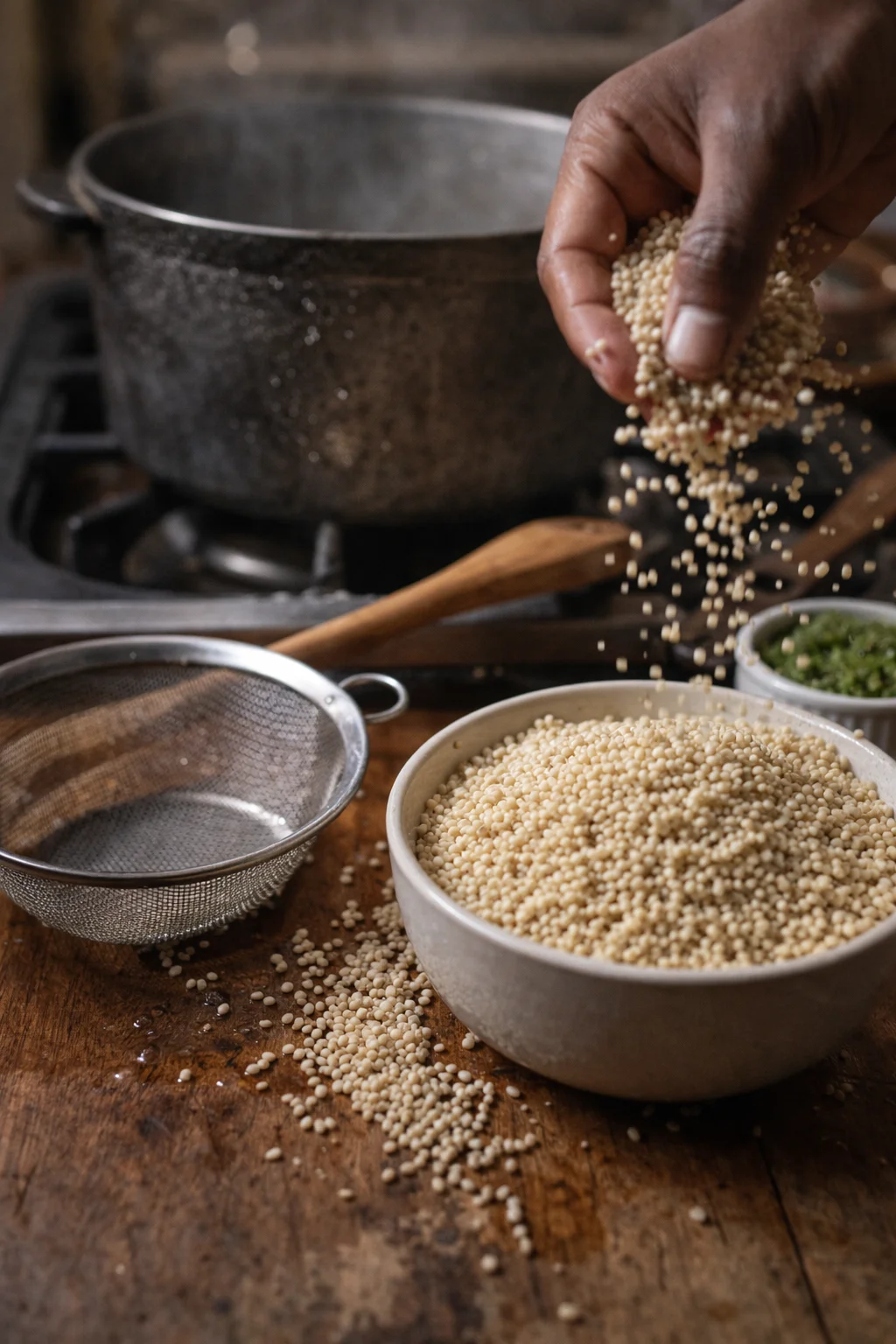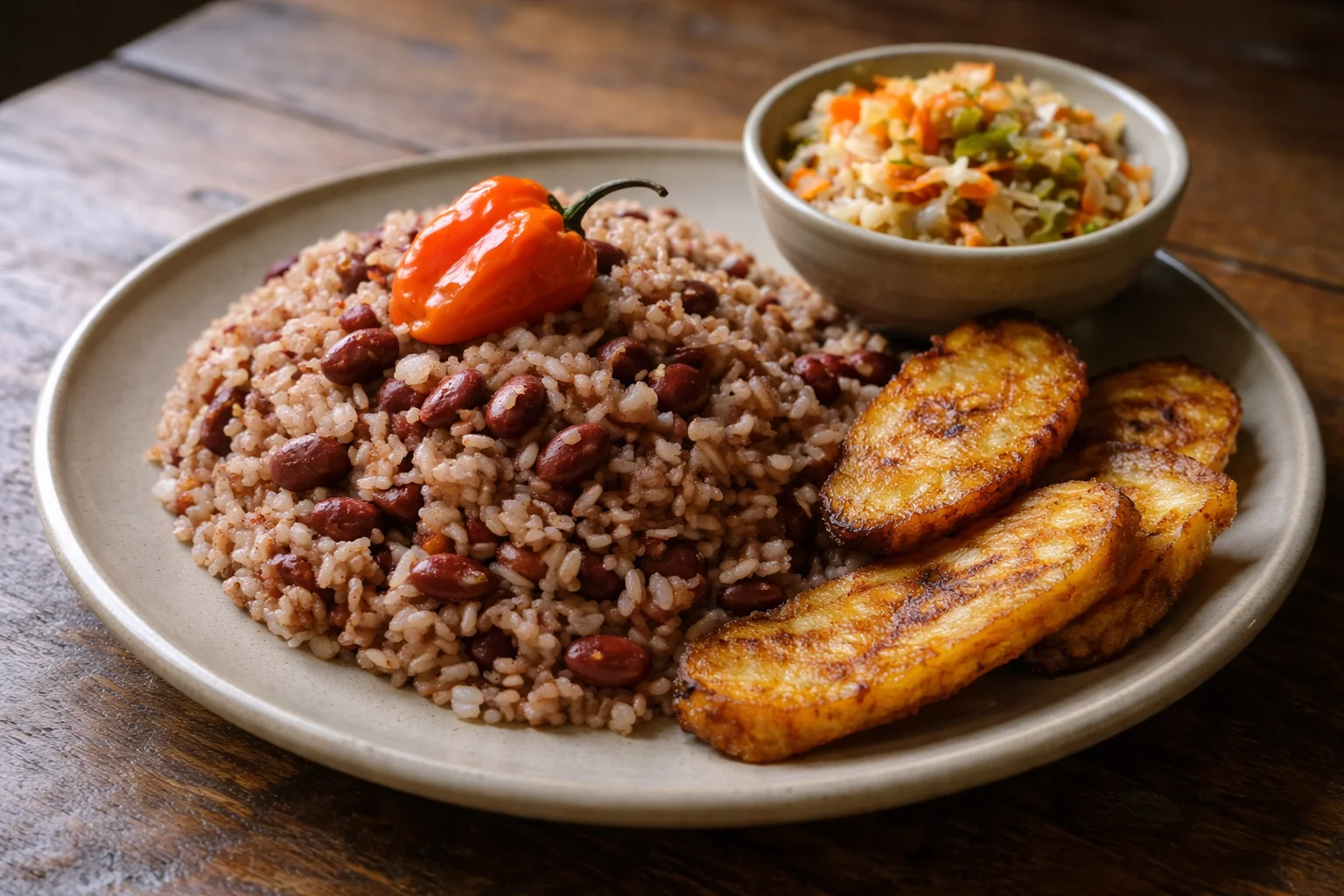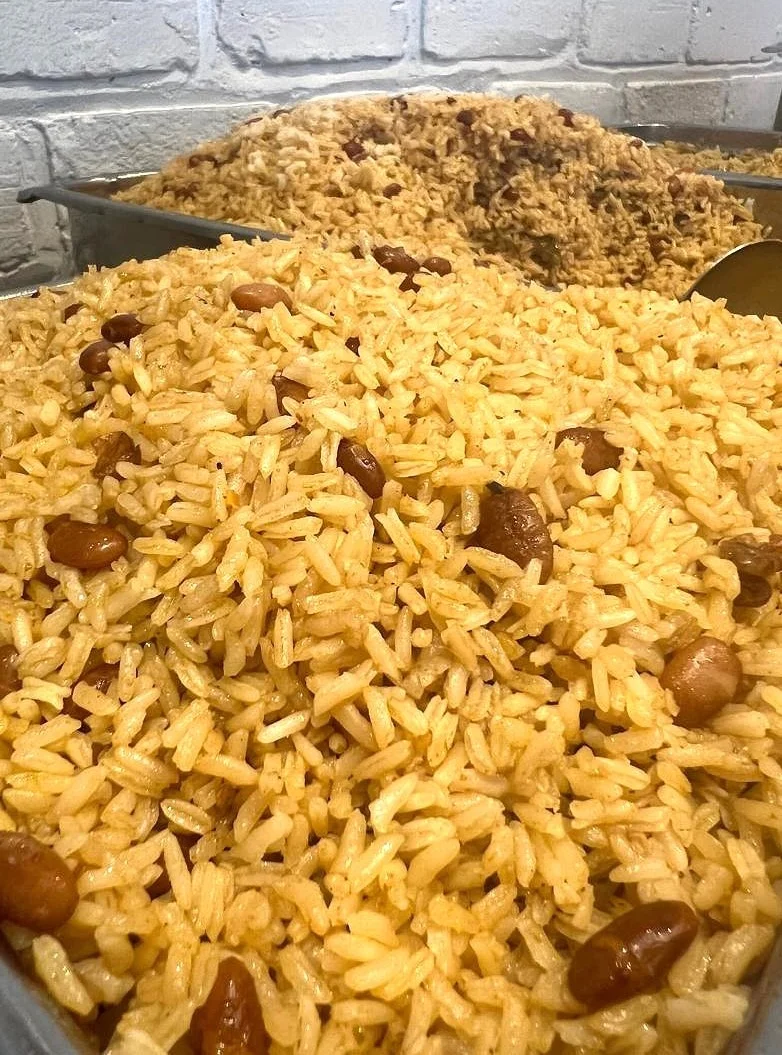
Haitian rice and beans, known locally as diri kole ak pwa, is the quintessential staple dish of Haitian cuisine. Unlike other Caribbean versions where rice and beans are served side-by-side, the Haitian method involves cooking the beans and rice together in a single pot.
This process allows the jasmine rice or basmati rice to absorb the deep colors and hearty flavors of the beans and rice liquid. The flavor profile is defined by epis (a vibrant Haitian seasoning base), clove, thyme, and often coconut milk for richness.
Whether using red kidney beans, black beans (ak pwa nwa), or pinto beans, the dish is characterized by its savory depth and aromatic scent. According to culinary historians, it represents a fusion of African techniques and indigenous Caribbean ingredients, making it an essential part of every Haitian food experience.
What Is Haitian Rice and Beans? (Complete Overview)
In the heart of every Haitian home, you will find a pot of diri ak pwa. To understand this dish is to understand Haitian culture itself. Diri (rice) and pwa (beans) are more than just sustenance; they are a symbol of national identity. While many outsiders refer to it generally as red beans and rice, the authentic name diri kole ak pwa literally translates to “rice stuck with beans.”
The magic begins with the seasoning. Epis, the foundation of Haitian recipes, is a ground pestle-and-mortar or blended mix of bell pepper, garlic, scallions, and herbs. When you sauté this mixture in oil before adding your dry beans or canned beans, the kitchen fills with an unmistakable aroma. The flavor profile is further enhanced by scotch bonnet pepper (kept whole for aroma rather than heat), bouillon, and adobo.
While red beans are the most common choice, variations like diri ak pwa nwa (rice and black beans) are equally beloved. The texture is paramount; the tender beans must remain intact while the rice remains fluffy. To achieve this, some chefs prefer soaking the beans overnight, while others use an Instant Pot to speed up the process. Whether it’s a simple side dish or the main event, this rice dish is the backbone of the Haitian table.
Haitian Food Rice and Beans
When discussing Haitian food rice and beans, one cannot overlook the regional variations that define the landscape. In the northern regions of Haiti, you might find rice and beans with coconut, where coconut milk replaces a portion of the broth or water. This creates a creamier, slightly sweeter diri ak pwa that pairs beautifully with spicy fish.
The choice of grain also matters. While white rice is used in many households, jasmine rice is often preferred for its floral notes that complement the clove and thyme used in the pot. If you want to make Haitian rice and beans that taste truly authentic, you must master the “scorched” bottom, known as gratin, which many consider the best part of the meal.
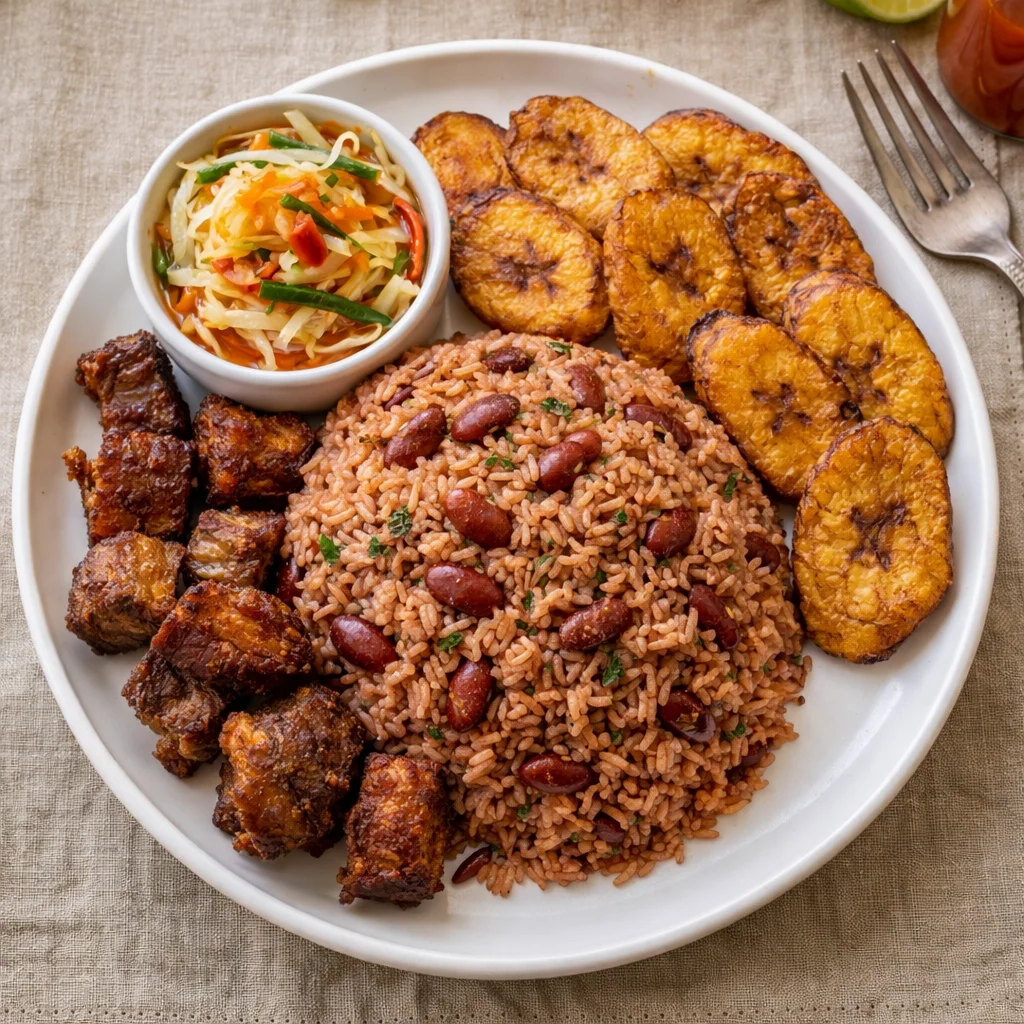
In a typical Haitian dish, diri kole is served alongside griot (fried pork) or poulet en sauce (stewed chicken). It is almost always accompanied by pikliz, a spicy pickled vegetable slaw that cuts through the richness of the beans in this recipe.
Haitian Rice and Beans Recipe
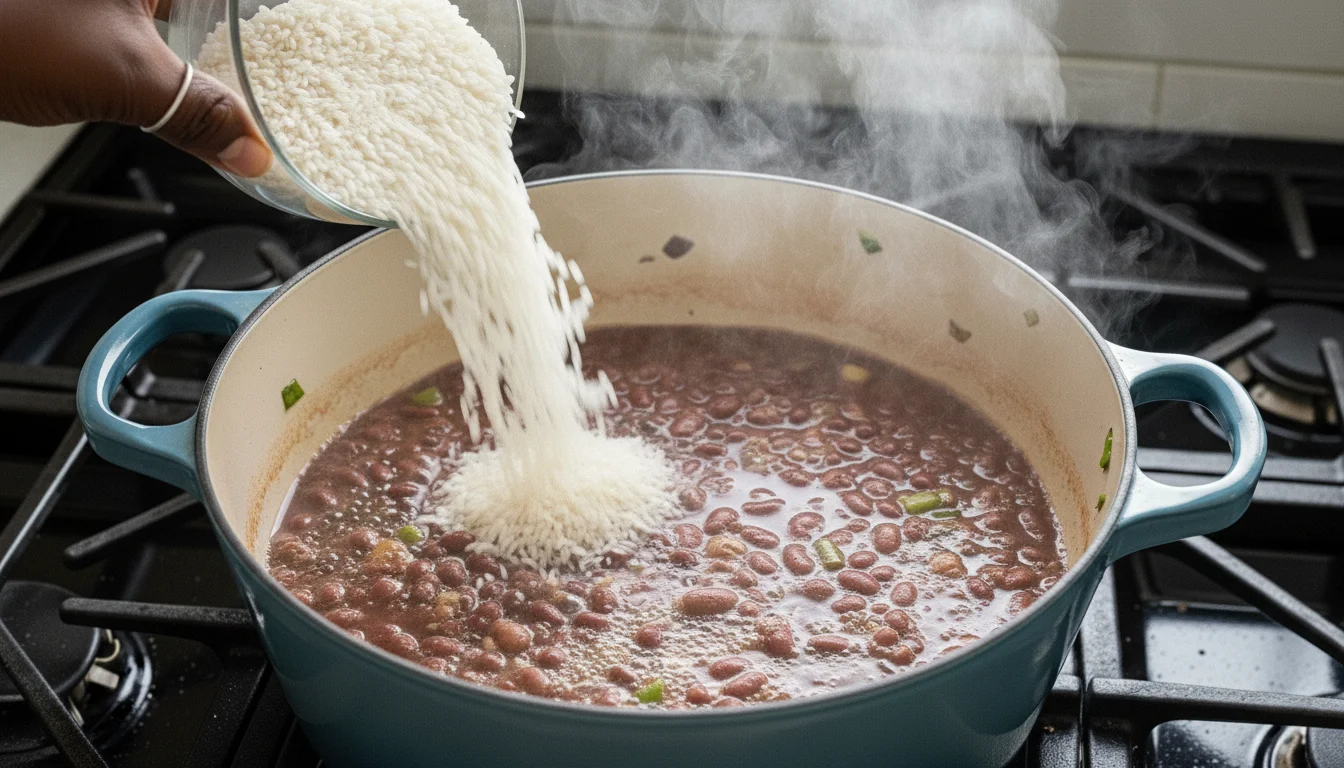
If you are ready to try this recipe, follow these steps to make your rice and beans like a pro. This rice recipe focuses on the traditional red kidney beans method, though you can use canned beans if you are short on time.
Ingredients:
- 2 cups jasmine rice
- 1 cup dry beans (soaked) or 1 can of red beans
- 2 tbsp epis (Haitian seasoning)
- 1 can coconut milk (optional for rice and beans with coconut)
- 4 cups chicken broth or bean cooking liquid
- 1 scotch bonnet pepper
- Cloves, thyme, and a pinch of adobo
Instructions:
- Cooking the beans: If using dry, soak your beans and boil until tender. Save the liquid!
- Sauté: In a large pot over medium heat, sauté the epis in oil until fragrant.
- Add the tender beans to the pot and fry them slightly with the seasoning.
- Pour in the broth (or bean water) and coconut milk. Bring to a boil.
- Add the rice, thyme, and clove. Place the scotch bonnet pepper on top.
- Cook the rice: Reduce heat, cover tightly, and simmer until the liquid is absorbed and the diri is fluffy.
You will love this recipe because it is full of flavor and brings a piece of the Caribbean to your kitchen.
Haitian Rice and Beans Myths & Misconceptions
- Myth 1: It’s the same as Jamaican Rice and Peas. While similar, the flavor profile differs; Haitians use epis and often omit the sugar found in some other Caribbean versions.
- Myth 2: You must use dry beans. While soaking the beans is traditional, you can absolutely make rice using canned beans for a faster weeknight version.
- Myth 3: It is always spicy. Despite the use of scotch bonnet, the pepper is usually left whole to provide aroma, not mouth-burning heat.
- Myth 4: It’s only a side dish. In many homes, a large bowl of diri ak pwa is a complete, protein-rich meal on its own.
Haitian Rice and Beans History & Cultural Significance
The history of haitian rice and beans is a story of resilience. During the colonial era, rice and beans were accessible ingredients that provided high caloric value for enslaved people. Over time, these ingredients were transformed through African culinary techniques into a traditional Haitian masterpiece.
Diri kole ak pwa became a symbol of unity—the “glue” that held the Haitian diet together. It is a staple dish served at every major life event, from Sunday dinners to weddings and funerals. The transition from white rice to the colored diri kole signifies a celebration; plain rice is often reserved for days of sickness or mourning, while rice and beans represents life and abundance.
Haitian Rice and Beans in the Diaspora Today
Today, the Haitian diaspora in cities like Miami, New York, and Montreal continues to love this recipe, adapting it to modern lifestyles. The use of the Instant Pot has become a game-changer for busy families wanting to make Haitian rice and beans without the hours of soaking the beans.
Even in modern fusion restaurants, haitian rice remains a focal point. You might see it served with fried plantains or even incorporated into “bowls” that appeal to a younger generation. Despite these modern twists, the core elements—the epis, the red beans, and the thyme—remain unchanged, preserving the soul of the dish.
FAQ: Haitian Rice and Beans Questions
- What is Haitian rice and beans?
It is a traditional Haitian dish where rice and beans are cooked together with epis, cloves, and often coconut milk. - What is the difference between Diri ak Pwa and Diri Kole?
Actually, diri kole ak pwa is the full name for rice “stuck” with beans. Diri ak pwa is simply the shorthand version used in daily conversation. - Can I use black beans instead of red?
Yes! Rice and black beans (ak pwa nwa) is a very popular variation with a distinct, earthy flavor. - Haitian rice and beans vs. other Caribbean rice?
The main difference is the use of epis and the specific inclusion of clove, which gives haitian rice a unique aromatic profile compared to the more allspice-forward Jamaican versions. - How to make authentic Haitian rice and beans?
The secret is in the epis and using the liquid from cooking the beans to dye and flavor the rice. - What pairs with Haitian rice and beans?
It is best served with griot (fried pork), stewed chicken, fried plantains, and pikliz. - What is the cultural importance of this dish?
It is the national staple dish, representing the history, survival, and culinary creativity of the Haitian people.
Sources
1. Haiti Open Magazine – The History of Diri Kole
2. Haitian Cooking – Authentic Recipes and Epis Guides
3. Caribbean Culinary Heritage Project – Rice and Bean Migrations