Last Updated: 2026-01-20
The Haitian Revolution unfolded in Saint-Domingue from 1791 to 1804, moving from a plantation uprising to a political and military struggle that ended French rule.
This page gives a sourced Haitian Revolution timeline you can use to teach, study, or quickly verify when major shifts happened, including the 1793 to 1794 abolition of slavery by French authorities, Toussaint Louverture’s 1801 Constitution, Napoleon’s 1802 expedition, and the independence declaration on January 1, 1804.
It also tracks the later diplomatic milestone when France recognized Haiti’s independence in 1825 in exchange for an indemnity, which shaped the young state’s finances and foreign relations. Read the narrative sections for context, then use the timeline list to locate dates fast.
Saint-Domingue before 1791: colonial rule, plantations, and rising tensions
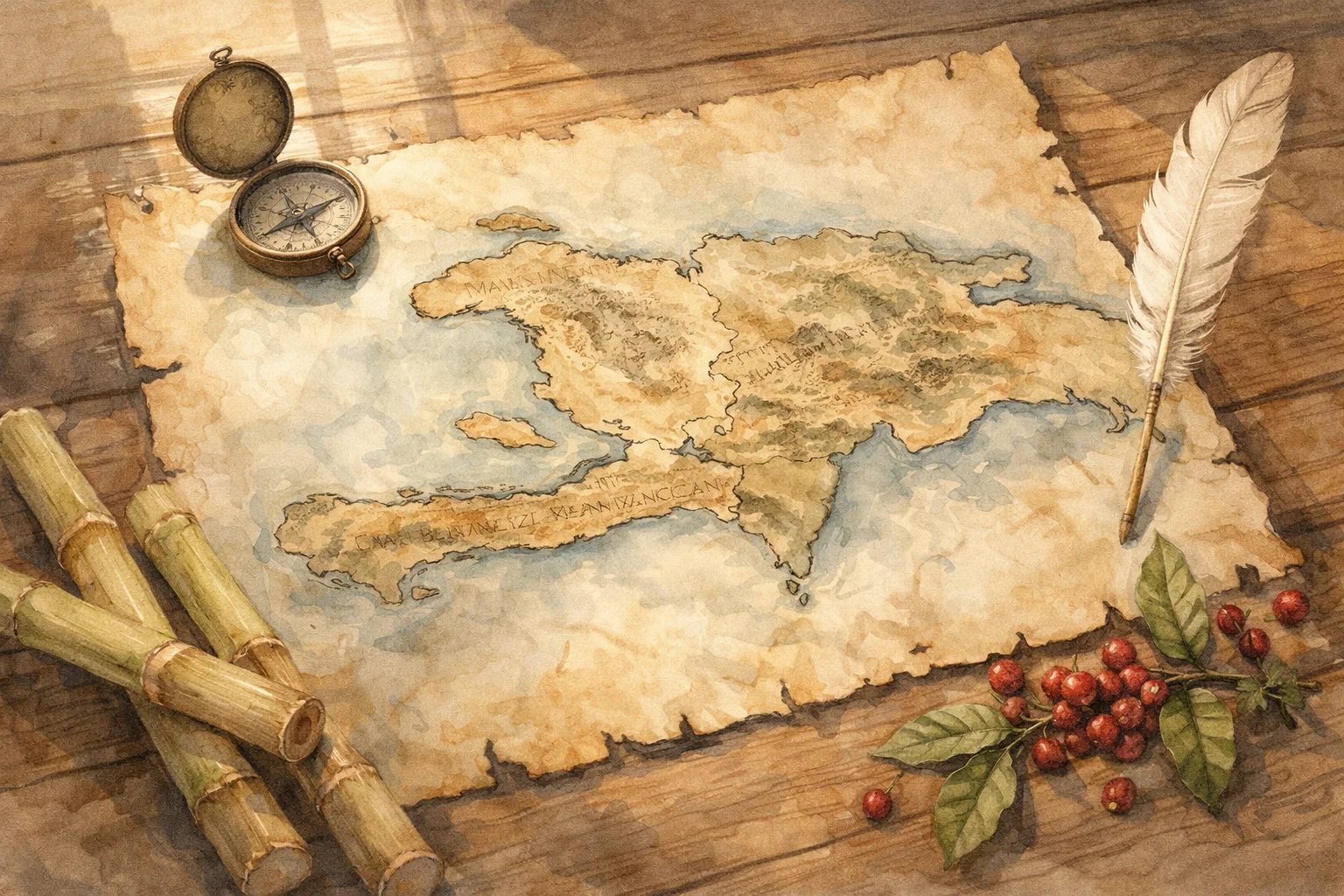
To understand the Haitian Revolution timeline, start with the society it overturned. Saint-Domingue (the French colony on western Hispaniola) was organized around sugar plantation and coffee production, with wealth concentrated among European landowners and merchants while most labor was forced from enslaved people of African descent.
Alongside Europeans and the enslaved majority, a substantial population of free people of color (often called affranchis in period sources) pursued civil equality, property rights, and political recognition inside a rigid racial hierarchy.
The French Revolution added fuel: debates over citizenship and rights in France reverberated across the colony and intensified local factional conflict. These pressures created an unstable mix of economic dependence on plantations, political uncertainty about who counted as a citizen, and social violence that could escalate quickly once armed groups formed.
Britannica summarizes this pre-1791 context as a collision of racist colonial structures, the politics of rights after the French Revolution, and the brutality of plantation slavery, all interacting inside Saint-Domingue’s competing factions. Britannica (Haiti: “The Haitian Revolution”)
From reforms to revolt: the 1791 uprising in Saint-Domingue
In 1791, colonial politics moved from petitions and confrontations into mass violence. Revolutionary France attempted reforms for free people of color, but resistance among colonists helped push conflict beyond legal debate.
In particular, the National Assembly’s decree of May 15, 1791 granted political rights in the colonies to some free people of color (those born to free parents), and backlash against enforcing it helped intensify unrest in Saint-Domingue. University of Maryland Libraries, “Colony in Crisis”
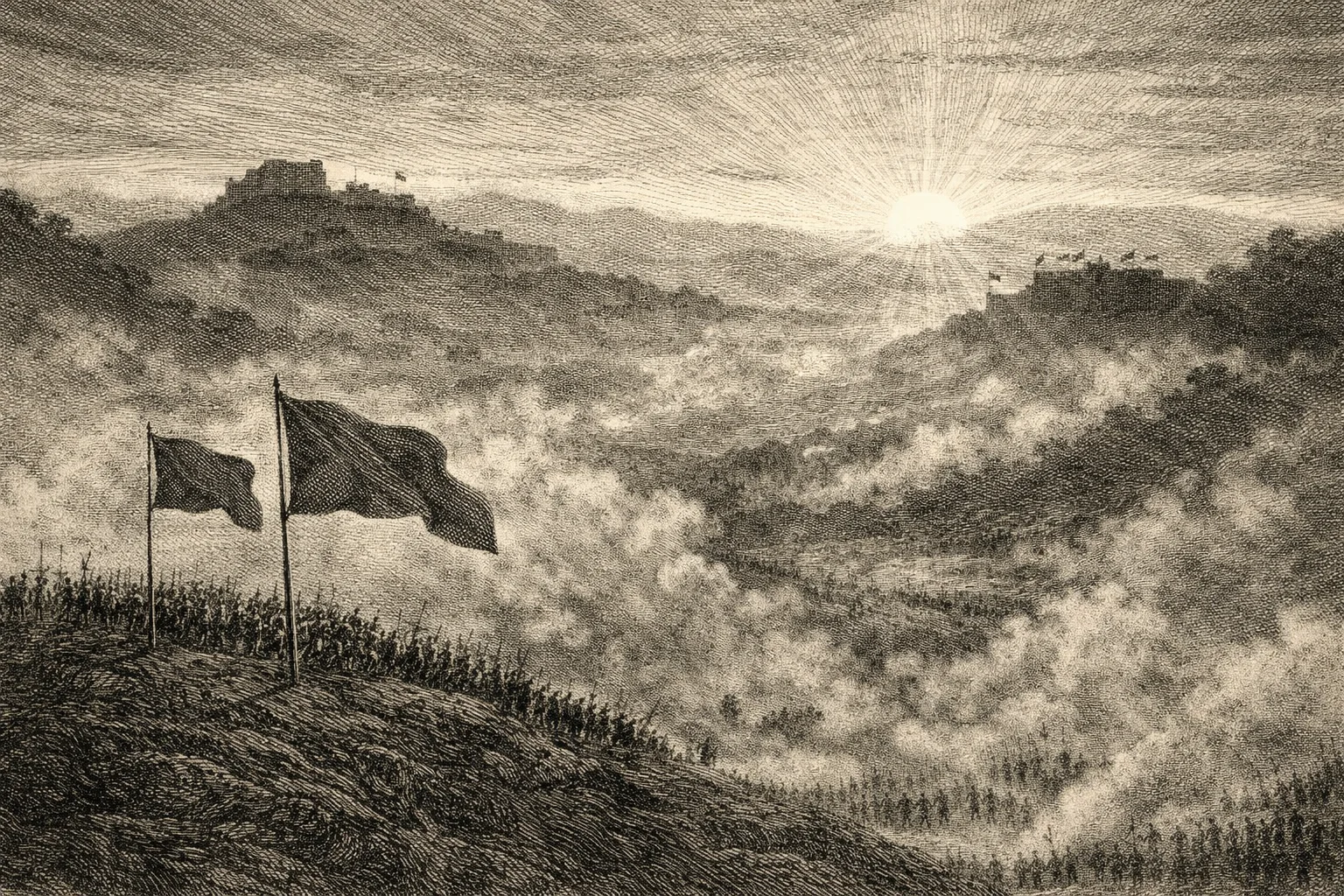
On August 22, 1791, a large uprising of enslaved people began in the northern plain, attacking plantations and breaking the assumption that colonial order could be restored quickly. The revolt was not a single moment with one leader or one goal.
It unfolded as a widening struggle shaped by local commanders, French commissioners, and rival colonial factions, as well as the reality that plantation labor and military power were connected. Once the uprising spread, the conflict became harder to contain because it was simultaneously a war over labor, political status, and control of territory.
The U.S. Department of State’s Office of the Historian places the beginning of the revolution in August 1791 and dates the uprising to August 22, 1791, framing it as the turning point that transformed Saint-Domingue’s crisis into a revolutionary war. U.S. Department of State, Office of the Historian
1793 to 1795: abolition of slavery, civil war, and foreign intervention
After 1791, the revolution became a series of shifting alliances rather than a straight line. Civil war among rival groups in the colony intersected with war between European powers in the Caribbean. Spain (based in Santo Domingo) and Britain (based in Jamaica) supported different factions at different times, and leaders recalculated alliances in response to changing policies.
A decisive turning point came in 1793 when French commissioner Léger Félicité Sonthonax offered freedom to enslaved people who joined his army and soon abolished slavery in the colony; in 1794 the French government confirmed that abolition.
These decisions altered what the conflict was about. The struggle was no longer only about colonial administration or local rights disputes; it also became a fight over whether emancipation would stand and who would control the revolutionary state that emerged from it.
Britannica describes Sonthonax’s 1793 emancipation policy, the 1794 confirmation by the French government, and the role of Spanish and British involvement in the widening conflict. Britannica (Haitian Revolution)
Toussaint Louverture and the 1801 Constitution: building power before the break
By the late 1790s, Toussaint Louverture had become the central political and military figure in much of Saint-Domingue. His leadership mattered not only on the battlefield but also in administration: organizing armed forces, negotiating with outside powers, and stabilizing production under new conditions.
In 1801, Louverture promulgated a constitution that asserted local authority while maintaining a formal connection to France, an attempt to secure the revolution’s gains without inviting immediate reconquest.
For students reading a Haitian Revolution timeline, this is a key anchor because it shows how revolutionary leadership shifted from rebellion to state-making, including drafting governing rules and managing diplomacy and trade pressures at the same time.
The Office of the Historian highlights Louverture’s rise and notes that he promulgated a constitution in 1801 as he gained control of the colony. U.S. Department of State, Office of the Historian
Napoleon’s 1802 expedition and the road to 1804 independence
Louverture’s growing autonomy triggered a direct response from Napoleon Bonaparte. In late 1801 and 1802, France sent a large expedition under General Charles Leclerc to reassert control and, as evidence accumulated, Haitian leaders concluded that France intended to restore slavery.
Louverture agreed to an armistice in May 1802 but was later seized and imprisoned in France, where he died in 1803. With Louverture removed, the war intensified under leaders including Jean-Jacques Dessalines and Henry Christophe.
The final phase culminated in the Battle of Vertieres on November 18, 1803, followed by French surrender and withdrawal. On January 1, 1804, independence was declared under the name Haiti. These steps are the core arc of the revolution: emancipation defended by force, then sovereignty asserted through victory and declaration.

Britannica connects the Leclerc expedition, Louverture’s capture, the later leadership of Dessalines and Christophe, the Battle of Vertieres, and the declaration of independence on January 1, 1804. Britannica (Haitian Revolution)
Timeline of key Haitian Revolution events, 1791 to 1825
- May 1791: The National Assembly issued the May 15 decree granting political rights in the colonies to some free people of color born to free parents, and backlash against enforcing it helped accelerate conflict. University of Maryland Libraries, “Colony in Crisis” Why it matters: Political.
- August 1791: Thousands of enslaved people rose in rebellion, marking the beginning of the revolution’s open warfare in Saint-Domingue. Library of Congress Why it matters: Military.
- 1793: French commissioner Sonthonax offered freedom to enslaved people who joined his forces and moved toward abolition, changing the conflict’s economic foundation. Why it matters: Economic.
- 1795: Spain ceded the rest of the island to France in the Treaty of Basel, reshaping claims and alliances even as war made governance unstable. Why it matters: Diplomatic.
- 1801: Toussaint Louverture promulgated the 1801 Constitution as he consolidated authority and tried to secure the revolution’s gains through law. U.S. Department of State, Office of the Historian Why it matters: Legal.
- May 1802: After an armistice, Louverture was arrested and deported to France, deepening divisions and radicalizing resistance against French forces. Why it matters: Social.
- November 1802: General Leclerc died and command shifted to Rochambeau, hardening the war’s direction as revolutionary leaders prepared for a final break. Why it matters: Political.
- November 18, 1803: The Battle of Vertieres was followed by Rochambeau’s surrender of the remaining expeditionary force, clearing the path to independence. Britannica (Haitian Revolution) Why it matters: Military.
- January 1, 1804: Haiti declared independence, forcing a new reality of state-building under external pressure and limited access to trade and credit. Why it matters: Economic.
- 1825: France recognized Haiti’s independence in return for an indemnity of nearly 100 million francs, a diplomatic settlement with long-term financial consequences. Britannica (Haiti: “The Haitian Revolution”) Why it matters: Diplomatic.
After independence: power struggles and the 1825 recognition-indemnity agreement
Independence in 1804 did not end Haiti’s internal political struggles or its external vulnerability. Haiti’s early leaders faced devastated plantations, administrative shortages, and the problem of securing legitimacy without a supportive imperial sponsor.
In October 1804, Dessalines assumed the title of Emperor Jacques I, but he was killed in October 1806, and the country fractured into competing governments. Henry Christophe consolidated power in the north, later declaring himself King Henry I in 1811 and building major fortifications such as Sans Souci and the Citadelle Laferriere as symbols of defense and authority.
After Christophe’s death in 1820, Jean-Pierre Boyer became president of the entire country and, in 1822, conquered Santo Domingo, where his government abolished slavery while reshaping local governance and property.
Against this unstable backdrop, the 1825 milestone must be labeled precisely: it was not the date independence happened, but a diplomatic recognition and financial settlement.
In 1825, France recognized Haitian independence in return for an indemnity (described by Britannica as nearly 100 million francs), linking diplomatic acceptance to a large economic obligation that influenced state finances and international standing. Britannica (Haiti: “The Haitian Revolution”)
Sources
- Encyclopaedia Britannica: “Haitian Revolution”
- Encyclopaedia Britannica: “Haiti” (The Haitian Revolution section)
- U.S. Department of State, Office of the Historian: “The Haitian Revolution, 1791 to 1804”
- Library of Congress: “A particular account of the insurrection of the negroes of St. Domingo, begun in August, 1791”
- University of Maryland Libraries: “Colony in Crisis” (May 15, 1791 decree context)