The Haitian Revolution was a long, shifting struggle in the French colony of Saint-Domingue that began in 1791 and ended with an independence declaration in 1804. This page gives you a source-based timeline plus explanations of the main turning points: why conflict erupted, how emancipation and abolition changed the stakes, and why leaders like Toussaint Louverture and Jean-Jacques Dessalines mattered.
Use the timeline to anchor dates, then use the sections that follow to connect causes to outcomes (political change, military decisions, and how colonial rule fractured). If you want a concise study guide for exams, a diaspora-friendly refresher, or a clear overview for general history reading, this explainer is built to help you track what happened and why it mattered.
Haitian Revolution History: Pre-1791 Causes and Colonial Crisis
Before the fighting began, Saint-Domingue was a highly profitable French colony built on forced labor, with extreme inequality across law, wealth, and power.
The immediate prewar crisis was not a single cause but a collision of competing demands: white planters defending control, free people of color pressing for rights, and a vast population of enslaved people living under brutal conditions. Events in France mattered because the French Revolution changed what different groups thought was possible… and what they feared losing.
One early sign of the colony’s instability was Vincent Ogé’s revolt in 1790, led by an affranchi (a free person of mixed or African descent). Ogé’s uprising failed, but it showed that questions of citizenship and political equality were already turning into open conflict.
Those tensions did not stay contained. In the background, plantation violence and the daily mechanics of enslavement made wider rebellion thinkable, even if no single leader could control what would come next. These layers of conflict help explain why the Haitian Revolution became a multi-sided war rather than a single, linear revolt. Encyclopaedia Britannica… Haitian Revolution

Haitian Revolution History: August 1791 Uprising and the First Phase of War
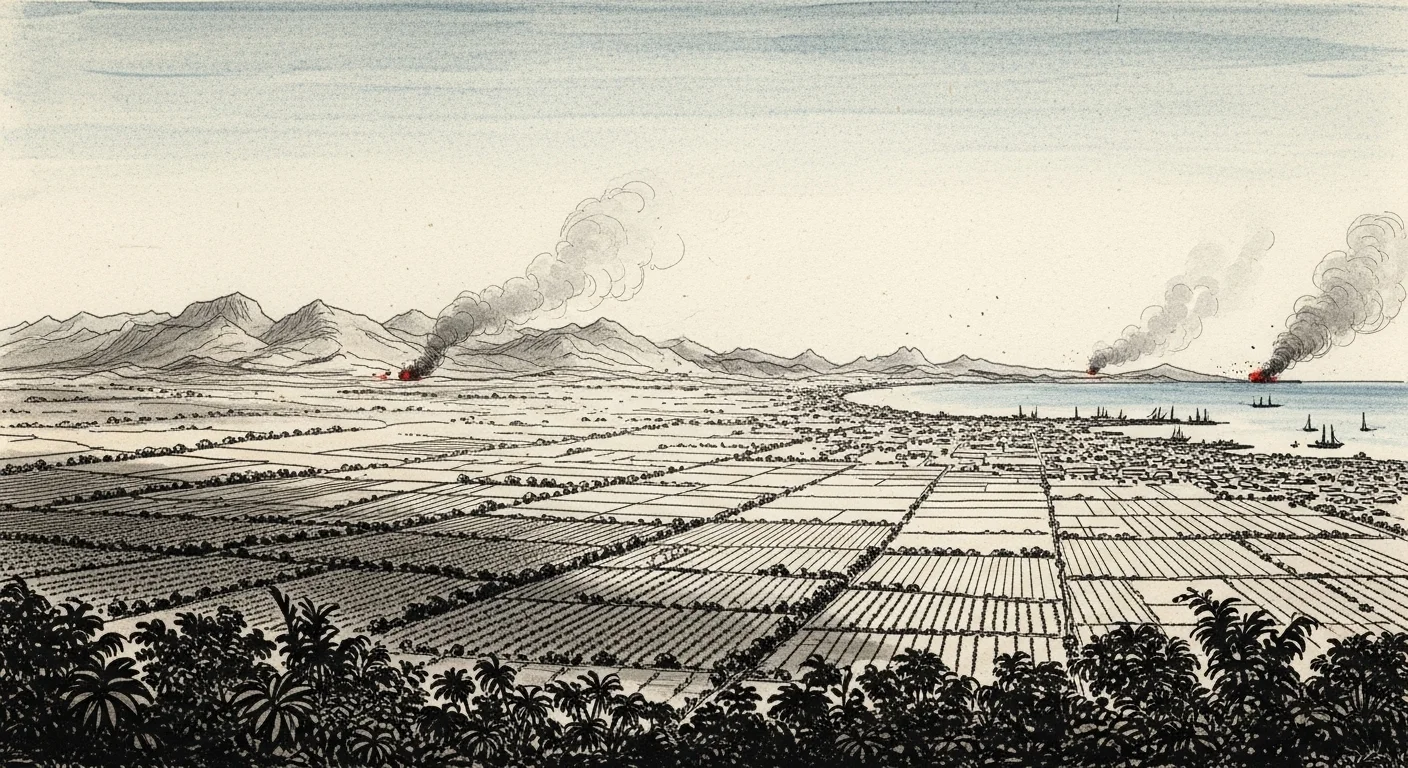
The war is commonly dated to an uprising that began in August 1791, when coordinated attacks and widespread violence signaled that the plantation order could be challenged at scale.
In the early phase, the conflict did not look like a single army versus another. It was a fast-evolving struggle shaped by geography (plantation zones, ports, and mountain routes), local leadership, and the speed at which news and fear traveled.
One reason this period is hard to summarize is that “the revolt” was not one action. It was a chain reaction: plantations destroyed, counterattacks launched, and factions forming around shifting goals. At the same time, political claims and legal debates in France kept changing the meaning of terms like “citizenship” and “rights” for different groups in Saint-Domingue.
A primary printed account from the period frames the moment as an “insurrection” begun in August 1791 and reflects how colonial authorities tried to explain events to audiences outside the colony. Library of Congress… A particular account of the insurrection… begun in August, 1791
1793 to 1794: Emancipation, Abolition, and Why Alliances Shifted
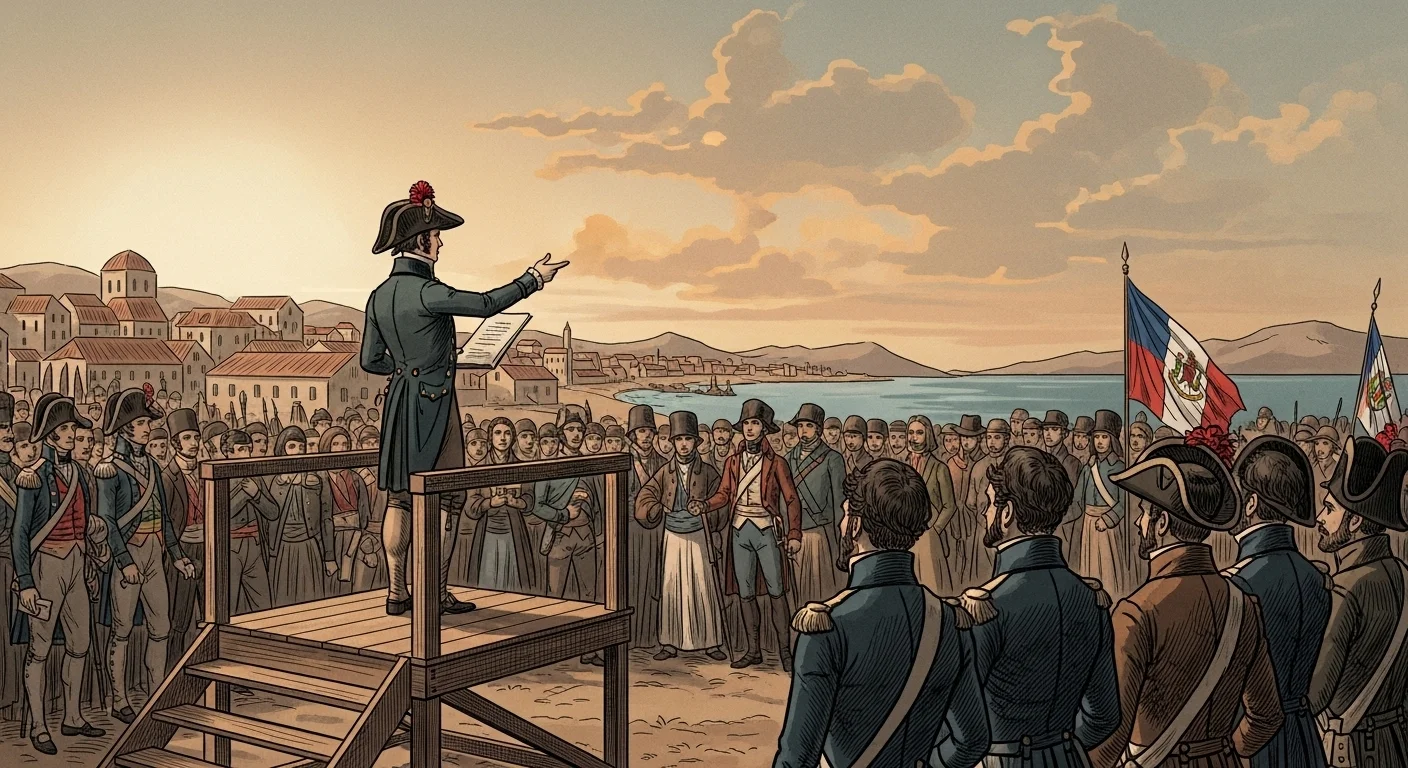
As the fighting widened, the central question became whether freedom could be secured inside a colonial framework or only by breaking it. A major turning point came when French civil commissioners Léger-Félicité Sonthonax and Étienne Polverel announced the end of slavery in the colony in August 1793, seeking both to stabilize Saint-Domingue and to secure loyalty in a collapsing wartime environment.
The National Convention then abolished slavery across the French Empire in 1794 and extended citizenship rights, changing the political logic of the war and pushing leaders to reassess what “French rule” meant in practice.
This did not create unity. It produced new conflicts about labor, property, and military authority. It also reshaped strategy: if abolition could be reversed by a future regime in Paris, then military victory alone would not guarantee lasting emancipation.
Many people were fighting with a clear memory of what they had been promised and what could be taken away. Understanding this shift is essential to Haitian Revolution history because it explains why later events (like Napoleon’s intervention) created a new, sharper fight over sovereignty, not just reforms. Harvard DASH (PDF)… The Haitian Declaration of Independence in an Atlantic Context
Haitian Revolution History: Toussaint Louverture and the 1801 Constitution
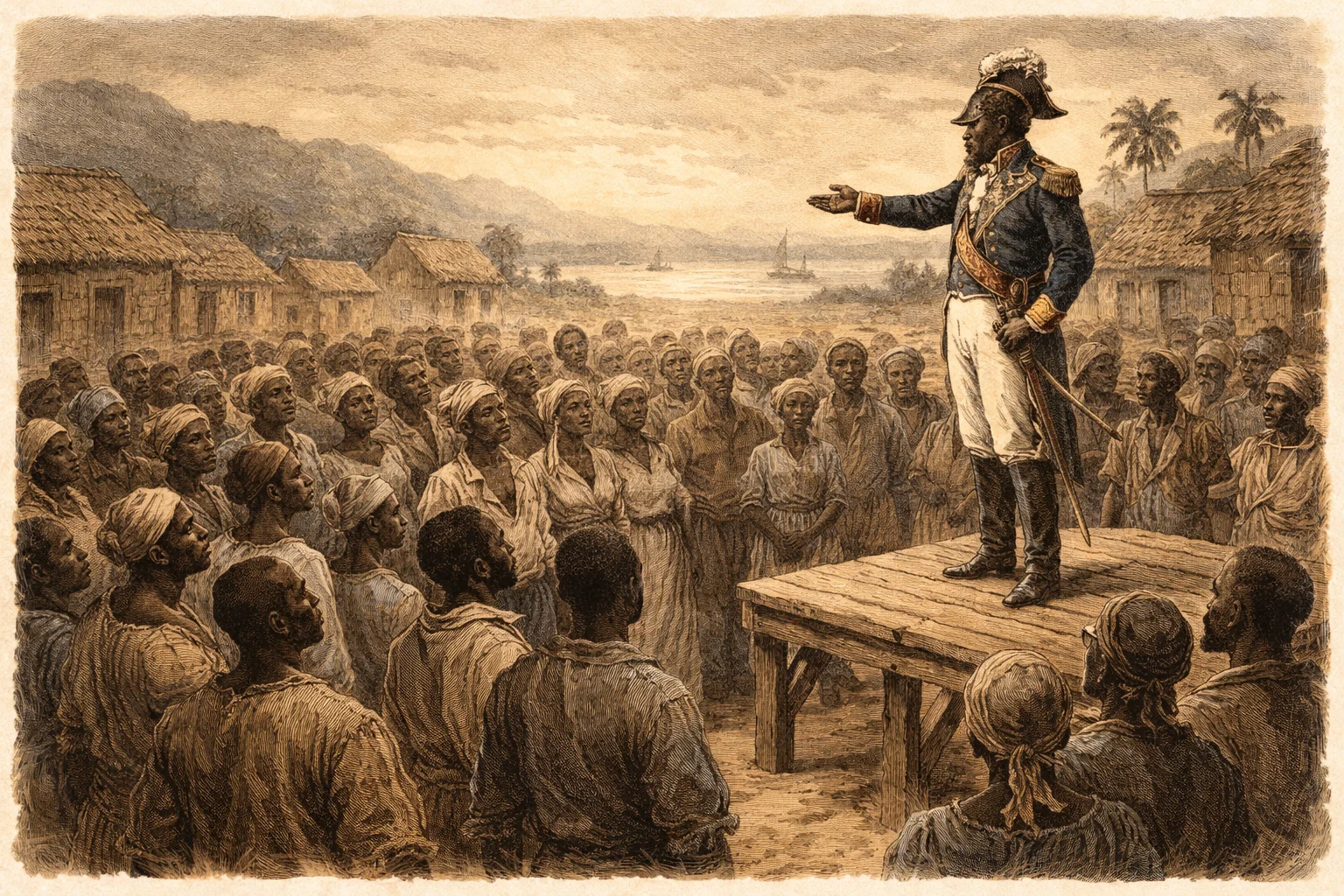
Toussaint Louverture emerged as a central military and political figure during the 1790s, navigating a landscape of shifting coalitions and foreign interventions. Over time, he consolidated authority and aimed to stabilize Saint-Domingue while preserving emancipation.
A key moment was the 1801 Constitution, which asserted sweeping internal autonomy even while maintaining a formal tie to France. In practice, it signaled that the colony would not simply return to old colonial rule, and it elevated Louverture’s role as governor-general.
This period also reveals a hard truth that many simple summaries skip: emancipation did not instantly resolve the labor question. Leaders faced intense pressure to keep the plantation economy functioning (especially sugar and coffee production), and policies could become coercive even under a regime committed to ending slavery.
That contradiction… freedom won through war alongside forced labor discipline… is part of what makes the Haitian Revolution complex rather than celebratory propaganda. For readers trying to understand Haitian independence, this is the bridge between abolition as law and sovereignty as a political reality that still had to be defended. U.S. Office of the Historian… The United States and the Haitian Revolution
1802 to 1803: Napoleon’s Intervention and the Turn Toward Independence
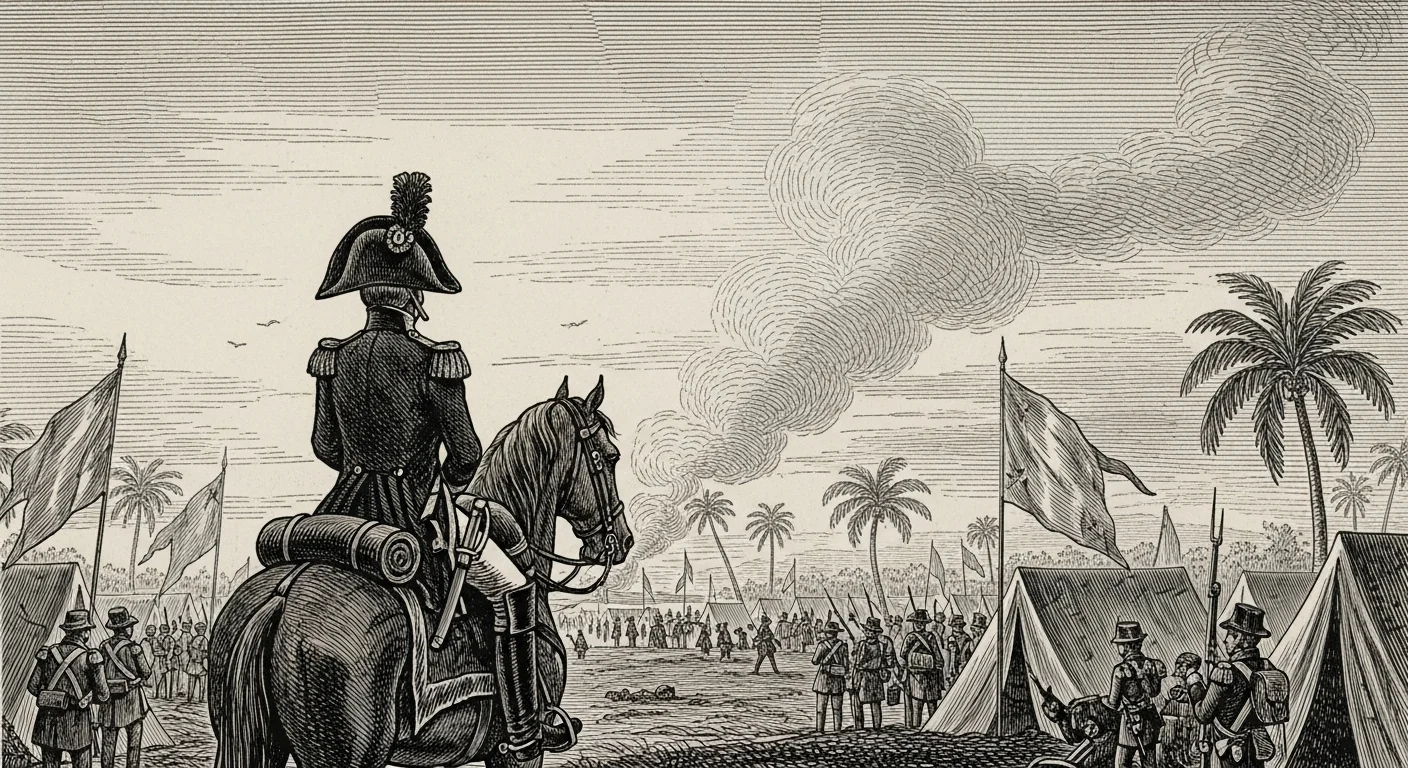
When Napoleon Bonaparte sought to reassert control, the conflict entered a decisive phase. In 1802, France sent a major expedition under General Charles Leclerc. Louverture was captured and deported, and the war’s stakes shifted again.
Fear that emancipation could be undone (and that the colony could be forced back into slavery) transformed the struggle into a fight where independence became the only durable guarantee for many combatants.
The war from 1802 to 1803 involved brutal violence, hard choices, and changing battlefield conditions. Disease, including yellow fever, devastated French forces, while Haitian leaders adapted through military strategy and local knowledge of terrain.
Jean-Jacques Dessalines rose as a dominant leader in this phase, and fighting increasingly pointed to a final break with French authority. By late 1803, French evacuation was underway, setting the stage for a formal declaration of independence in early 1804. Harvard DASH (PDF)… The Haitian Declaration of Independence in an Atlantic Context
Haitian Revolution History Timeline: Key Events from 1790 to 1804
- October 1790: Vincent Ogé leads an unsuccessful revolt by free people of color seeking political rights. Why it matters: Political… it shows that demands for equality were already destabilizing colonial rule before the wider uprising. Encyclopaedia Britannica… Haitian Revolution
- May 1791: Revolutionary France grants French citizenship to certain landowners, including some free people of color, deepening factional conflict in the colony. Why it matters: Legal… it changes who is recognized as a citizen and sparks new disputes over power.
- August 1791: A large-scale insurrection begins in Saint-Domingue, marking the start of sustained revolutionary warfare. Why it matters: Social… mass participation and coordinated action make the plantation system ungovernable in many areas. Library of Congress… A particular account of the insurrection… begun in August, 1791
- 1793: Fighting in and around Cap-Français (now Cap-Haïtien) helps trigger displacement and refugee movements across the Atlantic world. Why it matters: Economic… war disrupts trade, property, and labor, creating cascading instability.
- August 1793: Civil commissioners announce the end of slavery in Saint-Domingue amid military emergency. Why it matters: Diplomatic… emancipation policy is used to secure wartime loyalty and reframe legitimacy.
- February 1794: The French National Convention abolishes slavery across the French Empire and extends citizenship rights. Why it matters: Legal… abolition becomes law across the empire and reshapes the revolution’s political promises.
- 1801: Louverture issues a constitution asserting broad autonomy for Saint-Domingue while maintaining a formal link to France. Why it matters: Political… constitutional autonomy challenges metropolitan authority without an explicit break.
- February 1802: Leclerc’s expedition arrives to restore French control, and the war intensifies. Why it matters: Military… it forces Haitian commanders to shift toward survival strategy and total resistance.
- November 1803: French forces evacuate after decisive defeats and negotiated departure terms, clearing the path for a formal independence act. Why it matters: Economic… withdrawal ends the immediate war but leaves Haiti facing isolation and reconstruction.
- January 1, 1804: Haiti’s leaders declare independence, ending the core conflict and founding an independent nation. Why it matters: Social… sovereignty is asserted by a population of largely African descent in a world still structured by racial slavery. John Carter Brown Library… The Other Revolution: Haiti, 1789 to 1804
Haitian Revolution History: Leaders, Factions, and Places to Know
If you are studying Haitian Revolution history, it helps to organize the story around who held power, where conflict concentrated, and what each faction sought.
Key leaders include Toussaint Louverture (a central strategist and political figure of the 1790s), Jean-Jacques Dessalines (a decisive leader in the final phase), and Henry Christophe (a major military figure during the endgame). On the French side, Napoleon’s strategy was executed through commanders like Charles Leclerc and later Rochambeau, whose actions hardened resistance.
Places matter because power in Saint-Domingue depended on ports, plantations, and routes of movement. Cap-Français (Cap-Haïtien) appears repeatedly because it was a political and logistical hub, while towns like Gonaïves are remembered for the independence declaration.
Finally, “factional conflict” is not a buzzword here… it is a structural feature. Revolutionary politics in France, colonial elites, free people of color, and formerly enslaved soldiers could align or split depending on what they believed would protect emancipation and authority. Collections and curated documents can help you see how different voices framed the revolution as it unfolded. John Carter Brown Library… The Other Revolution: Haiti, 1789 to 1804
Why the Haitian Revolution Matters in World History
The Haitian Revolution matters because it forced governments and publics to confront whether universal rights could exist alongside colonial domination and racial slavery. It also reshaped geopolitics in the Caribbean:
European powers faced a prolonged war that disrupted trade, transformed alliances, and produced refugee movements that influenced politics in ports across the region. Even without listing every downstream consequence, it is clear that the revolution changed the strategic map of the Atlantic world by proving that colonial control could collapse under sustained resistance.
For U.S. history, the revolution raised immediate policy dilemmas. American leaders weighed commerce, ideology, and fear of revolt in a slaveholding society… and U.S. responses shifted over time as events in Saint-Domingue evolved.
That tension between ideals and interests is one reason the Haitian Revolution is often studied alongside the American and French Revolutions as part of a broader revolutionary era. U.S. Office of the Historian… The United States and the Haitian Revolution
Sources
- U.S. Office of the Historian… The United States and the Haitian Revolution
- Encyclopaedia Britannica… Haitian Revolution
- Harvard DASH (PDF)… The Haitian Declaration of Independence in an Atlantic Context
- John Carter Brown Library… The Other Revolution: Haiti, 1789 to 1804
- Library of Congress… A particular account of the insurrection… begun in August, 1791