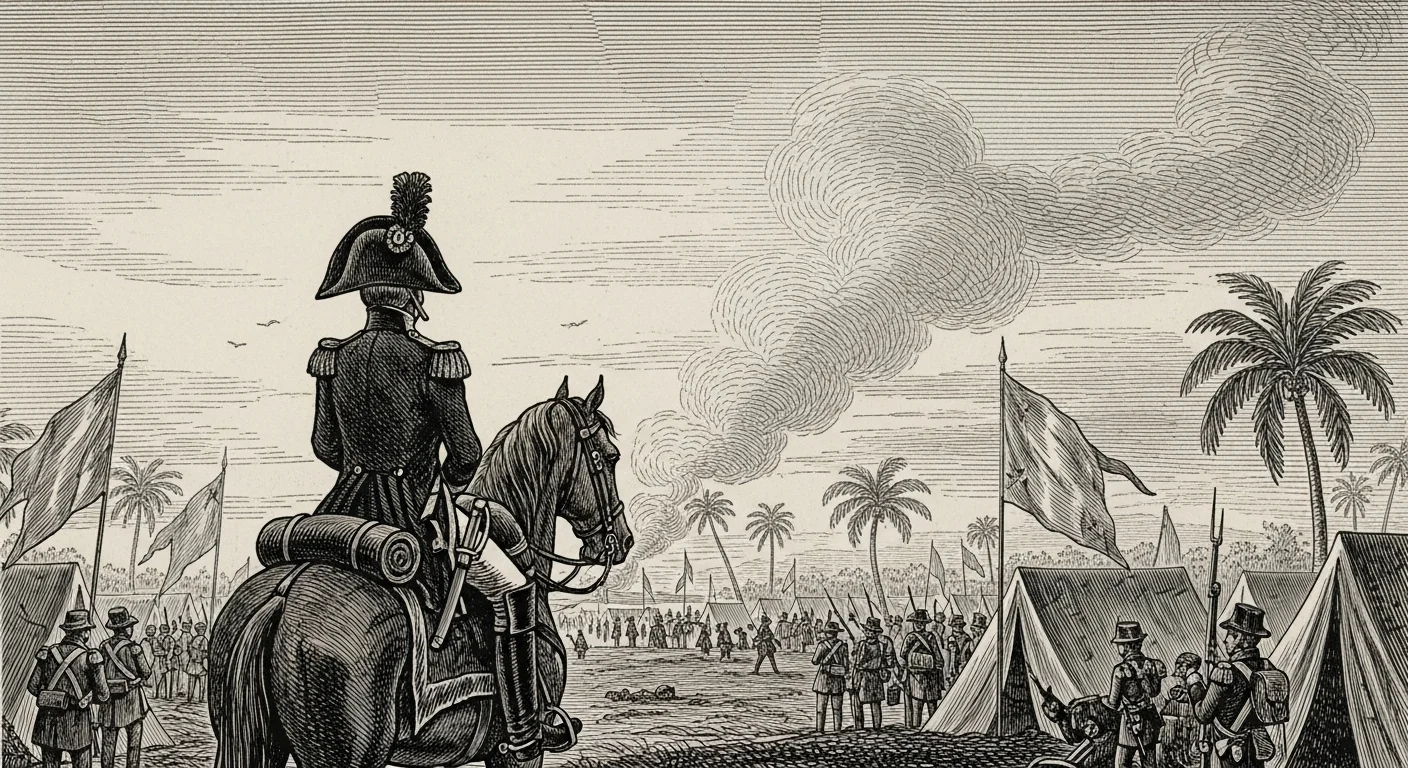
Haitian independence emerged from Saint-Domingue, France’s richest slave colony, where about 500,000 enslaved people powered sugar and coffee wealth under brutal coercion. Revolts erupted in 1791 amid French Revolutionary rights debates and challenges by free people of color.
Toussaint Louverture built an army and pushed autonomy, but Napoleon’s 1802 invasion led to Jean-Jacques Dessalines’s final victory at Vertières. Haiti declared independence in 1804, reshaping abolition and anticolonial politics worldwide.
Key Takeaways
- Saint-Domingue was France’s richest colony, built on sugar and coffee plantations worked by about 500,000 enslaved people under extreme coercion.
- The Haitian Revolution began in 1791 as mass revolts erupted, fueled by brutal slavery and rights debates unleashed by the French Revolution.
- Leaders like Toussaint Louverture built a disciplined army, and France’s 1794 emancipation decree reshaped alliances and strategy.
- Napoleon’s 1802 expedition captured Louverture, but Dessalines and Christophe won the decisive 1803 Battle of Vertières.
- Haiti declared independence on January 1, 1804, inspiring global anticolonialism yet facing isolation and France’s imposed 1825 reparations.
What Was Haitian Independence: and Why It Mattered Globally?
How did Haitian History and Independence reshape the modern world? It was the 1804 creation of Haiti, the first Black republic, after formerly enslaved people defeated France and rejected restored slavery. Its victory challenged imperial assumptions, proving colonial power wasn’t inevitable and that universal rights claims had force beyond Europe.
Haiti’s existence pressured empires to reconsider slavery, influenced abolitionist debates, and inspired anticolonial politics across the Atlantic. It also shifted geopolitics: France’s loss weakened its Caribbean strategy and encouraged independence movements elsewhere. Yet global retaliation followed—diplomatic isolation and France’s 1825 reparations demand. Haitian independence
How Saint-Domingue’s Slave Economy Set the Stage
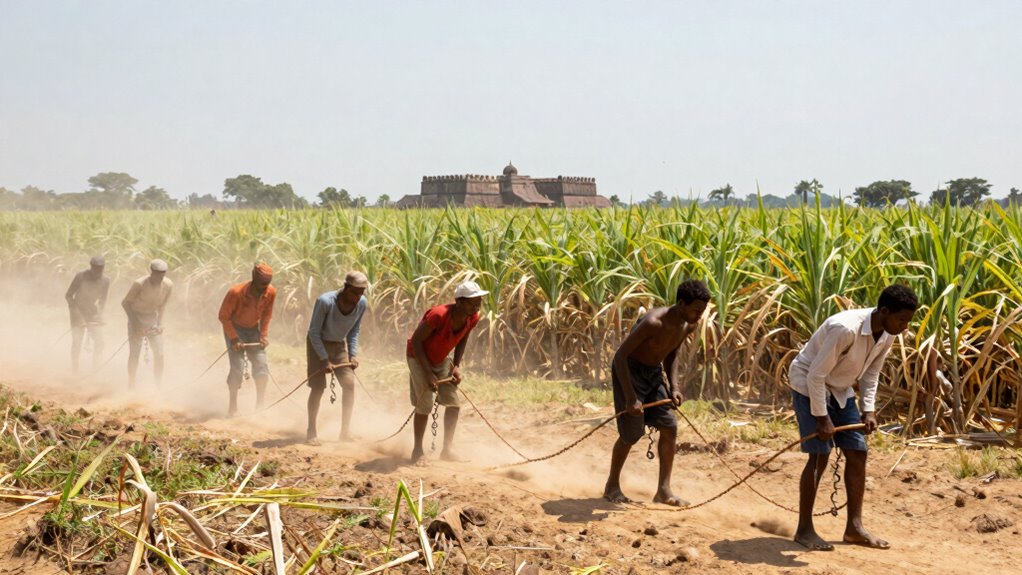
Why did Saint-Domingue explode into revolution? Its unmatched plantation economy made it France’s richest colony by 1789, but it depended on extreme coercion. Roughly 500,000 enslaved people produced sugar and coffee for global markets, while only about 40,000 whites and 30,000 free blacks and mulattos sat above them in a rigid hierarchy.
Profit demanded relentless labor, brutal punishment, and constant importation of captive workers, creating fear on one side and desperation on the other. Even limited status for free people of color couldn’t stabilize such a system.
What Sparked the Haitian Revolution in 1791?
Amid the heat of plantation brutality and the shockwaves of the French Revolution, Saint-Domingue didn’t just simmer—it ignited. Enslaved people faced relentless violence on sugar and coffee estates, while free people of color pressed for rights, emboldened by talk of liberty.
Vincent Ogé’s failed 1790 uprising signaled that the racial order could be challenged. By August 1791, coordinated revolts erupted across the northern plains, torching plantations and breaking plantation control. In the south, thousands followed prophetic figures and burned estates, seizing towns like Léogâne and Jacmel, turning unrest into revolution.
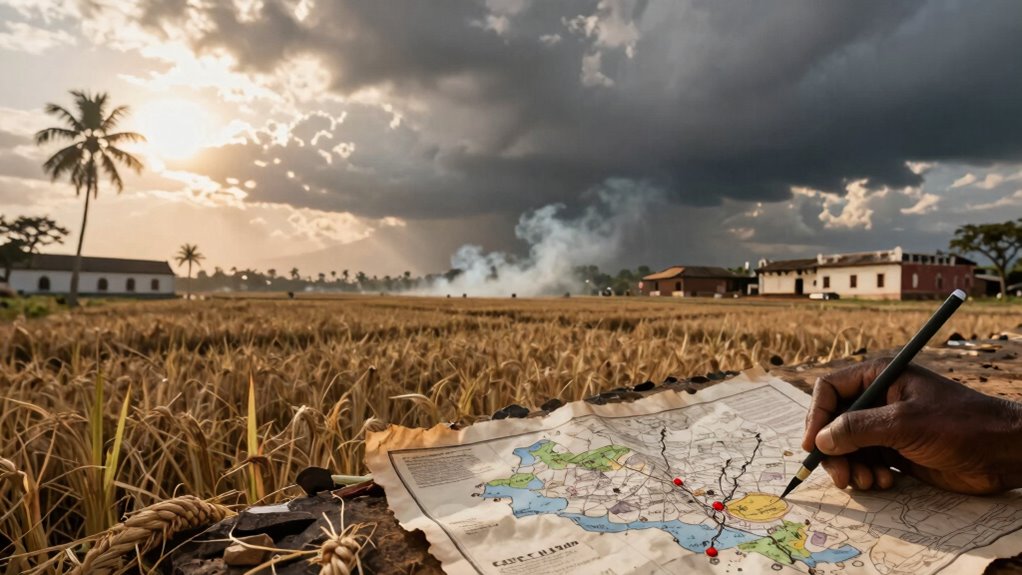
Enslaved communities organized within the plantation system to resist, survive, and imagine freedom, laying the groundwork for a broader movement that would reshape the island and influence global history revolutionary ideals.
Who Led Haitian Independence: Toussaint to Dessalines
From Toussaint Louverture to Jean-Jacques Dessalines, Haitian independence was driven by leaders who turned a slave revolt into a disciplined war for sovereignty. Louverture rose after 1791, mastered shifting alliances, and, after France’s 1794 emancipation decree, built a capable army and centralized authority.
His 1801 constitution signaled autonomy and island-wide abolition, alarming Napoleon. When Leclerc’s 1802 expedition seized Louverture, Dessalines assumed command, hardening resistance.
With allies like Henry Christophe and a unified coalition forged at Arcahaie in 1803, he directed the final campaign that broke French power at Vertières. 1801 constitution solidified a legal claim to autonomy, providing a framework for governance beyond immediate military victory.
How Haiti Declared Independence in 1804: and What Followed
Dessalines’s victory at Vertières on November 18, 1803 shattered France’s last serious bid to retake Saint-Domingue, clearing the way for a political break that military force had already earned.
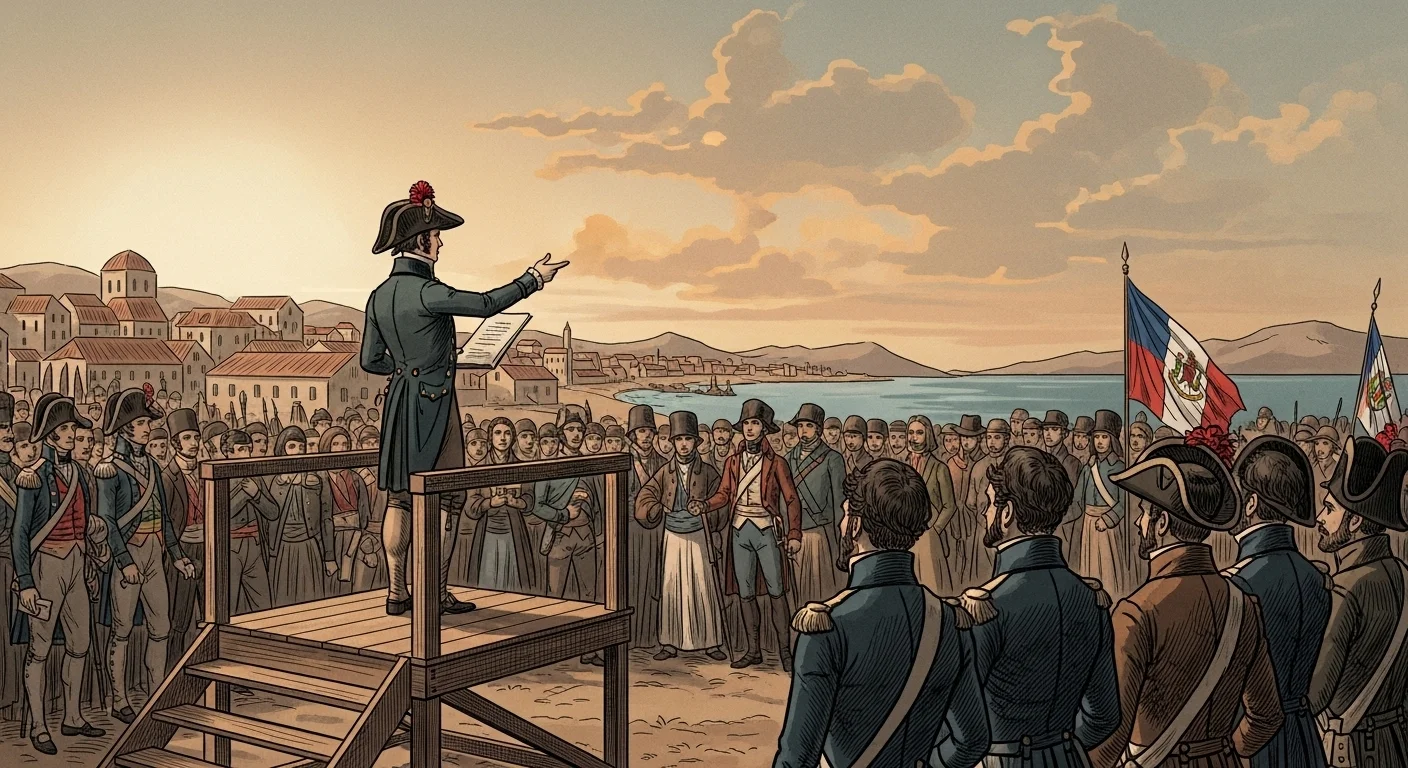
On January 1, 1804, leaders proclaimed independence at Gonaïves and restored the island’s older name, Haiti, signaling a new Black republic.
Dessalines soon asserted authority, later crowning himself emperor, while ordering 1804 killings of many remaining whites to prevent a return of slavery.
Foreign powers withheld recognition; France imposed reparations in 1825.
Haiti still inspired anticolonial struggles across the region.
Independence or death was a defiant opening formula in the declaration, signaling resolve to both domestic audiences and foreign observers.
The proclamation framed independence as a permanent separation from France and a collective commitment to defend the new state.
Frequently Asked Questions
How Did Vodou Influence Revolutionary Organization and Morale?
Vodou influenced revolutionary organization and morale by providing shared rituals, oaths, and sacred gatherings that coordinated plans, built trust, and legitimized leadership. Its spirits and songs strengthened courage, unity, and resilience when repression intensified.
What Role Did Women Play in the Haitian Revolution and Early Haiti?
Women served as couriers, nurses, fighters, and organizers, sustaining networks, provisioning armies, and shaping morale through religious and community leadership. In early Haiti, they’d manage households, markets, and politics, though rights remained constrained.
How Did Haiti’s 1825 Reparations Shape Its Long-Term Economy?
It burdened Haiti with crippling debt, diverting revenues to France-backed payments, stunting public investment and infrastructure. Reliance on high-interest loans entrenched fiscal instability, weakened state capacity, and fostered long-term underdevelopment and dependency.
Why Did Other Nations Delay Diplomatic Recognition of Haiti?
Other nations delayed recognition because they feared inspiring enslaved uprisings, protected slave-based economies, and resisted legitimizing a Black-led republic. They’d also weighed trade interests against France’s pressure and racist assumptions about governance stability.
Conclusion
Haitian independence reshaped the modern world by proving enslaved people could defeat Europe’s strongest empires and build a sovereign state.
Born from Saint-Domingue’s brutal plantation economy, the 1791 uprising grew into a revolution guided by leaders from Toussaint Louverture to Jean‑Jacques Dessalines. Haiti’s 1804 declaration ended colonial rule, but it didn’t end hardship; isolation and retaliation followed. Even so, Haiti’s victory inspired abolition, resistance, and new ideas of freedom.
References
- https://historyincharts.com/timeline-of-the-haitian-revolution
- https://www.axismaps.com/projects/map-and-timeline-of-the-haitian-revolution
- https://www.britannica.com/topic/Haitian-Revolution
- https://en.wikipedia.org/wiki/History_of_Haiti
- https://haitianartsociety.org/blog/haitian-independence-day
- https://ctrl.carlow.edu/kotw/history
- https://thehaitianrevolution.com