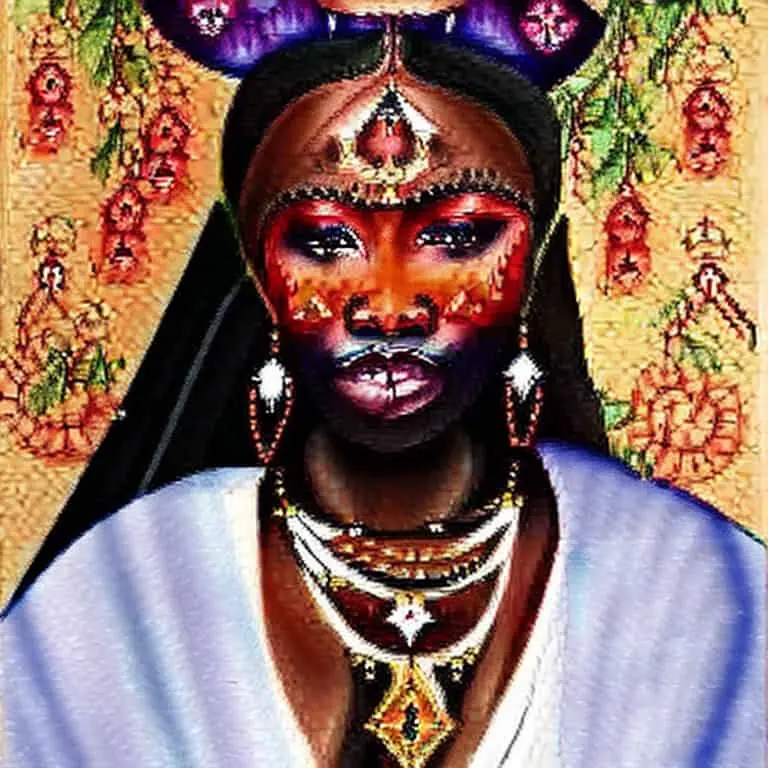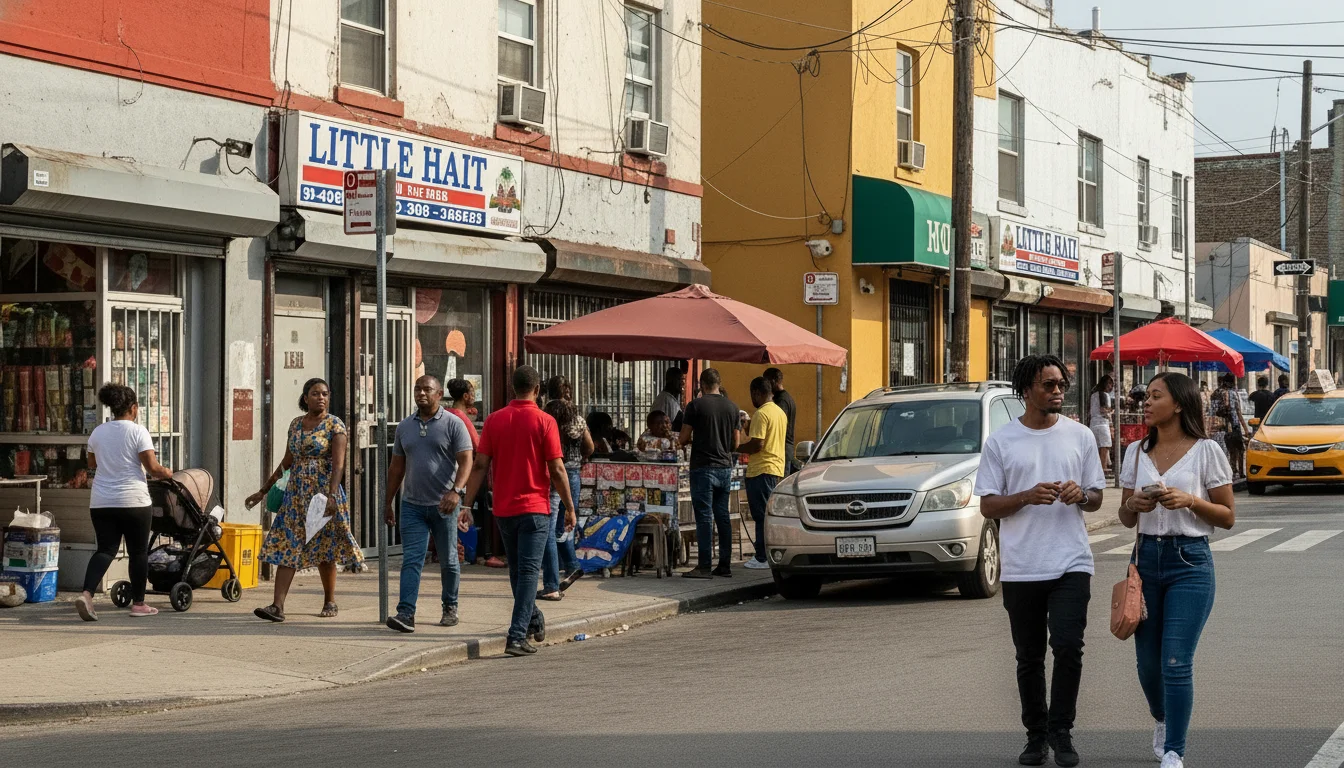
The Haitian diaspora includes 1.5–2 million people abroad, mainly in the U.S., Dominican Republic, Chile, Canada, and France, shaped by waves from the Duvalier era to the 2010 earthquake and today’s insecurity.
Kreyòl anchors daily life and belonging, while French often signals schooling and workplace status. Identity shifts by generation through code-switching and upbringing. Lakou-style mutual aid, churches, Vodou, music, food, remittances, media, and travel keep ties strong, with more ahead.
Key Takeaways
- Haitian Creole anchors daily diaspora life, signaling intimacy, solidarity, and belonging in homes, community gatherings, and cross-border calls.
- French often functions as a schooling and professional credential, while Creole remains the primary home language for many families.
- Migration waves from the Duvalier era through the 2010 earthquake and recent gang violence shaped today’s large, connected diaspora communities.
- Portable “lakou” networks organize shared childcare, housing, rides, and mutual aid, often coordinated through churches and community groups.
- Remittances, diaspora media, and visits for baptisms and funerals sustain obligations, cultural memory, and traditions across generations and borders.
Haitian Diaspora Basics: Who, Where, and Why
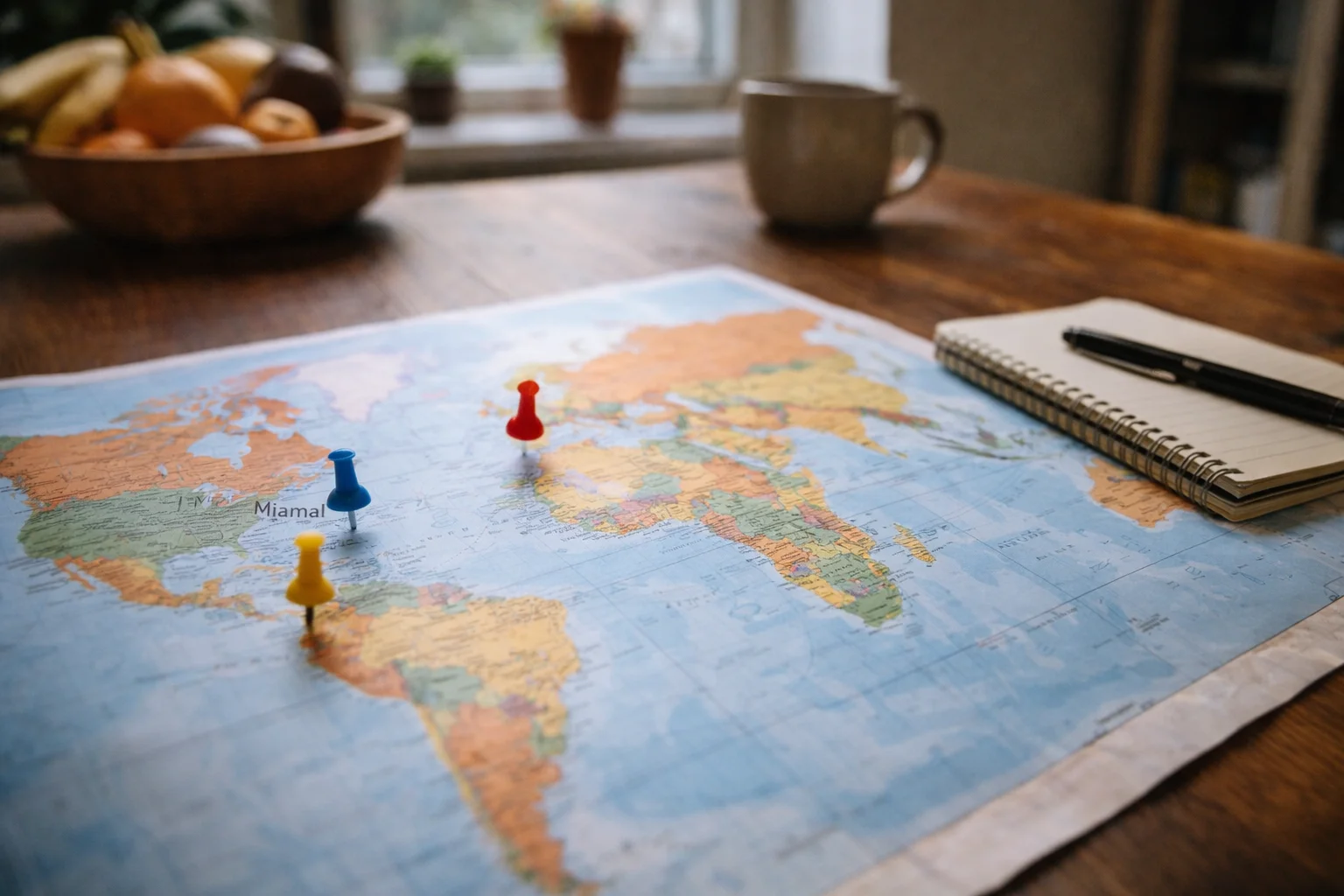
Haiti’s population is about 11.75 million, yet 1.5–2 million live abroad. Economic hardship, unemployment near 40%, insecurity, and political turmoil propel departures.
The diaspora includes substantial communities in the United States (about 43%), the Dominican Republic (roughly 496,000 nearby neighbors), Chile (about 237,000), Canada (101,000), France (85,000), and Brazil (33,000), with smaller communities in Cuba, Mexico, and the Bahamas. primary sources
Major Migration Waves That Shaped the Diaspora
When did Haitians begin leaving in large, recognizable waves—and what shaped each surge? Major departures accelerated in the 1960s–1970s under the Duvalier dictatorships, when professionals and students sought safety and opportunity, often heading to the United States, Canada, and France.
The upheavals continued through the 1990s–2000s, as political instability and economic strain pushed more Haitians to seek livelihoods abroad, frequently via family-based, chain migration. The 2010 earthquake and subsequent disasters intensified displacement across the Americas, including Chile and Brazil.
Recent years’ gang violence and governance crises have pushed new outflows, reshaping destinations and routes, with many migrants navigating complex border landscapes and seeking asylum or feasible work opportunities diaspora networks to support families back home.
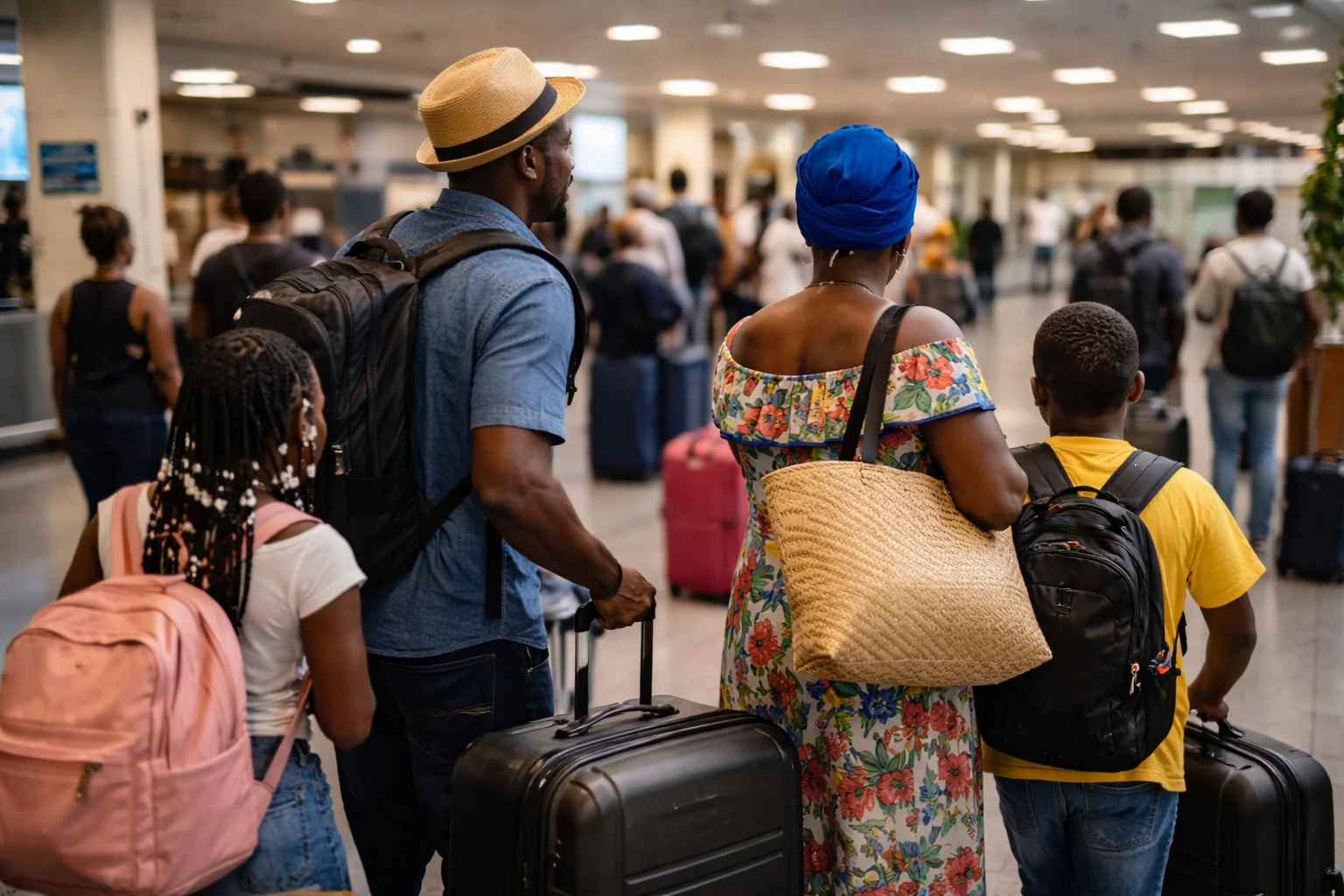
Haitian Creole in the Haitian Diaspora Everyday Life
Each migration wave carried more than people and passports—it carried Haitian Creole, which often becomes the language of daily life once families settle abroad. In homes from Florida to Montreal, Creole anchors routines: breakfast talk, discipline, prayers, jokes, and family news.
It’s the default for calling relatives across borders and for explaining cultural cues to children raised abroad. Community life keeps it audible through churches, radio shows, barbershops, markets, and diaspora gatherings.
Even where members juggle other languages publicly, Creole signals intimacy, solidarity, and belonging—especially for recent arrivals and elders. It serves as a living thread diaspora language that sustains memory and identity across generations.
French in the Haitian Diaspora: School, Work, Status
How does French travel in the diaspora—less as a home language than as a credential? For many Haitians abroad, it’s tied to schooling, diplomas, and perceived professionalism, especially in Francophone systems like Montreal or in international workplaces.
French can signal academic preparation, echoing earlier migration waves that included teachers, doctors, and other professionals. In job markets where Haitians cluster in health care, education, service, and office roles, French often functions as a gatekeeper for promotions, client-facing positions, and cross-border mobility.
It’s also a status marker in community institutions, media, and formal events. The language elements themselves are sometimes influenced by the presence of formal instruction at schools connected to the Haitian diaspora’s transnational networks the Franklin Center and by participation in culturally specific professional contexts.
Haitian Diaspora Identity by Generation and Upbringing
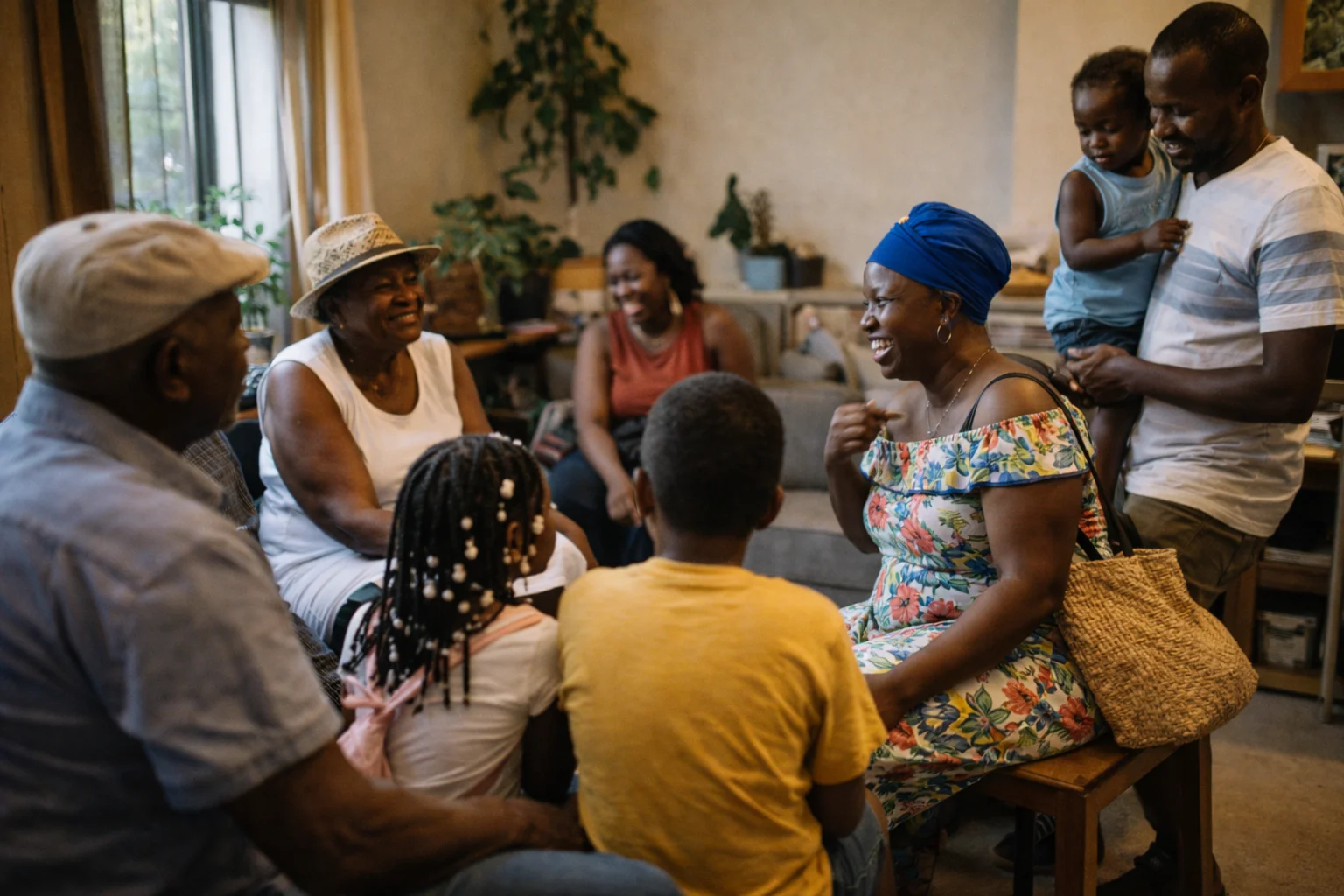
Across the Haitian diaspora, identity often shifts by generation less like a clean handoff and more like a negotiation shaped by birthplace, schooling, and the home’s rules. First-generation adults may center Haiti as reference, measuring success through remittances, citizenship steps, and reputation abroad.
Their children, often US- or Canada-born, code-switch between Haitian norms and local peer culture, treating Haiti as both origin and distant homeland. Arrival age matters: those who migrate young may feel “in-between,” while later arrivals keep stronger habits. Class and schooling shape confidence in French, Kreyòl, or both daily population distribution.
Lakou Values in Haitian Diaspora Family Networks
In what ways does the *lakou*—a tradition of shared yard, mutual care, and communal responsibility—survive when Haitians live far from Haiti? It’s carried through family networks that function like a portable courtyard: pooled childcare, shared housing, rotating rides, and emergency cash.
In U.S., Canada, Chile, and France, aunties, cousins, and close family friends coordinate groceries, job leads, and school help through group chats and weekend visits. Remittances and collective budgeting spread risk across households.
Even among U.S.-born descendants, 65.2% family households show how togetherness stays central. The revolutionary history of Saint-Domingue, including how emancipation and autonomy unfolded through local leadership and family-based organization, informs contemporary diasporic practices and resilience citizenship dynamics.
Faith in the Haitian Diaspora: Church, Vodou, Service
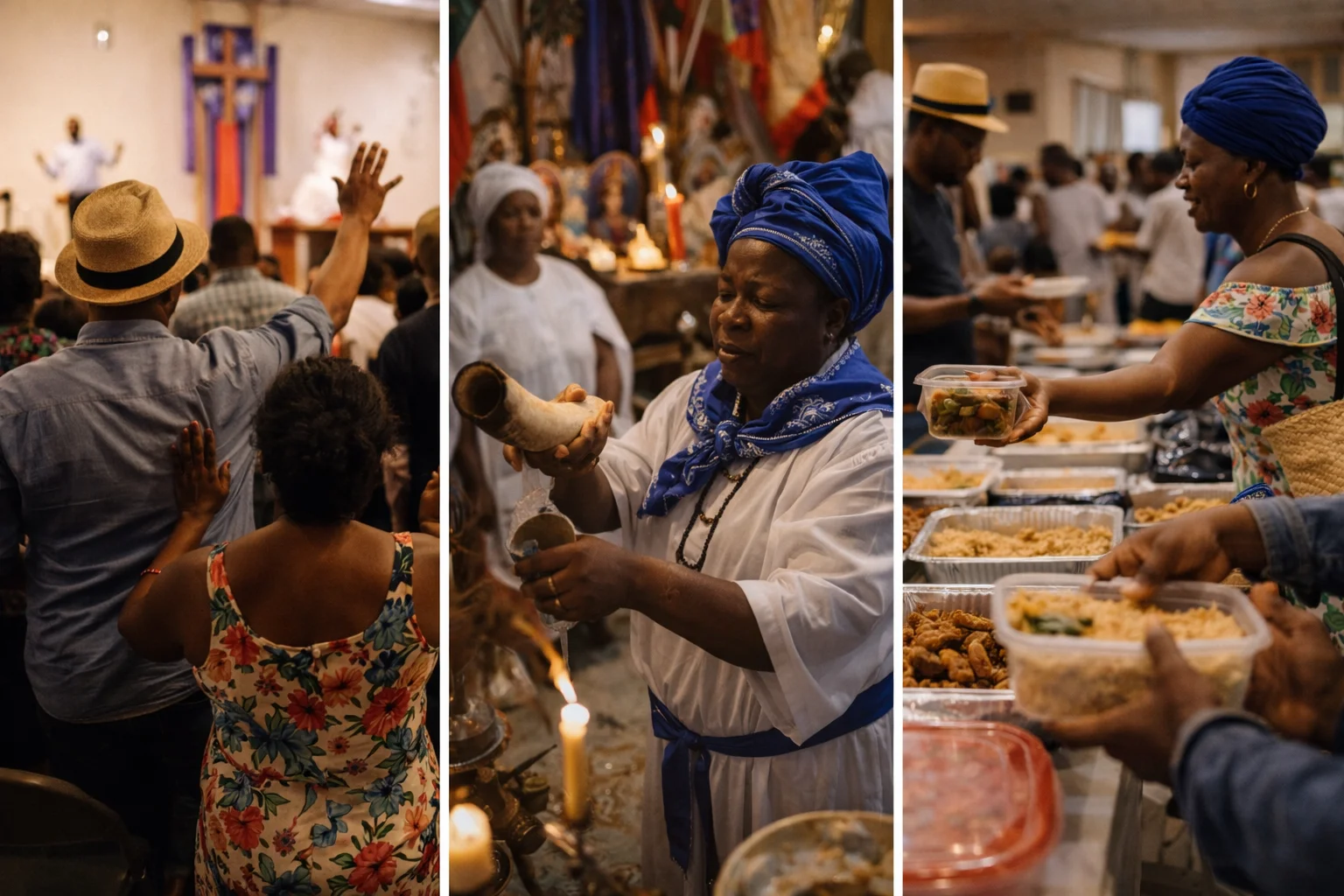
Lakou-style family networks don’t just share rides, rent, or childcare—they also carry faith practices that organize community life far from Haiti. In U.S., Canada, and France, churches anchor Creole worship, mutual aid, and counseling for newcomers facing violence-driven displacement and uncertain paperwork. Many congregations run food pantries, remittance drives, and job referrals, turning belief into service.
Alongside this, Vodou communities preserve ceremonies, healing traditions, and respect for ancestors, often practiced privately or in temples to avoid stigma. For many households, identities aren’t either-or; they’re blended, adaptable, and community-minded.
Haitian Diaspora Music: Kompa, Rara, Rap Kreyòl
Even when Haitian families are thousands of miles from Port-au-Prince, music keeps the diaspora’s identity audible and shared. Kompa’s steady groove anchors weddings, community halls, and long drives, linking elders and U.S.-born youth to Haitian cadence.
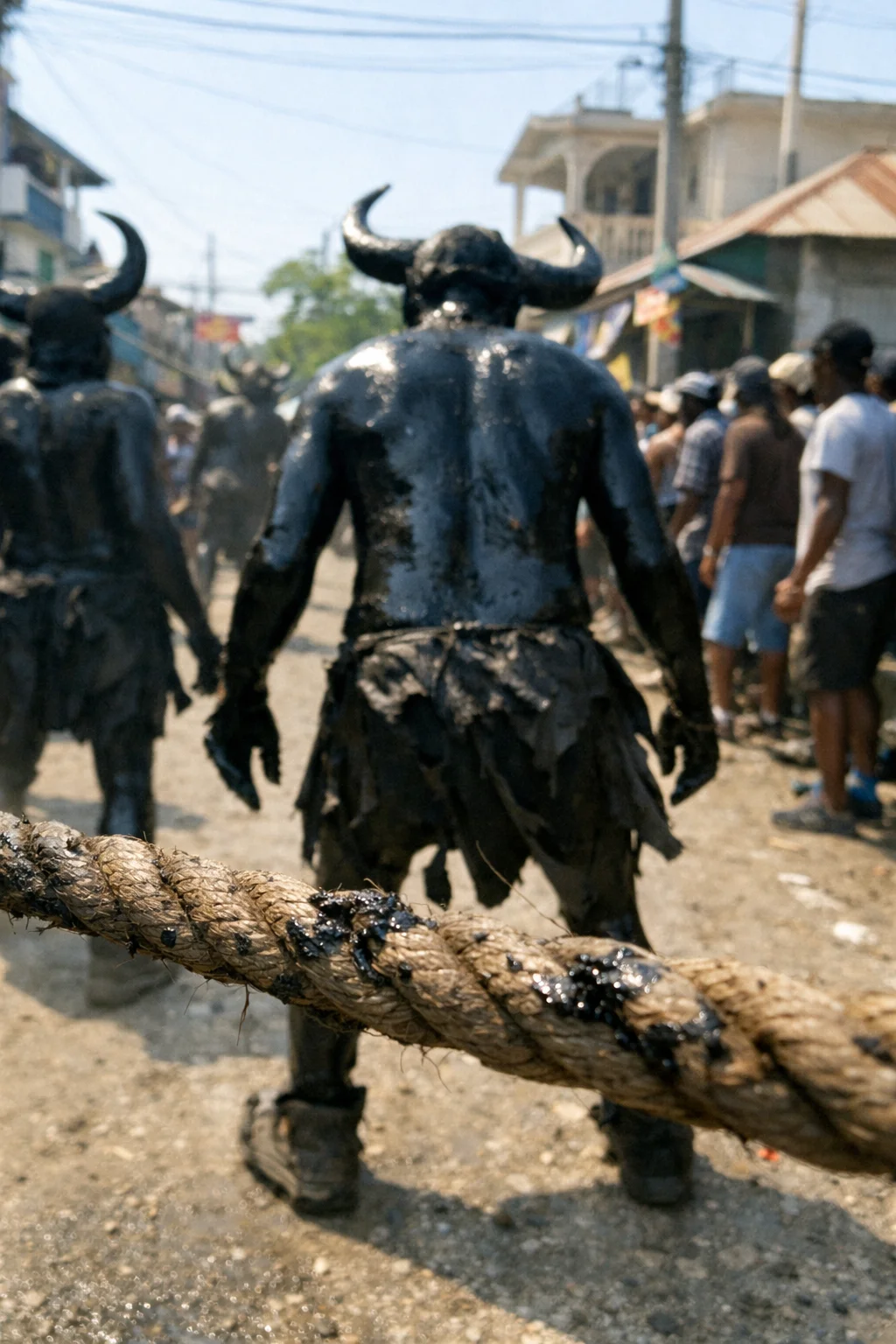
Rara, with bamboo horns and call-and-response, carries street-procession energy into parades and cultural showcases abroad, turning public space into memory. Rap Kreyòl speaks to migration pressure, pride, and politics in a language that travels easily, proving Creole’s flexibility.
Across cities where Haitians settle, playlists become portable flags, and dancing becomes belonging, together. The diaspora’s musical memory has roots in the revolutionary era that shaped Haiti’s national story, linking contemporary rhythms to a history of emancipation and resistance historical context.
Haitian Diaspora Food and Sunday Dinner Traditions
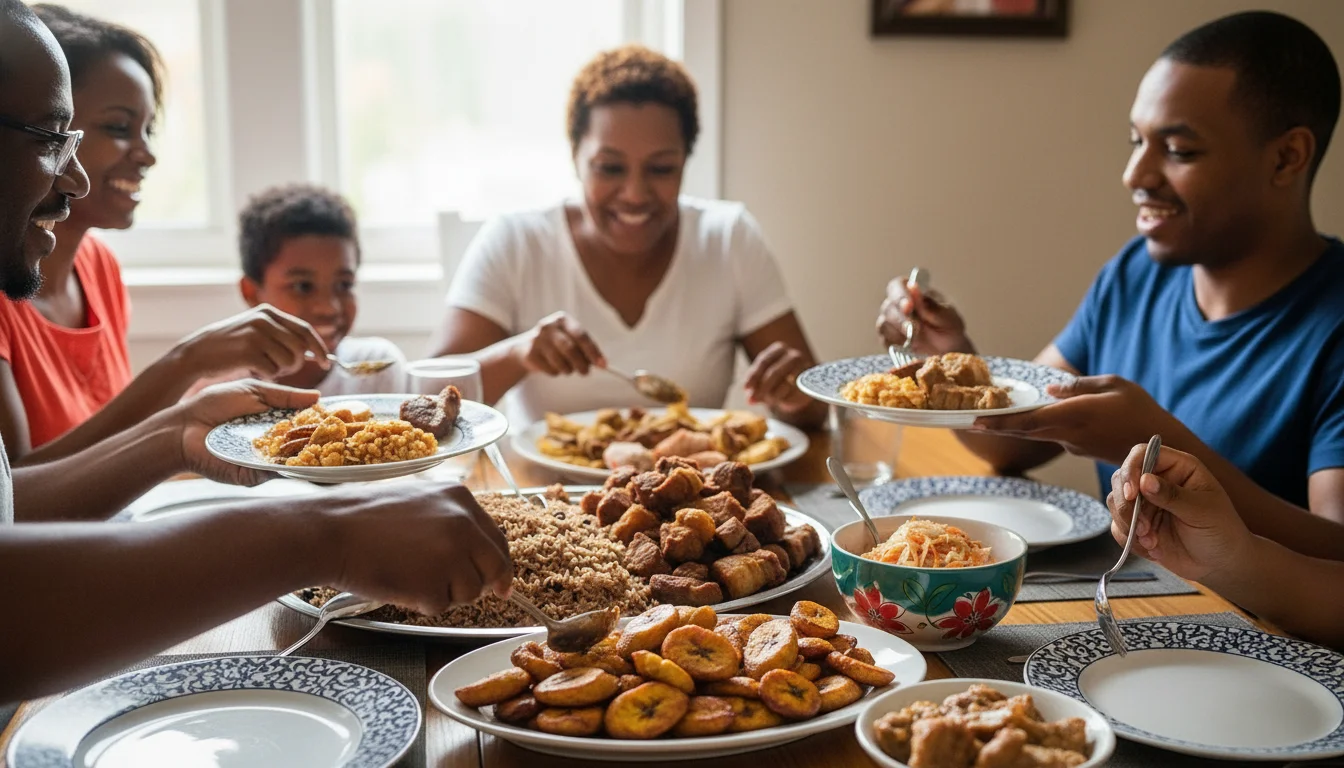
How do Haitian families keep home close when borders, budgets, and schedules pull them in different directions? In diaspora kitchens, Sunday dinner becomes a weekly anchor, planned around church, shift work, and school calendars.
Staples like diri kole ak pwa, griyo, poul, legim, pikliz, and bannann peze set the table, while soup joumou or bouyon signals care and continuity. Elders teach spice blends, washing rice, and the “right” epis by taste, not measures.
Guests are expected, plates are shared, and Kreyòl sayings keep manners, humor, and identity alive, all of which are preserved through Trans-Atlantic Slave Trade Database inspired patterns of culinary memory and exchange across generations.
Staying Connected: Remittances, Media, and Travel
After the plates from Sunday dinner are cleared, many Haitian families keep that same sense of closeness alive through what they send, what they watch, and when they can return.
Remittances help cover school fees, rent, and emergencies, especially as migration continues amid economic strain and insecurity. Diaspora media—Creole radio, WhatsApp voice notes, YouTube news, and konpa playlists—keeps language and humor circulating from Miami to Montreal.
When travel’s possible, visits for baptisms, funerals, and lakou gatherings renew ties and responsibilities. For those facing distance, these routines turn separation into a shared, ongoing life. remittances and diaspora media continue to sustain community networks and cultural continuity across borders.
Frequently Asked Questions
How Do I Research Haitian Ancestry When Records Are Missing or Inconsistent?
They’d triangulate clues using oral histories, church and civil registers, immigration files in key destinations, DNA matches, and surname variants. They shouldn’t trust single documents; they’ll build timelines, map relatives, and verify with multiple sources.
What Are Respectful Ways to Greet Elders at Haitian Community Events?
They’d greet elders with “Bonjou” or “Bonswa,” offer a handshake or light cheek kiss if invited, use titles like “Madam” or “M’sye,” and speak softly, listening first, showing deference and patience.
How Do Haitians Choose or Change Haitian-Creole and French First Names Abroad?
Abroad, Haitians often keep Haitian-Creole names at home and use French or anglicized versions publicly; they’ll switch for pronunciation, paperwork, or bias. Some adopt saints’ names, honor relatives, or add middle names for flexibility.
What Should I Know About Haitian Flag Etiquette During Diaspora Celebrations?
They should treat the Haitian flag with respect: don’t let it touch the ground, don’t use it as clothing, and display it upright. At diaspora events, they’ll follow hosts’ rules and local laws.
How Can Non-Haitians Avoid Cultural Appropriation When Joining Haitian Traditions?
Non-Haitians can avoid appropriation by asking permission, learning meanings, and following hosts’ guidance. They shouldn’t mimic sacred rites, costumes, or Creole casually; they should credit sources, support Haitian-led groups, and listen when corrected.
Conclusion
Across continents, the Haitian diaspora has carried language, faith, music, and food into new homes without letting roots fade. Haitian Creole keeps daily life intimate, while French can shape schooling, work, and status. Identity shifts by generation, yet Sunday dinners, church services, and Vodou traditions still gather people together.
Kompa, rara, and Rap Kreyòl echo shared memories. Through remittances, media, and travel, they’re staying connected—redefining Haiti beyond borders.
References
- https://www.migrationpolicy.org/country-resource/haiti
- https://en.wikipedia.org/wiki/Haitian_diaspora
- https://countrymeters.info/en/Haiti
- https://www.thecairoreview.com/essays/engaging-the-haitian-diaspora
- https://icmglt.org/haitian-immigrants-in-the-united-states
- https://en.wikipedia.org/wiki/Haitian_Americans
- https://zipatlas.com/us/family-structure/haitian-family-households.htm
- https://data.who.int/countries/332