What caused the Haitian Revolution? It erupted in Saint-Domingue because extreme plantation wealth depended on violent slavery, political power was restricted by race, and French imperial trade rules and revolutionary politics fractured colonial authority at the same moment.
When white factions and officials fought over sovereignty and citizenship after 1789, long-standing resistance networks among the enslaved could scale into a mass uprising in 1791.
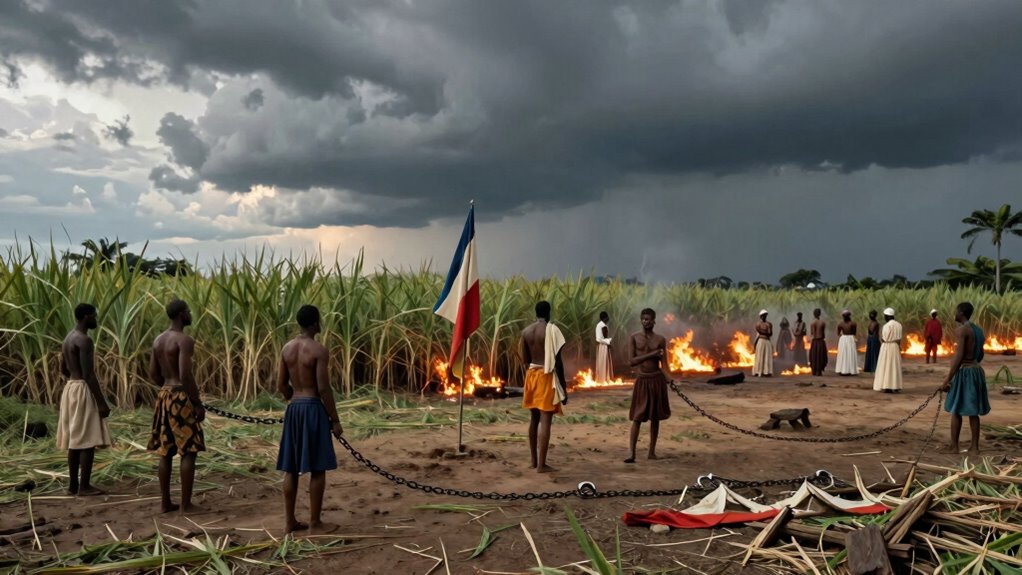
Saint-Domingue was France’s richest colony, exporting enormous sugar and coffee wealth, yet most people were excluded from rights and security. The colony’s social order tied economic power to race and legal status, forcing conflicts that could not be managed once metropolitan authority weakened.
Key Takeaways
- Saint-Domingue produced immense plantation wealth, but profits and political power concentrated among elite whites while most residents remained excluded.
- Slavery in Saint-Domingue was unusually lethal and violent, and it generated durable resistance practices: sabotage, flight, maroon communities, and coordination through night gatherings.
- Race functioned as a governing system: “whiteness” was treated as a qualification for offices, courts, and militias, while free people of color were denied equal citizenship.
- French mercantilist trade rules restricted commerce and routed benefits through France, intensifying local grievances and expanding smuggling and factional rivalry.
- After 1789, French revolutionary rights language and shifting decrees destabilized authority, helping turn social conflict into political struggle and then open revolt.
Quick Definitions (Terms You Will See)
- Grands blancs: wealthy white planters and major merchants who dominated plantations, credit, and colonial councils.
- Petits blancs: poorer whites (artisans, overseers, soldiers, shopkeepers) who defended racial status as a form of political power.
- Affranchis (free people of color): legally free residents, often property owners, who were still blocked from equal rights by racist law.
- Maroons: people who escaped slavery and formed communities in more defensible terrain, sustaining survival and resistance.
Key Causes of the Haitian Revolution
The Haitian Revolution is best explained by a convergence of pressures that tightened together: imperial economics, racialized citizenship, and coercive labor. None of these forces alone guarantees revolution. Together, under the destabilizing shock of post-1789 politics, they created a situation where authority could not hold.
French mercantilist controls restricted Saint-Domingue’s formal trade and routed much of the system’s benefit through metropolitan networks, while local elites argued they bore the risks without full political representation. These controls also encouraged smuggling and informal commerce, meaning the system did not affect every group the same way. That unevenness sharpened factional conflict. Mercantilism and empire background
At the same time, the French Revolution’s rights language spread a new political vocabulary. In the colony, different groups used “liberty” and “equality” to argue for very different outcomes: planters for autonomy, petits blancs for racial privilege, and affranchis for equal citizenship. Once rival claims became “rights,” compromise became harder.
Saint-Domingue’s Plantation Wealth and Inequality
Saint-Domingue’s plantations made it the most lucrative colony in the French empire. By the late eighteenth century, the colony supplied a large share of Europe’s sugar and coffee, making its wealth look unstoppable.
That wealth also hardened inequality. Plantation profits concentrated among grands blancs, while most people had little security and almost no political voice. These inequalities mattered because they linked economic power to political exclusion, creating high-stakes conflict over who could govern.
Population structure intensified the problem: Saint-Domingue had a very large enslaved majority, a smaller white population, and a substantial free population of color. That demographic reality meant that any crisis of authority carried the risk of mass rebellion once coordination became possible. Demographic context
Slavery’s Violence and Resistance Before 1791
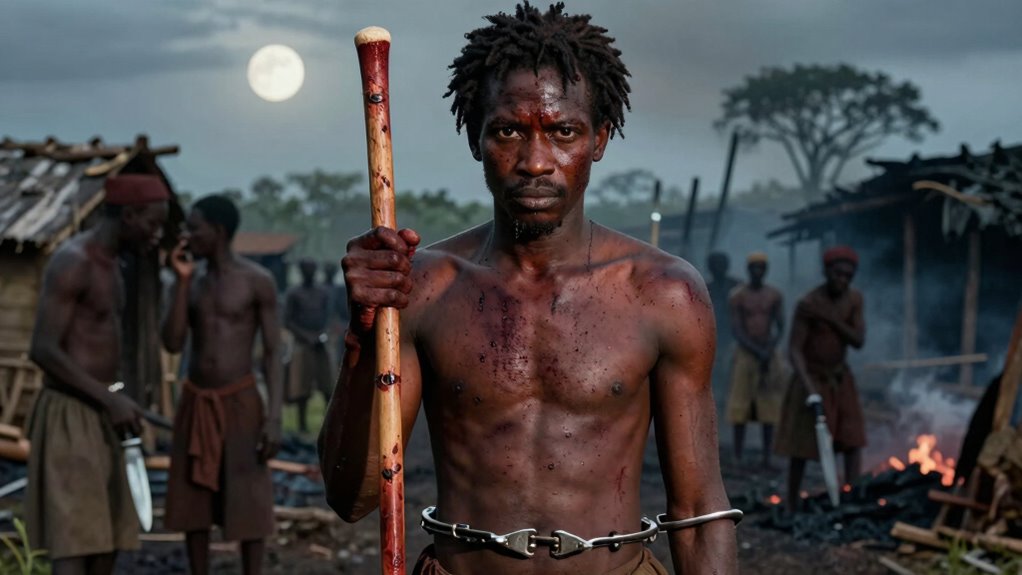
Why did slavery lead to revolution in Saint-Domingue? Because plantation discipline relied on extreme violence and replacement, and that brutality generated both desperation and experience in resistance. High mortality, overwork, punishment, and forced labor pushed many people to resist whenever opportunity appeared.
Resistance was not only spontaneous. Enslaved people sabotaged tools, slowed production, stole provisions, and fled to maroon communities. Night gatherings and spiritual practice helped preserve communication and solidarity across plantations. Over time, these practices created networked capacity, the ability to coordinate beyond a single estate when authority fractured. Background overview
Racial Hierarchy Shaping Haitian Revolution Tensions
Why did racial hierarchy become a political crisis? In Saint-Domingue, race was treated as a governing logic: “whiteness” was used to justify control of courts, militias, assemblies, and administrative offices. This system was enforced through daily rules, surveillance, and punishment.
That hierarchy did more than categorize people. It organized power, shaped access to testimony and law, and made equality feel like a direct threat to those whose status depended on exclusion. For primary-source starting points, see the Library of Congress guide. Haiti primary resources
Free People of Color Denied Political Rights
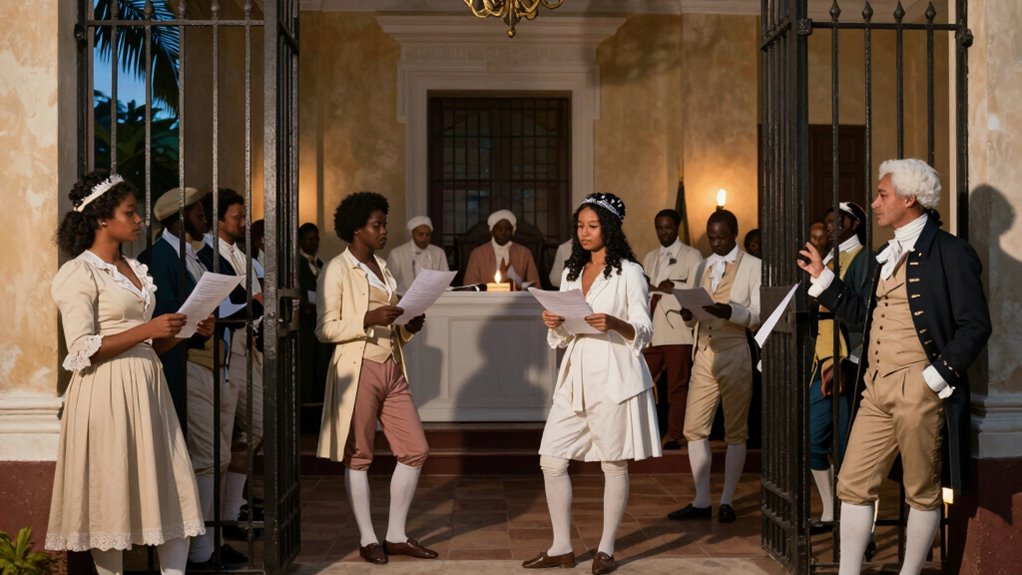
Free people of color, often called affranchis, paid taxes and sometimes owned land and businesses, yet colonial law blocked them from equal citizenship. They faced restrictions on voting, office-holding, and legal standing, even when they had wealth or education.
Vincent Ogé’s 1790 uprising is important because it clarified the stakes. He pushed for political rights for free men of color and showed that petitions could escalate into armed conflict when authorities refused equality. His defeat and execution deepened polarization rather than restoring order. Citizenship and political rights
White Planters vs. Poor Whites in Saint-Domingue
Why did white unity collapse? Because shared racial identity did not erase class conflict. Grands blancs dominated land, credit, and councils. Petits blancs resented elite privilege and feared losing livelihoods and status.
Many petits blancs defended harsh racial hierarchy as a form of political insurance. Planters sometimes resisted those tactics when they needed skilled alliances, but the broader result was factional instability. That instability mattered because it weakened the colonial response once rebellion spread. Broader Haiti timeline context
French Trade Controls That Bred Colonial Resentment
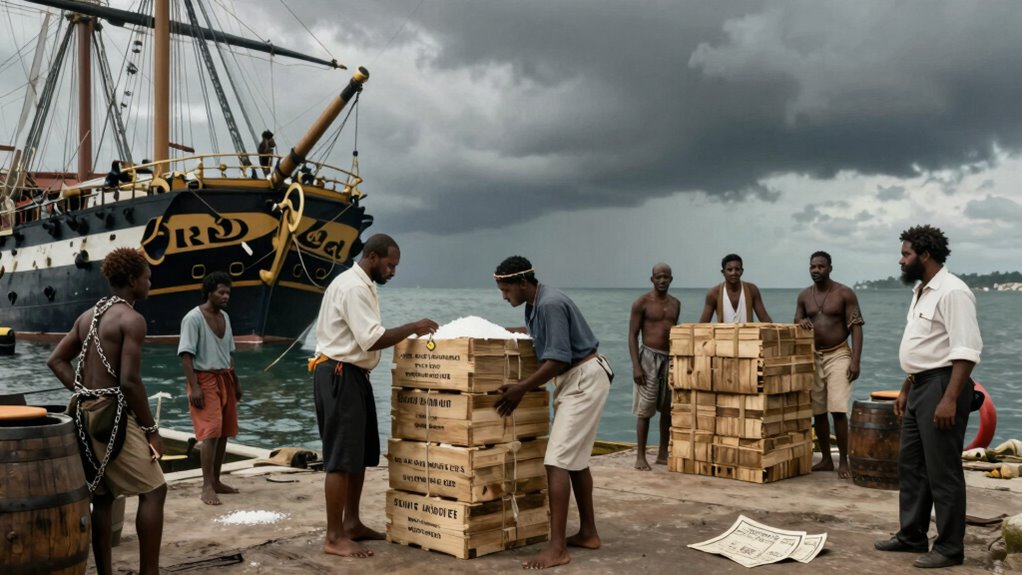
French trade controls shaped Saint-Domingue’s economy by restricting formal commerce and strengthening metropolitan influence over profits, shipping, and credit. Planters could view these rules as both useful and constraining, depending on market conditions and political alliances.
Smuggling and regional trade often expanded in response, which created winners and losers inside the colony. Those uneven outcomes fed resentment, distrust of officials, and competition for leverage over policy. That competition became dangerous when the political center in France fractured after 1789. Saint-Domingue in broader Haiti history
How the French Revolution Reshaped Haitian Revolution Politics
What changed after 1789? Revolutionary proclamations and debates over citizenship introduced a new framework for political claims. Whites invoked liberty to demand autonomy. Affranchis invoked equality to challenge racial exclusion. Officials in the colony struggled to enforce shifting decrees from Paris, and legitimacy began to break apart.
As authority weakened, petitions, assemblies, and armed demonstrations became normalized as “politics,” not merely disorder. This created an opening where enslaved networks could transform localized resistance into coordinated uprising. French Revolution and citizenship
Rival Power Blocs That Escalated Revolt Into Revolution
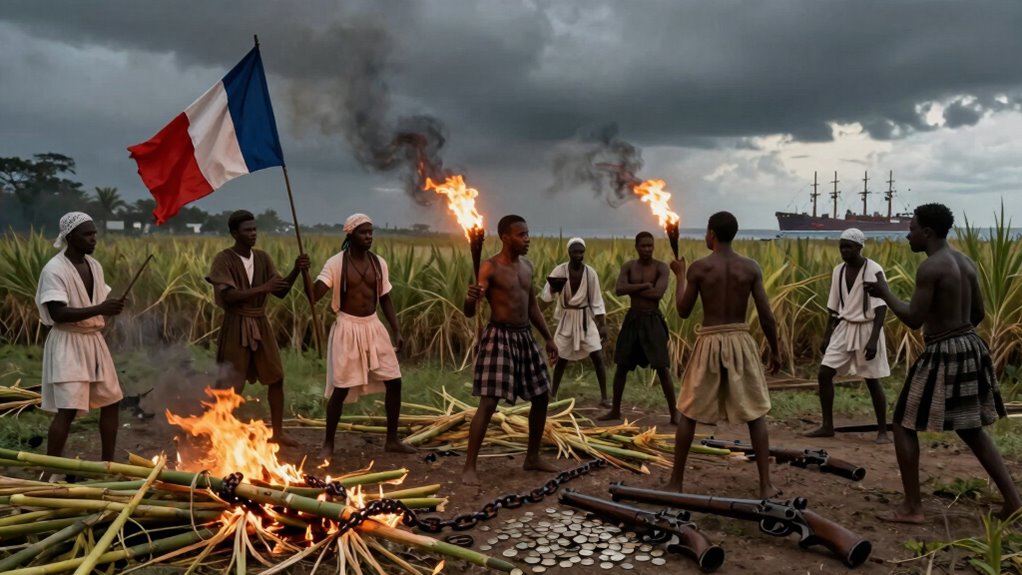
By 1790–1791, Saint-Domingue had multiple rival blocs claiming legitimacy: grands blancs, petits blancs, affranchis leaders, colonial officials, and eventually large-scale insurgent forces among the enslaved. Each bloc pursued power using the language of rights, security, and sovereignty.
As elites fought each other, they weakened the ability to contain rebellion. That political fragmentation helps explain why 1791 became the moment when revolt could expand rapidly across plantations rather than being crushed locally. Primary source collections
What Made Saint-Domingue Different From Other Slave Rebellions?
Large slave rebellions occurred elsewhere in the Atlantic world, including Jamaica and Brazil. Saint-Domingue’s revolution differed because demographic scale, mountainous terrain, and deep political fragmentation among elites combined with international war to create more room for insurgent victory than most colonies ever allowed.
In many colonies, rebellions faced faster consolidation of elite power or fewer opportunities to exploit conflict between foreign empires. In Saint-Domingue, those constraints weakened at the exact moment resistance networks were ready to expand.
Frequently Asked Questions
What Were the Main Causes of the Haitian Revolution?
The main causes were the colony’s wealth built on brutal slavery, a racialized political system that denied equal citizenship, and French imperial trade and governance rules that intensified factional conflict. After 1789, revolutionary rights language and shifting decrees fractured authority, allowing mass uprising to spread in 1791.
When Did the Haitian Revolution Start, and Why Then?
The large-scale uprising began in 1791, but the timing was shaped by earlier crises after 1789. Political legitimacy fractured as white factions and officials fought over sovereignty and as free people of color pressed for equal rights. That instability gave resistance networks room to coordinate across plantations.
Why Did Slavery Lead to Revolution in Saint-Domingue?
Because plantation discipline relied on violence and replacement labor, and that brutality generated persistent resistance, communication, and escape networks. When colonial authority weakened, those networks made coordinated mass insurrection possible at scale.
What Role Did Free People of Color Play in the Crisis?
Free people of color pressed for equal citizenship and representation, exposing the contradiction between rights language and racist law. Their petitions and revolts, including Vincent Ogé’s 1790 uprising, deepened polarization and helped destabilize the colony’s political order.
Did Foreign Powers Shape the Revolution’s Path?
Yes. Spain and Britain intervened to weaken revolutionary France, while French authorities shifted policies to defend the colony under wartime pressure. Those international conflicts complicated alliances and influenced how the revolution unfolded.
Conclusion
The Haitian Revolution grew out of a colony where extraordinary wealth rested on extraordinary coercion. Slavery’s violence created both suffering and organized resistance, while racial hierarchy and political exclusion turned everyday inequality into a governing crisis.
When French revolutionary politics fractured authority after 1789, competing blocs fought for sovereignty and citizenship, and the uprising of 1791 could not be contained. What followed reshaped the Atlantic world and redefined the meaning of freedom in the age of revolution.
References
- https://study.com/academy/lesson/causes-of-the-haitian-revolution.html
- https://revistaperiferias.org/en/materia/the-haitian-revolution/
- https://scholarsbank.uoregon.edu/items/5f9bfaf1-8fe6-473f-9654-0d17fe697ac5
- https://scholar.library.miami.edu/slaves/san_domingo_revolution/individual_essay/david.html
- https://www.oerproject.com/OER-Materials/OER-Media/HTML-Articles/Origins/Unit7/Economic-and-Material-Causes-of-Revolt
- https://www.britannica.com/topic/Haitian-Revolution
- https://teachingsocialstudies.org/2023/01/20/the-revolt-that-changed-everything-the-haitian-revolutions-immediate-effect-on-the-united-states/